


Europe to Conquer the Moon Using Other Countries' Maps
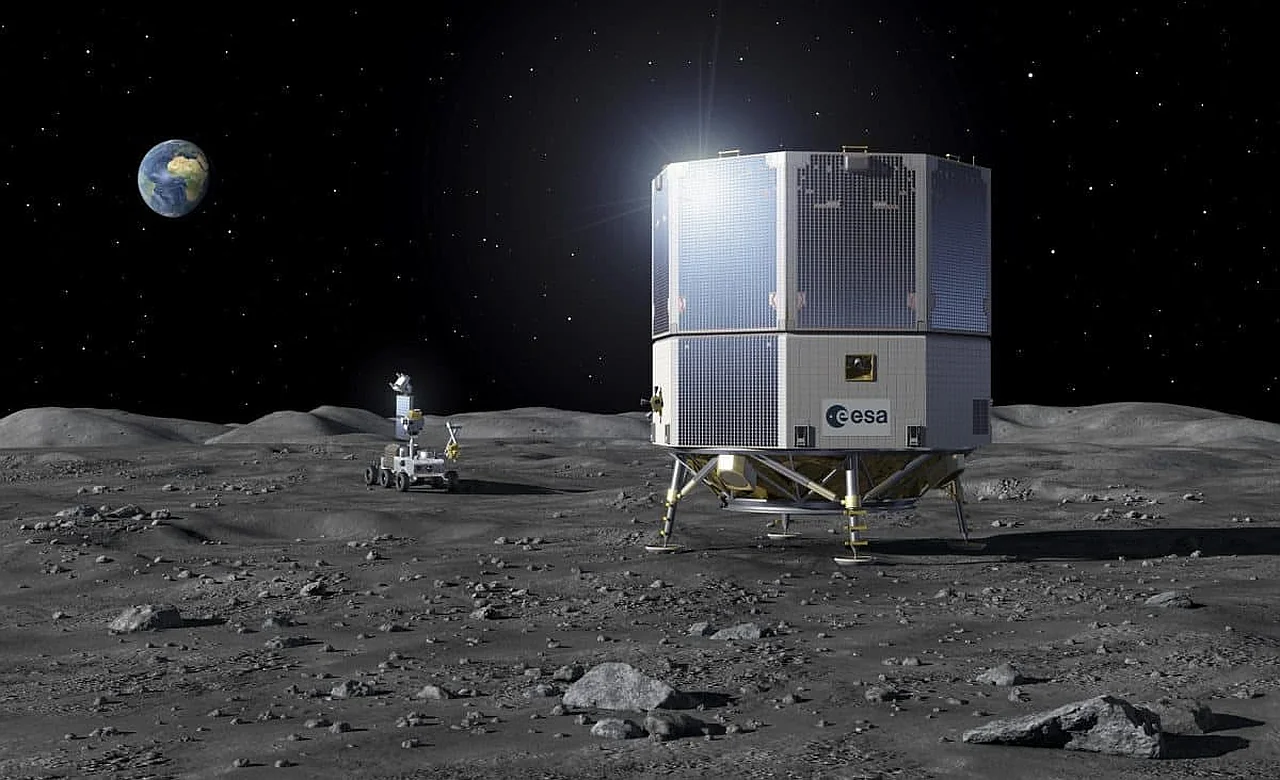
The European Space Agency (ESA) has admitted that it lacks the proprietary topographic data necessary to land its prospective Argonaut cargo lander on the lunar surface. Consequently, during the design phase and potentially during the first mission, Europe will be forced to rely on lunar maps created by other nations. This situation has once again brought the issue of the region's independence in space exploration to the forefront. This is reported by Ixbt.com news reports.
The Argonaut project was first proposed in 2022 at the ESA ministerial conference held in Paris. Final approval of the program was granted at a meeting of ministers from member states in 2025. This vehicle is intended to be Europe's contribution to the US Artemis lunar program, while simultaneously providing the continent with the capability for independent landings on Earth's satellite.
International Cooperation and Data Shortage
Ultra-precise topographic maps are required for the safe exploration of the Moon and the successful landing of spacecraft. Over the last twenty years, countries such as the USA, India, and China have actively collected such data within their national programs. Europe, however, has not yet created an independent system for mapping the lunar surface.Daniel Neuenschwander, Director of ESA's Uncrewed and Robotic Exploration program, announced after the agency's council meeting on June 17 that data for the Argonaut project would be purchased from external providers. Although the agency has not disclosed specific partners, the USA, India, and China are seen as the primary sources.
Currently, the most accurate data available in space belong to the following devices:
- The USA's Lunar Reconnaissance Orbiter (operational since 2009, imaging some areas with 0.5 meter accuracy);
- India's Chandrayaan-2 orbiter (capable of providing high-resolution images down to 25 centimeters);
- China's extensive database starting from the Chang'e-1 mission.
Future Plans and Steps Toward Independence
ESA is not disclosing how much funding will be spent on purchasing topographic data. However, the agency has already begun working on its own mapping system. According to Daniel Neuenschwander, several small lunar missions are currently under development. Two of them will specialize specifically in exploring the lunar south pole region—the exact area where the European lander is planned to touch down.The Argonaut cargo lander will be capable of delivering up to 1500 kg of payload to the lunar surface. The first flight is scheduled for 2030, with subsequent missions repeated every two to three years. This project is of strategic importance for strengthening Europe's position in the space race, although it currently requires reliance on foreign technologies.


Comments 0
…