


World Ocean Temperature Hits Record High: June 2026 Was the Hottest in History
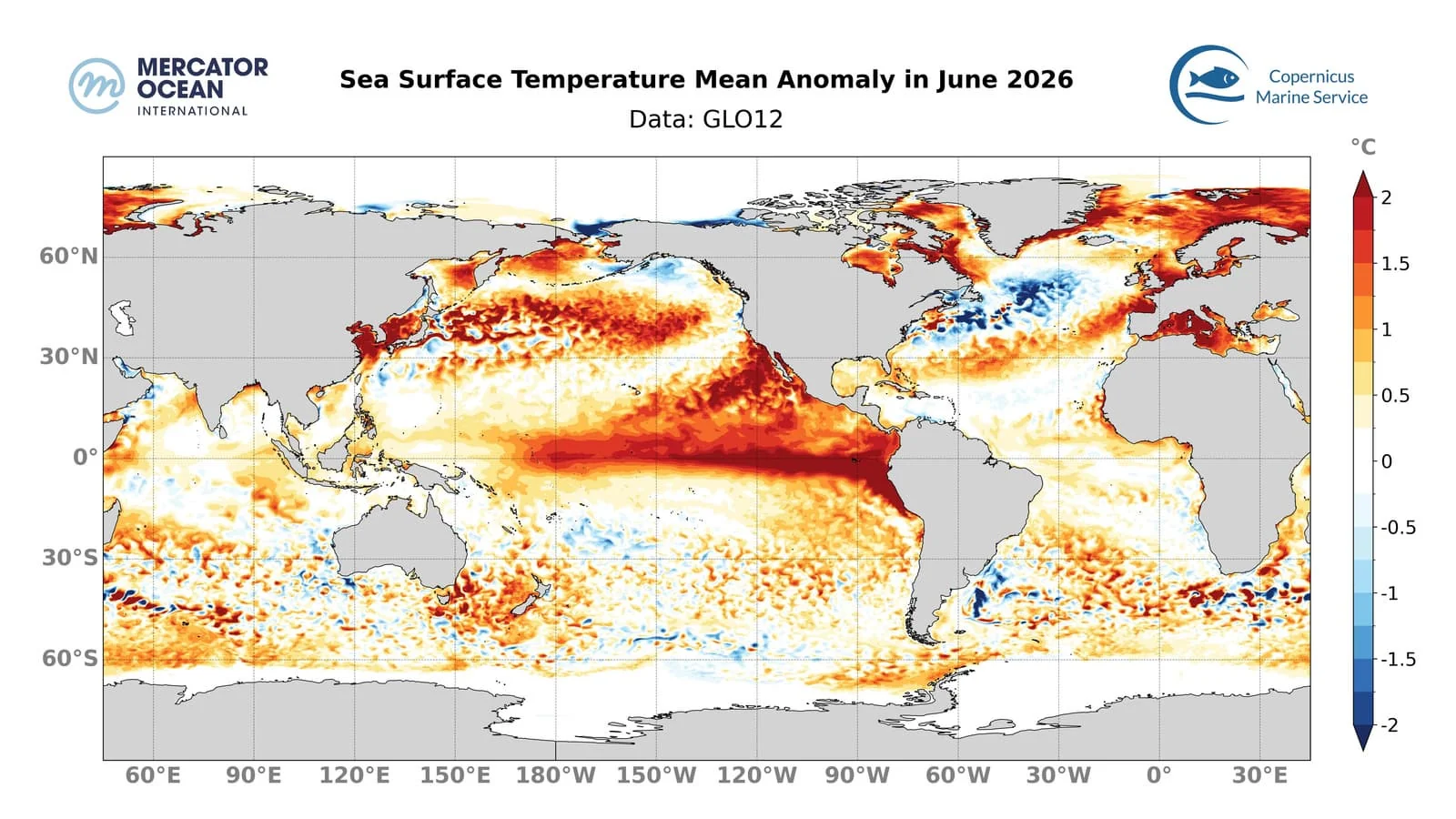
Changes in the Earth's climate system continue to take on an alarming turn. According to the latest report released by the Copernicus Marine service, the average surface temperature of the World Ocean in June 2026 was 21.0°C. This figure is the highest result in the history of instrumental observations, making June an absolute record-holder for ocean temperature. This is reported by Ixbt.com news provides.
Analysis shows that the first six months of 2026 also ranked among the hottest half-years in human history. A large part of our planet's ocean system was covered by anomalously hot conditions. These conclusions are based on data from the GLO12 global monitoring system, which combines satellite observations, digital modeling, and ocean reanalysis.
Global heatwaves and their scale
From January to June of this year, the average ocean surface temperature was 20.94°C. Although this figure is slightly lower than the 2024 record (21.04°C), it marked 2026 as the second hottest half-year in history. Experts are particularly concerned about the duration and scale of the anomalous heat: by the end of June, nearly 82 percent of the World Ocean area remained under heatwaves of varying intensity.Ocean heatwaves are phenomena where water temperatures remain above the climatic norm for a long period. Such conditions can last for weeks or months, seriously affecting marine ecosystems, water circulation, and the global weather regime. According to Copernicus data, the most stable "hot zones" were observed in the tropical and subtropical parts of the Pacific Ocean, the center of the North Atlantic, as well as the coasts of Chile, California, and Europe.
Regional records and the El Niño effect
The Mediterranean Sea became one of the most heated regions. Here, the average temperature from January to June reached 18.07°C, and 98 percent of the aquatory was under the influence of heatwaves. The situation in the North Atlantic was also complex, with temperature records being broken for four consecutive months in some areas. Such changes can be catastrophic for marine flora and fauna.In the tropical part of the Pacific Ocean, the June temperature reached 27.26°C, recording the highest figure in the region's history. Scientists link this dynamic to the El Niño climatic phenomenon. El Niño causes the redistribution of heat in the Pacific Ocean and changes weather conditions worldwide, which in turn increases the probability of extreme natural phenomena.
Oceans absorb the bulk of excess heat in the climate system, so their state is of decisive importance for the future of our planet. The Copernicus Marine report shows that long-term heat stress in the oceans directly affects not only marine life but also the severity of weather on land. This requires strengthening global climate monitoring and environmental protection measures.


Comments 0
…