


China Tests Future Space Hospital and Biological Laboratory Technologies
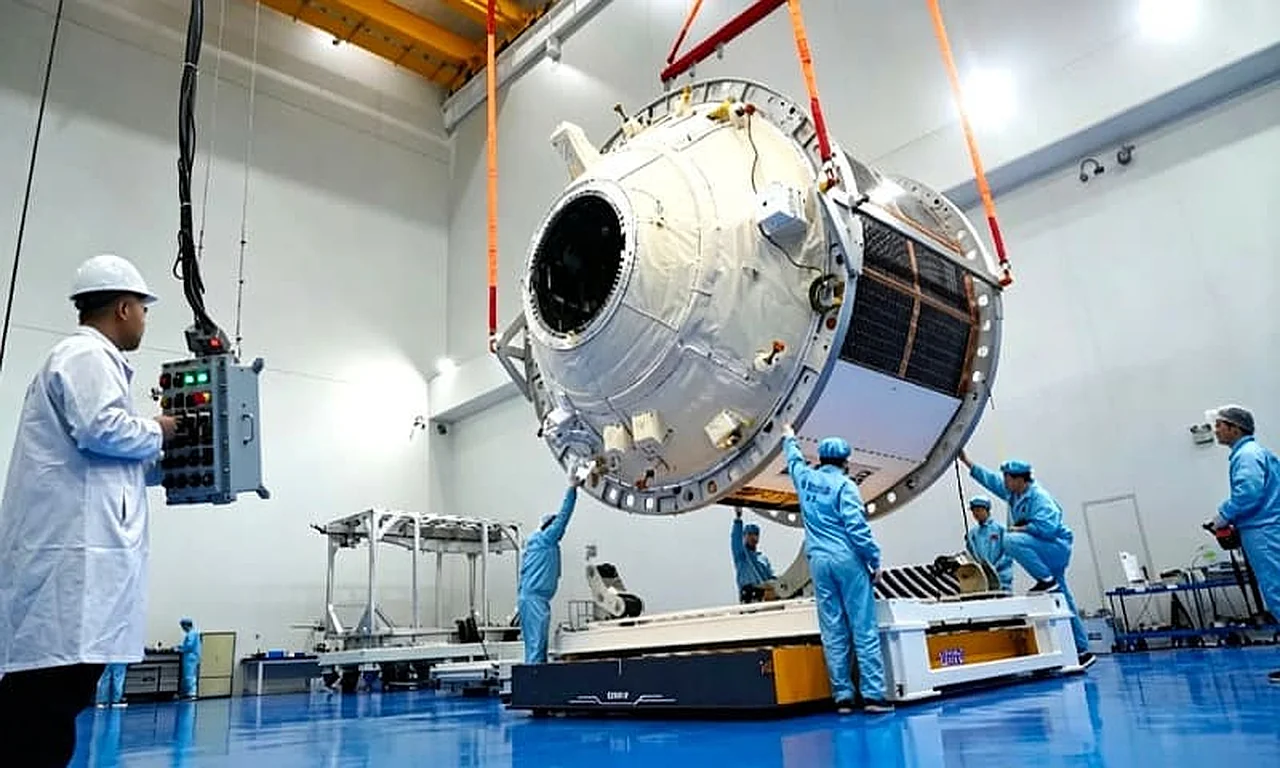
China has reached a new stage in space exploration, successfully testing a series of innovative technologies essential for future long-term missions and orbital infrastructures. The Qingzhou experimental cargo ship demonstrated its second-stage results in orbit, expanding capabilities for providing medical care and conducting biological research in space. This is reported by Ixbt.com news reports.
The Qingzhou spacecraft was launched into space on March 30 of this year using a Lijian-2 Y1 launch vehicle. Developed by the Innovation Academy for Micro-Satellites (IAMCAS) under the Chinese Academy of Sciences, the ship has a total weight of 4.2 tons. Approximately one ton of this is allocated to scientific equipment, and the device is designed for a three-year orbital service life.
Space Hospital and Medical Monitoring
One of the most important directions within the project is the "space hospital" concept. This system is aimed at ensuring the safe long-term habitation of humans beyond Earth's orbit. According to experts, establishing permanent settlements on other planets in the future is impossible without such autonomous medical complexes.According to ixbt.com, Chinese engineers have created an electromyographic diagnostic device equipped with a neuromorphic chip for remote monitoring of human health in space. This technology allows for the continuous real-time monitoring of muscle electrical activity. Additionally, a compact blood cell analyzer was tested, which helps crew members independently analyze their health without complex laboratory equipment.
Orbital Refrigerator and Biological Experiments
Another technological achievement is the creation of a vapor-compression refrigerator that operates stably under microgravity conditions. In adapting this Earth-based technology for space, scientists solved complex tasks such as separating gas and liquid and ensuring the stable operation of the compressor. This device serves not only for storing astronauts' food but also for temperature-sensitive biological samples.China already has extensive experience in biological research. Previously, experiments were conducted on danio-rerio fish, mice, and various plants on the Tiangong station. The new tests are focused on cultivating living organisms during long-term missions and further improving life-support systems.
Chan Liang, the chief designer of the Qingzhou project, emphasized that this flight serves not only for scientific experiments but also for the comprehensive testing of the ship's hermetic compartment and propulsion system. The results obtained will form the basis for creating the full operational version of the spacecraft.
According to the plan, the first operational flight of the Qingzhou cargo ship will take place in early 2027. It will help reduce the cost of delivering cargo to space while making the operation of China's orbital station more flexible and affordable.


Comments 0
…