


Revolution in Biology: Scientists Create the First Self-Reproducing Synthetic Cell
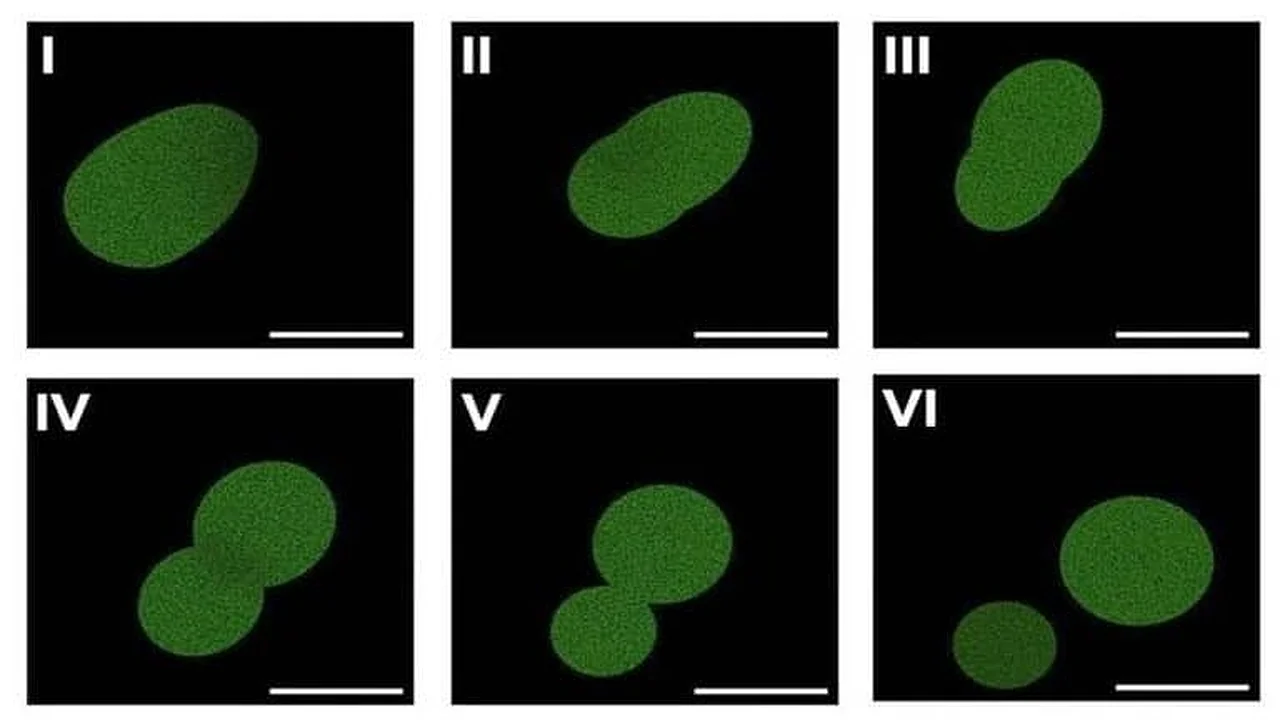
Researchers at the University of Minnesota in the USA have achieved a major breakthrough in the fields of biology and engineering. The system they created, called SpudCell , can independently perform all the essential functions of a living organism — growth, DNA replication, resource absorption, and transmission of genetic information to the next generation through division. The publication ixbt.com provided detailed information about this. Ixbt.com reports .
In previous experiments, scientists were only able to replicate certain biological processes of artificial cells. SpudCell The uniqueness of the project lies in the fact that it was able to combine several vital functions within a single system simultaneously. This is the most advanced model created in laboratory conditions that replicates the behavior of a living organism.
How does synthetic life work?
The basis of the system consists of liposomes — microscopic lipid membrane bubbles containing an aqueous environment inside. Synthetic DNA containing the system's operating instructions was placed inside. Molecules responsible for protein synthesis, enzymes, and ribosomes were also incorporated into this artificial cell. The cell obtains the resources it needs by fusing with special "feeding" liposomes.While in living cells the division process occurs through a complex internal structure (cytoskeleton), in the SpudCell system this process takes place mechanically. The accumulation of proteins on the membrane creates strong tension, causing the structure to split in two. The most fascinating aspect is that these artificial cells are also subject to the laws of natural selection.
Through genetic modification, researchers enabled certain cells to grow faster. As a result, under limited food conditions, these "strong" cells outcompeted the ordinary population within five generations. This proved that synthetic systems can also adapt to evolutionary processes.
A new platform for future technologies
SpudCell has a genome of approximately 90,000 base pairs, which is even less than the minimum required for a living cell. The genetic information is divided among seven independent plasmids, allowing the system's various functions to be programmed separately. Scientists plan to use this invention for the following purposes in the future:- Producing highly efficient drugs;
- Creating new types of materials and bio-transport systems;
- Synthesizing environmentally friendly fuels;
- Using cells designed from scratch instead of modifying bacteria and yeast.


Comments 0
…