


Energy Revolution: New Rechargeable Zinc-Ion Battery With Over 1500 Cycles Created
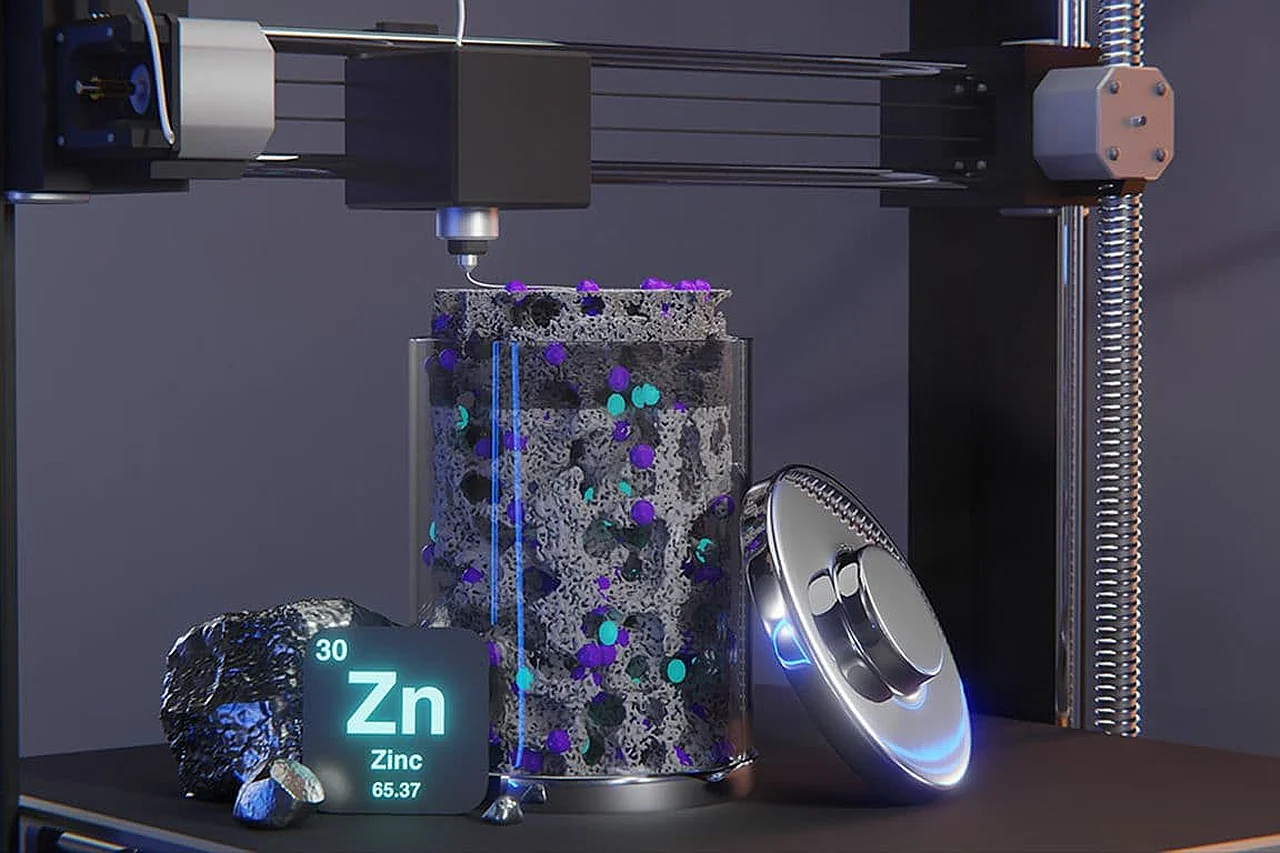
Researchers at the University of California (UCLA) have developed a new type of zinc-ion hybrid battery that is expected to mark a major breakthrough in energy storage technologies. Equipped with a 3D-printed electrode, this device can store seven times more energy than its counterparts. The discovery is expected to become a cheap and efficient alternative to lithium-ion batteries in the future. This was reported by Ixbt.com reports .
The uniqueness of the new device lies in the fact that it is a hybrid of two different technologies — a conventional battery and supercapacitors. One of its electrodes operates on the classic battery principle, while the other is made of a carbon-based material like supercapacitors. This structure allows the device not only to store large amounts of energy but also to charge and discharge very quickly.
3D Technology and Record Capacity
According to the project authors, as reported by ixbt.com, the main innovation is a porous 3D electrode with a branched internal structure. Its surface is coated with vanadium oxide, which effectively traps charge. It is this architectural solution that served to dramatically increase the device's capacity. According to the researchers, just one gram of this material has an internal surface area roughly equivalent to ten tennis courts.Tests showed that the battery can store seven times more charge than existing hybrid supercapacitor systems. Most importantly, the device also demonstrated high durability: after 1500 charge and discharge cycles, it retained 82 percent of its original capacity.
A Worthy and Affordable Alternative to Lithium
UCLA researchers did not choose zinc for nothing. Zinc is nearly 100 times more abundant in nature than lithium, and its extraction and processing are much easier and cheaper. This will help significantly reduce the cost of batteries designed for electric vehicles and household appliances in the future.The new development is primarily intended for energy storage systems where fast charging, long service life, and low cost are important. Additionally, the research team presented an affordable 3D-printer test cell designed for accurate and standardized testing of new types of energy storage devices in laboratory conditions.
If this technology is introduced into mass production, it could be very useful for countries focusing on renewable energy sources, such as Uzbekistan, for storing energy generated by solar and wind power plants. Affordable and durable batteries are a crucial link in ensuring energy independence.


Comments 0
…