


Event of the Century: 7.6 Billion People Will See Asteroid Apophis with the Naked Eye in 2029
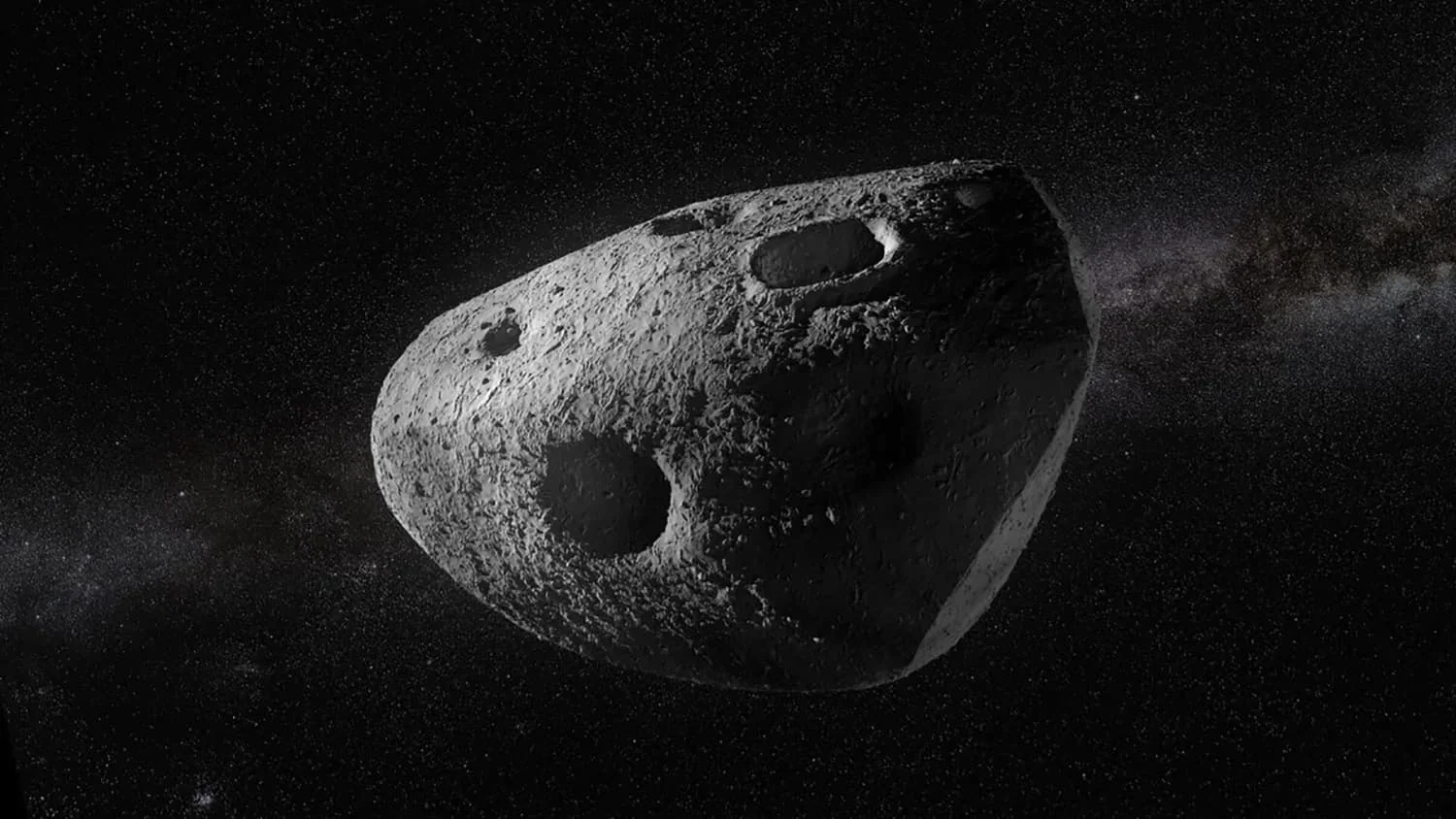
In April 2029, the Earth's population will witness one of the most stunning astronomical events of the 21st century. Asteroid 9942 Apophis will fly so close to our planet that nearly 90% of the world's population—approximately 7.6 billion people—will be able to observe it with the naked eye. Visibility maps prepared by scientists have revealed the details of this unique event. This is reported by Ixbt.com reports .
Apophis will not streak across the sky like a bright meteor, but will appear as a bright dot moving slowly against the background of the stars. According to ixbt.com, at its closest approach, its speed will be equivalent to the diameter of the full Moon per minute. This will allow even amateur observers to notice the asteroid's movement without a telescope.
Best observation points and timing
The asteroid will reach its peak brightness on the night of April 13, 2029, Tashkent time. Calculations show that at that moment, the celestial body will be over Cameroon. The best observation conditions will occur in Africa, most of Asia (including Uzbekistan and neighboring countries), the eastern part of South America, and parts of Europe. Given clear weather, a total of 3.9 billion people will be able to see it at its brightest.Apophis will make its closest approach to Earth on April 14. It will fly over the Atlantic Ocean at an altitude of just 31,600 kilometers from our planet. For comparison, this is even lower than the orbit of geostationary satellites. NASA experts rule out the possibility of the asteroid colliding with spacecraft despite such a close distance.
Danger averted: Scientific opportunities
Interestingly, when Apophis was discovered in 2004, the situation seemed quite serious. At that time, scientists estimated the probability of it colliding with Earth at 1 in 37. However, years of observations helped refine the asteroid's orbit, confirming there is no danger for at least the next hundred years. Now, this flyby is viewed not as a potential threat, but as a unique scientific laboratory.Scientists are eagerly awaiting how Earth's strong gravitational field will affect Apophis. It is hypothesized that our planet's gravity could slightly alter the asteroid's trajectory, trigger landslides on its surface, or expose hidden layers of ancient rock. All major observatories around the world will closely monitor this process.
For astronomy enthusiasts in Uzbekistan, this event is expected to be unforgettable, as our region's geographical location is very convenient for observing the asteroid's flight at night. The close approach of such a large celestial body is a rare event in human history, opening a new chapter in exploring the mysteries of the universe.


Comments 0
…