


Rare ancient Greek military camp discovered in Uzbekistan
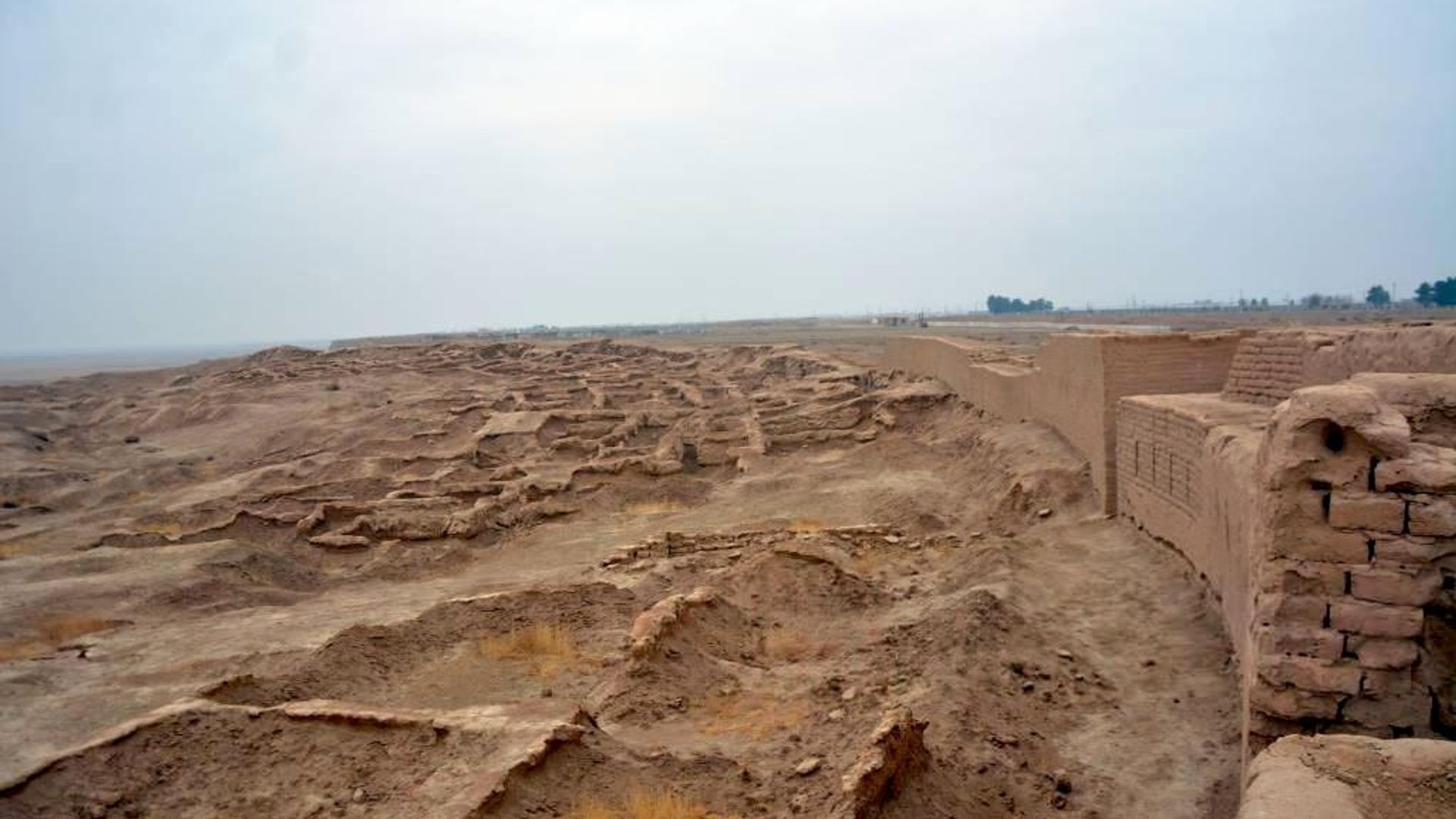
A unique discovery dating back to the Hellenistic period has been made during archaeological research conducted on one of the ancient hills located in southern Uzbekistan. Experts have announced that the structure identified in the Iskandartepa area was not a residential settlement, but rather an ancient Greek military camp used for a short period. This was reported by the GreekReporter publication.
It is noted that the research was carried out in collaboration between Czech and Uzbek archaeologists. A scientific team led by Ladislav Stančo from Charles University in Prague has been consistently studying the area since 2017. In 2021, the site was examined in greater detail using modern magnetometry and geophysical technologies designed to detect underground structures.
As a result of the scientific research, an area of nearly 6 hectares was surveyed, and the existence of a defensive trench approximately 400 meters long was discovered around the hill. Subsequent archaeological excavations revealed that the trench was 4–7 meters wide and about 85 centimeters deep.
Archaeologists also managed to find traces of posts that may have belonged to wooden defensive walls within the trench. Experts believe these findings indicate that the site served not as a permanent settlement, but as a well-fortified temporary military camp.
During the excavations, large ceramic water vessels, known as 'khums', were also found in the camp area. Scientists suggest that these vessels were likely used to store water rather than food, citing the absence of permanent buildings or natural water sources in the area as the reason.
Furthermore, researchers recorded about 90 oval-shaped pits in the eastern and western parts of the site. According to scientific hypotheses, some of these may have been reused as burial grounds in later periods.
One of the most significant findings includes coins dating back to the reigns of Greco-Bactrian rulers Euthydemus I and Demetrius I. These findings once again confirm that this military camp dates back to the 2nd century BC, linked to events of the Hellenistic period.
Comparing Iskandartepa with the Boysari hill located in the Sogdiana region, scientists note that its structure is one of the rare examples of Greek military camps found in Central Asia.
Experts emphasize that this unique archaeological discovery once again proves how effective modern geophysical methods are in identifying ancient monuments that are not visible to the naked eye. This may open up new opportunities for a deeper study of the history of the Hellenistic period and ancient Greek military infrastructure in Uzbekistan.


Comments 0
…