


Rostec to increase industrial robot production by over 10 times by 2030
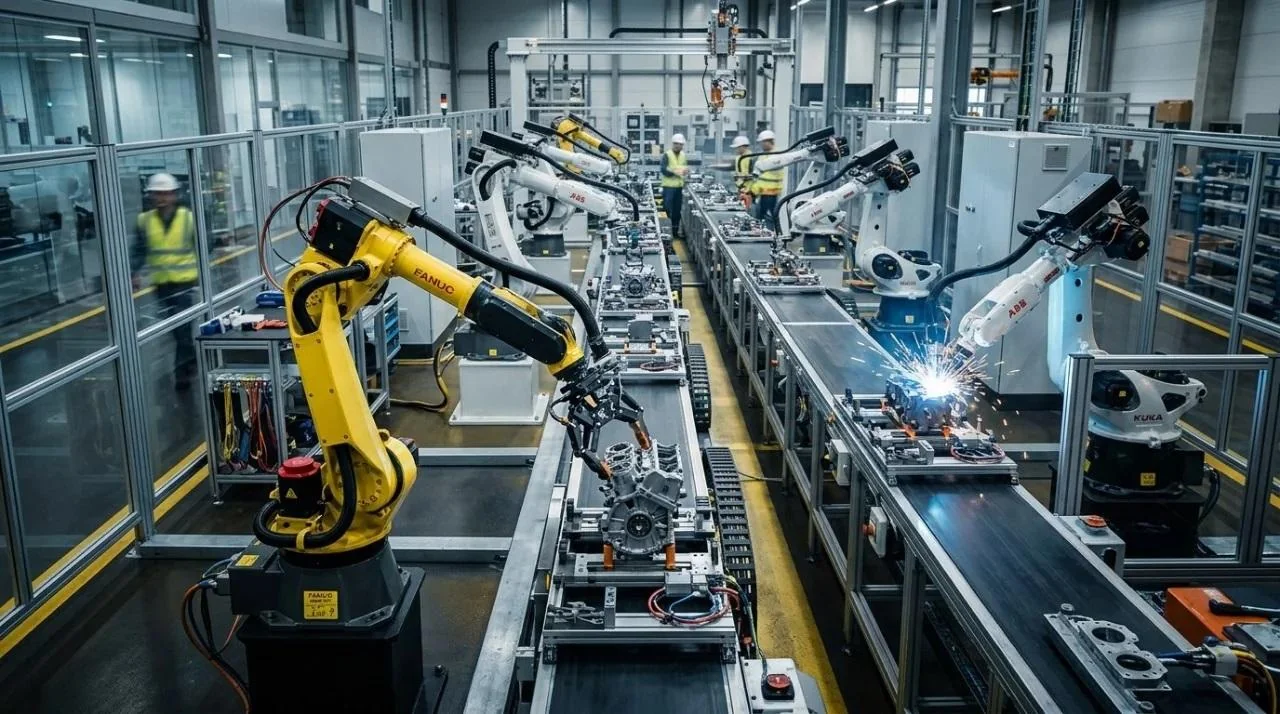
The Russian state corporation "Rostec" has announced a massive strategic plan to automate the country's industrial sectors. According to corporation head Sergey Chemezov, the production of 6,000 industrial robots per year will be established by 2030. This figure is nearly 11 times higher than current production capacities. This is reported by Ixbt.com reports .
Currently, "Rostec" enterprises deliver an average of 550 industrial robots per year. The capabilities of the existing technological base are designed for this specific volume. However, the goal is to achieve leadership in the robotics market by extensively modernizing and scaling production capacities in the coming years.
Application areas and capabilities of the robots
These automated systems serve to ease human labor in various complex industrial processes. According to the Ixbt.com publication, the robots are designed to perform the following operations:- Welding and metal processing;
- Machine maintenance;
- Glue and sealant application;
- Assembly and fastening of components;
- Stacking finished products and quality control.
Localization and technological independence
Today, the localization level of these robots stands at 75 percent. Russian specialists are independently developing the robot designs and have successfully registered eight key patents so far. Furthermore, the electronics and software required for the automated systems are also being created by local developers.For now, the majority of the produced robots are being tested and operated within "Rostec"-affiliated enterprises. Nevertheless, several units have already been delivered to major industrial giants such as RZD (Russian Railways) and GAZ Group. In the future, it is expected that other private and state enterprises will also show significant interest in these technologies.
In recent years, robotization processes have also intensified in Uzbekistan's industry. There is a high demand for foreign technology, especially in the automotive and textile sectors. Russia's steps in this direction could pave the way for competitive and relatively affordable industrial solutions in the regional market.


Comments 0
…