


The Path to Space for Everyone: People with Disabilities Can Be the Best Astronauts
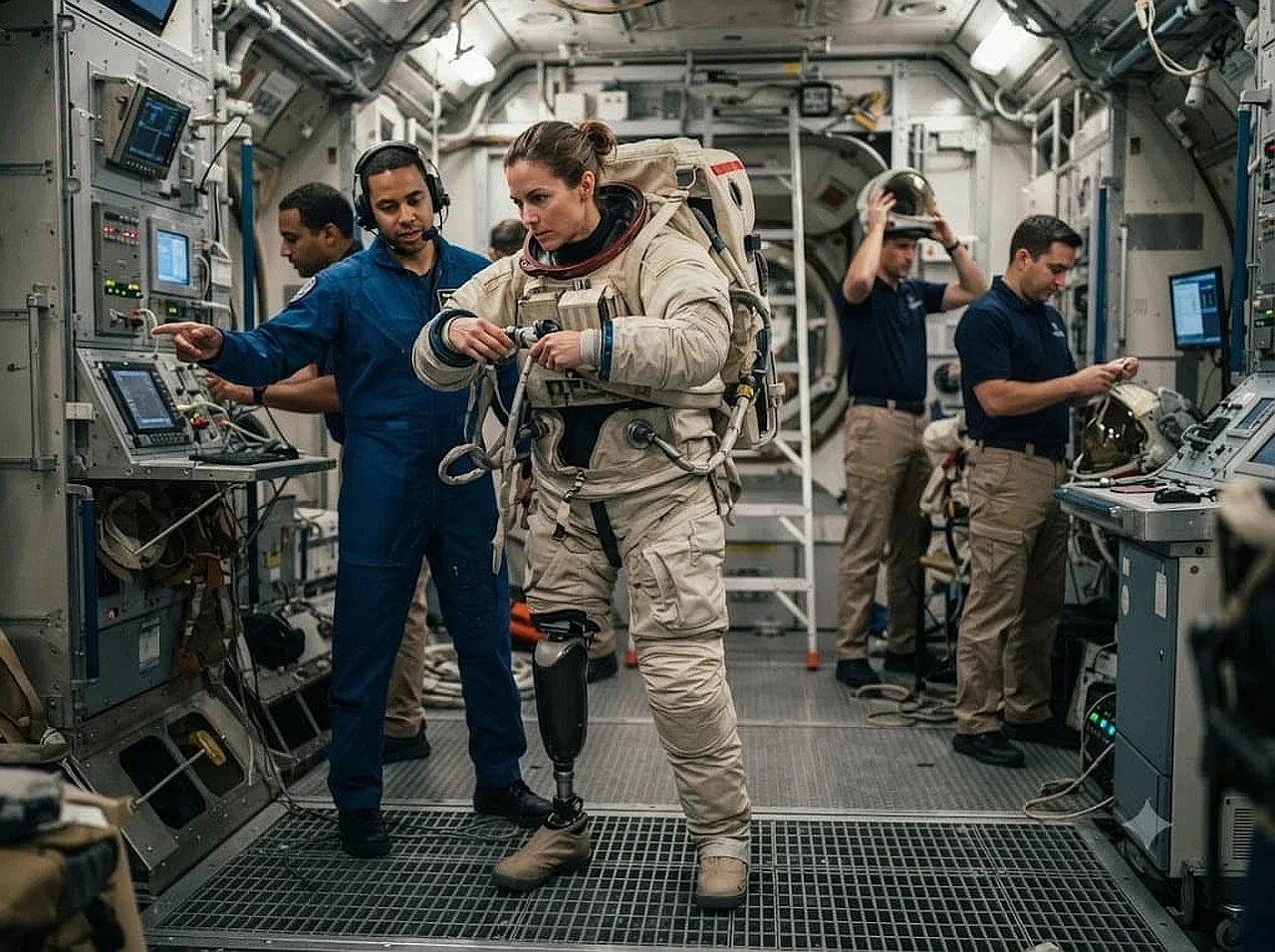
For a long time, the aerospace industry has been a closed club for men with perfect physical fitness and military experience. However, modern research and new missions are fundamentally changing these views. According to a new agreement between the UK Space Agency and the private company Vast, Paralympic sprinter John McFall is expected to head to space in 2027. The flight of the athlete, who lost part of his leg and uses a prosthesis, is not just a display of inclusivity, but the beginning of a new era in space medicine. This is reported by Ixbt.com .
Experts believe that certain physiological characteristics of people with disabilities could provide unexpected advantages in long-distance space missions, such as a flight to Mars. For example, in people with limited leg mobility or those who have undergone amputation, body weight is distributed differently, and the reaction to fluid movement throughout the body in weightlessness is unique. This could make it easier to adapt to the discomforts of space.
Historical experiments and the secrets of endurance
Looking back at history, there are many cases in NASA studies where women and people with certain physical characteristics outperformed male pilots. In the 1960s, female pilots like Jerrie Cobb ranked in the top 2 percent of candidates in endurance tests, and Wally Funk was able to stay in an isolation chamber three times longer than the record set by male astronauts. However, due to the military requirements of that time, they were denied the opportunity to fly into space.Another interesting case was observed in the 1950s: NASA involved 11 men with hearing impairments to study the vestibular system. It turned out that these individuals, who had impaired inner ear function, did not lose their performance even under conditions of severe shaking and rotation. Meanwhile, experienced pilots suffered from severe nausea and loss of orientation in such situations. Today, 60-80 percent of astronauts face this exact problem during their first days in space.
Adaptability is the key to success
When unexpected emergencies occur in space, the daily adaptability skills of people with disabilities can be useful. For example, in 2013, when Italian astronaut Luca Parmitano went on a spacewalk, water leaked into his helmet, almost limiting his vision and hearing. He managed to return to a safe place using his senses and touch. Such cases are crucial for Mars missions, where communication with Earth is delayed by up to 20 minutes.The space industry has already taken the first steps in this regard:
- In 2021, Hayley Arceneaux became the first person with a bone prosthesis to fly into space as part of SpaceX's Inspiration4 mission;
- In 2025, engineer Michaela Benthaus is expected to become the first wheelchair user to participate in a suborbital flight;
- The John McFall mission will be the first case of a person with a disability being involved in long-term scientific research by a major government agency.


Comments 0
…