


Lithium-replacement technology: Liquid zinc battery tested in China
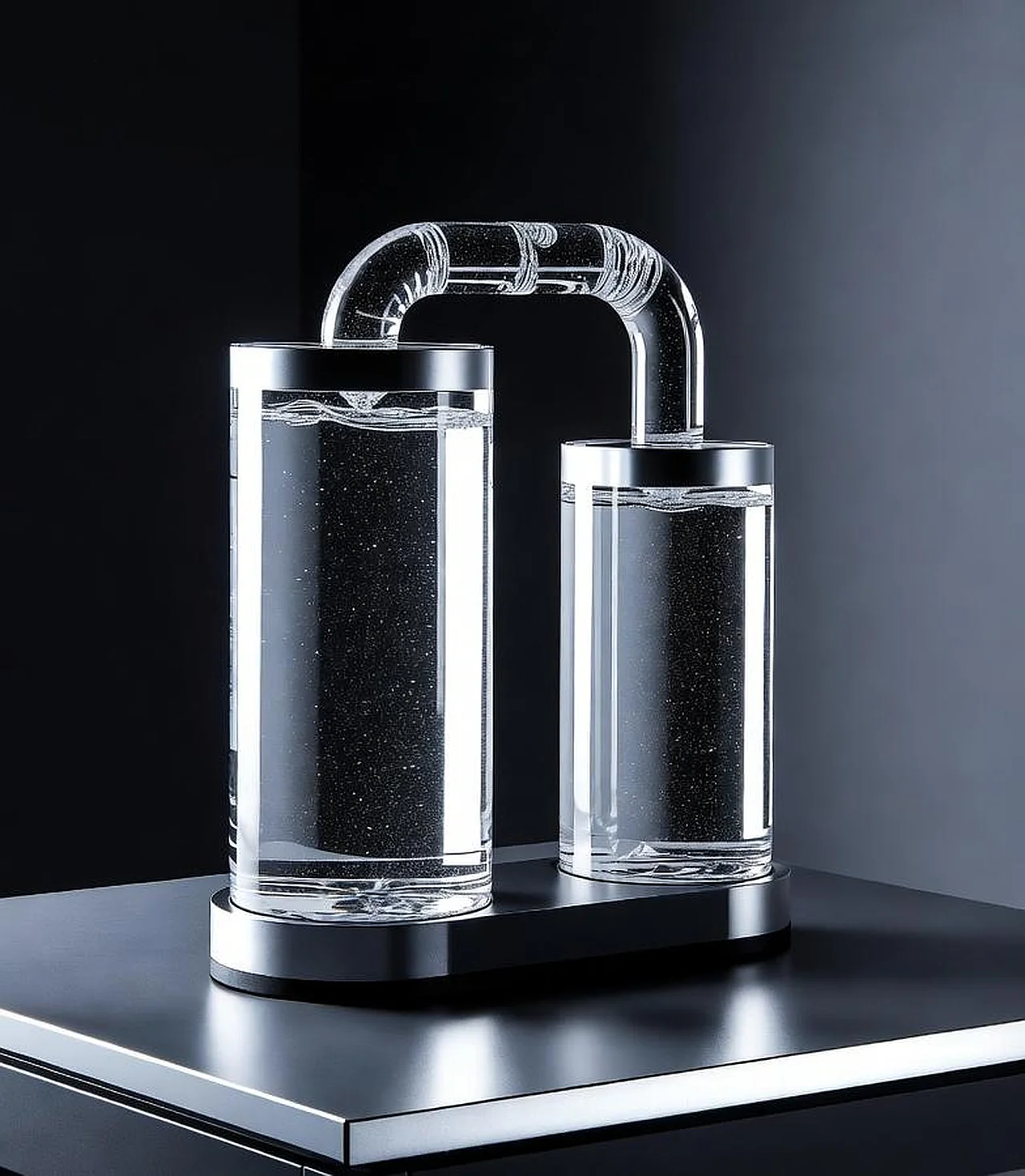
Chinese scientists have successfully tested a new type of flow battery based on liquid zinc, which is expected to be a revolutionary breakthrough in the energy sector. This battery proved its ability to operate continuously for over seven months. Researchers believe the new technology could become a promising foundation for large-scale energy storage systems for solar and wind power plants. This is reported by Ixbt.com reports .
Presented by experts from Fudan University and the Chinese Academy of Sciences, this development differs fundamentally from traditional batteries. According to ixbt.com, the experimental battery operated continuously for 5,128 hours (approximately 214 days) during tests. This figure is crucial for industry representatives seeking stable and long-term solutions for renewable energy sources.
Liquid energy carrier mechanism
While traditional zinc batteries use a stationary metal electrode, the new system uses a liquid suspension consisting of zinc nanoparticles. This liquid circulates continuously between a reservoir and an electrochemical cell. Here, zinc acts not just as an electrode, but as a unique "liquid energy carrier."During charging and discharging, zinc particles repeatedly transition from a metallic state to an ionic state and vice versa, ensuring stable battery operation. The core of the technology is a special suspension design: it contains zinc nanoparticles, a porous carbon framework, and an organic ligand electrolyte. This composition prevents particles from clumping together and maintains efficiency even after thousands of cycles.
Scaling and future prospects
One of the biggest advantages of the new design is its ease of scalability. In ordinary batteries, increasing capacity requires building larger elements, whereas here, it is sufficient to simply increase the volume of the reservoirs storing the zinc suspension. This feature makes the technology very attractive for national energy grids.According to test results, the battery showed a coulombic efficiency of 99.94 percent. A version with a manganese dioxide-based cathode retained 81.1 percent of its initial capacity after 5,500 charge-discharge cycles. This indicates a multi-year service life.
According to project leader Fei Wang, the idea emerged during a visit to a plant producing zinc via electrolytic methods. The scientist realized that the process of recovering metal ions could be used not only in metallurgy but also for storing electrical energy. In the next phase, researchers will work on adapting the technology for industrial scale and creating similar batteries based on other metals.


Comments 0
…