


SpaceX launches the first space 'mechanic' to repair satellites in orbit
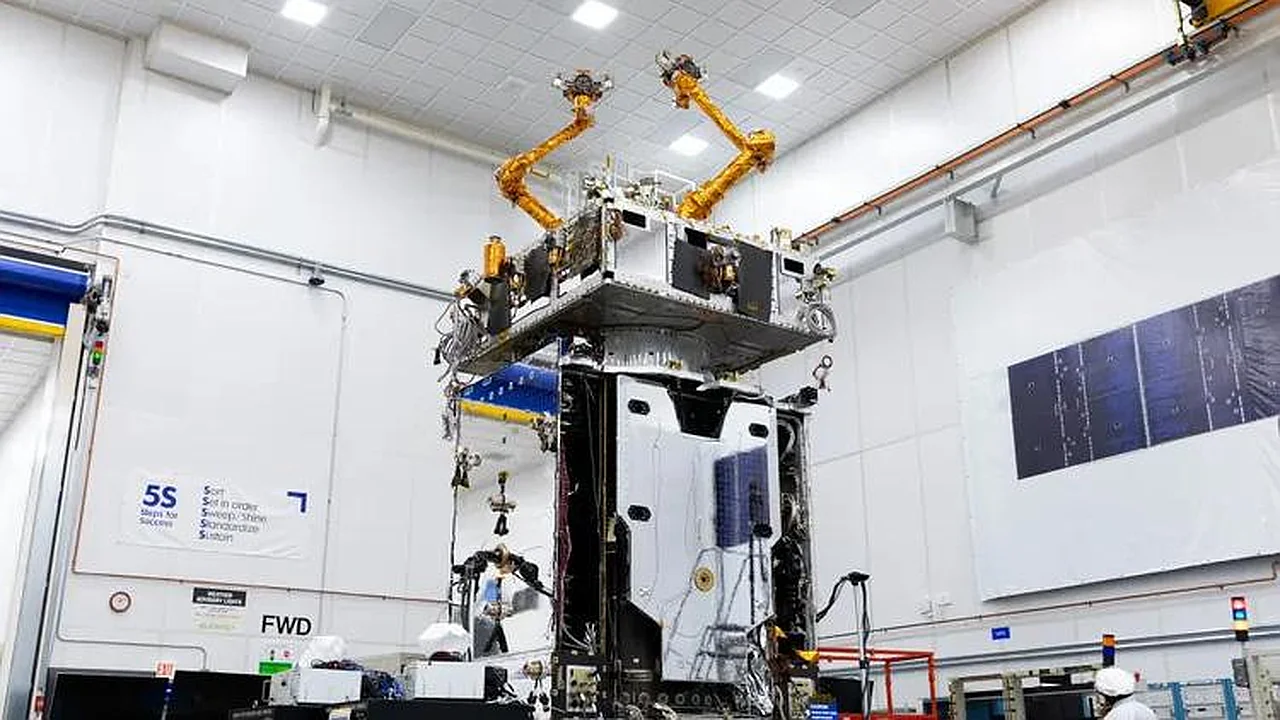
SpaceX, led by Elon Musk, is carrying out the MRV-MEP mission today, July 21, which is expected to be a revolutionary step in the space industry. A Falcon 9 rocket launching from Cape Canaveral, Florida, will carry a unique space 'mechanic' into orbit. This mission is the first large-scale project aimed at extending the service life of satellites directly in space. This is reported by Ixbt.com reports .
As part of the mission, the Mission Robotic Vehicle (MRV) developed by SpaceLogistics, a subsidiary of Northrop Grumman, and three Mission Extension Pod (MEP) modules will be delivered to geostationary orbit. The main goal of this project is to prevent satellites that are running out of fuel or experiencing technical malfunctions from burning up in the atmosphere and to continue their operations.
The MRV is a unique robotic service vehicle equipped with two three-meter manipulator 'arms' created by the U.S. Naval Research Laboratory. Using these mechanical arms, the robot will install MEP modules onto customers' satellites. This process allows complex engineering work to be performed in space without human intervention.
Space 'life savers'
Mission Extension Pod (MEP) modules are compact devices equipped with their own electric propulsion systems. Once installed on a satellite, the module takes over the task of managing the main craft's orbital position and maintaining its orientation. According to Northrop Grumman, one such module can extend the life of a satellite weighing around two tons by at least eight years.The first customers for the new system are Australia's Optus operator and Intelsat. They have already ordered modules for their spacecraft. After completing the initial tasks, the MRV will remain in orbit to participate in future inspections, relocations, and modernization of other satellites.
Another important aspect of this mission is the MRV's capability for in-space refueling. The device is equipped with a Passive Refueling Module interface approved by the U.S. Space Force. This paves the way for much longer use of the service vehicle and for carrying out complex future missions.
According to ixbt.com, this flight is also of particular significance for SpaceX. The first stage of the Falcon 9 rocket will not be recovered due to the high energy required to reach geostationary orbit. This will be the 32nd and final flight for this booster. Previously, it served in many missions, including cargo transport to the International Space Station and the Starlink project.
The development of this technology is also of strategic importance for countries like Uzbekistan that are planning to have their own telecommunications satellites. In the future, it will be possible to save significant funds by repairing expensive equipment in space rather than replacing it with new units.


Comments 0
…