


SpaceX Achieves Historic Success: Starship Soft-Lands in Ocean for First Time
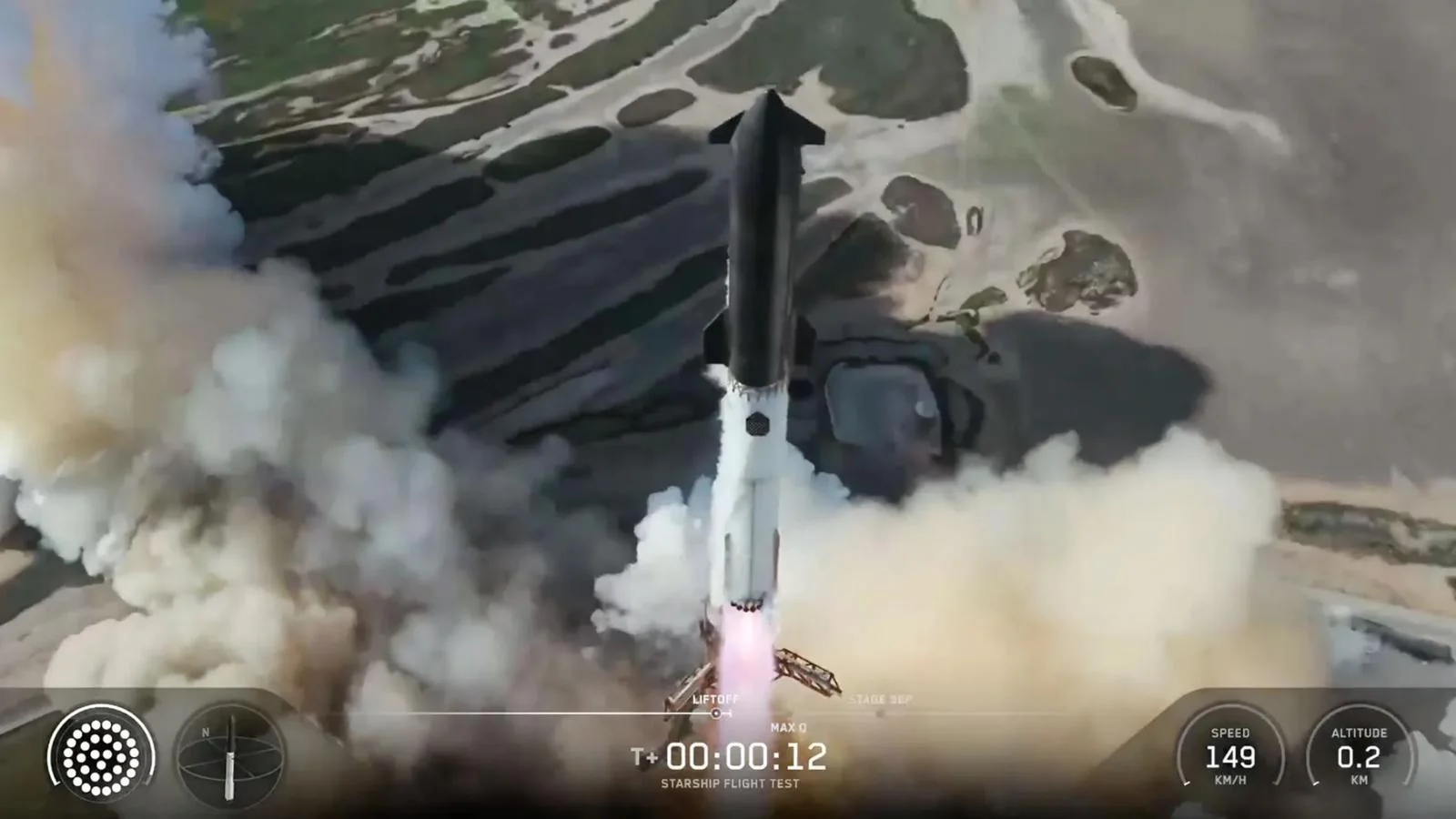
SpaceX, founded by Elon Musk, has completed the 13th test flight of its Starship super-heavy rocket system. This mission became one of the most successful milestones in the program's history, as the spacecraft made its first soft landing in the Indian Ocean while maintaining its structural integrity. This result opens a new era in space exploration and reusable rocket technology. This is reported by Ixbt.com reports .
The flight took place on July 24 from the Starbase test site in Texas. This was the second test of the Starship V3 modification, and the spacecraft performed its task one hour after liftoff. According to ixbt.com, the spacecraft floated on the water's surface for some time after impact and continued transmitting telemetry data to Earth. SpaceX representative Dan Huot described the event as "the softest landing in the history of the program."
Technical Issues and New Achievements
Although the mission was deemed successful, unexpected technical glitches were observed during the return of the Super Heavy booster. According to the plan, 13 Raptor engines were supposed to ignite simultaneously to decelerate. However, according to telemetry data, only 5 of them worked. As a result, the booster hit the waters of the Gulf of Mexico at a higher speed than planned.Nevertheless, the Starship spacecraft itself performed several important operations in space. In particular, one of the six Raptor engines was restarted in open space during the flight. This maneuver is considered vital for future orbital missions and safely returning the spacecraft to Earth. Additionally, the onboard next-generation Starlink V3 satellite deployment system was tested.
Thermal Protection and Future Plans
The spacecraft's atmospheric reentry was one of the most thrilling moments. Onboard cameras showed the spacecraft's hull surrounded by glowing plasma live. Starship's thermal protection layer proved capable of withstanding such extreme temperatures. Before landing in the water, the spacecraft transitioned to a vertical position and slowed down using three engines.This success is a massive step forward for SpaceX on the path to crewed flights to Mars. The Starship system is designed to be fully reusable, and it is expected to drastically reduce the cost of delivering cargo to space. This news is also important for technology enthusiasts, as the development of the Starlink system will expand high-speed internet access worldwide, including in remote areas in the future.
The SpaceX team will now analyze the gathered data and work on improving the landing system of the Super Heavy booster for future flights. In upcoming tests, plans include not just ocean landings, but also catching the booster mid-air using the special "Mechazilla" tower.


Comments 0
…