


Star Formation in Andromeda Galaxy Has Dropped Sharply
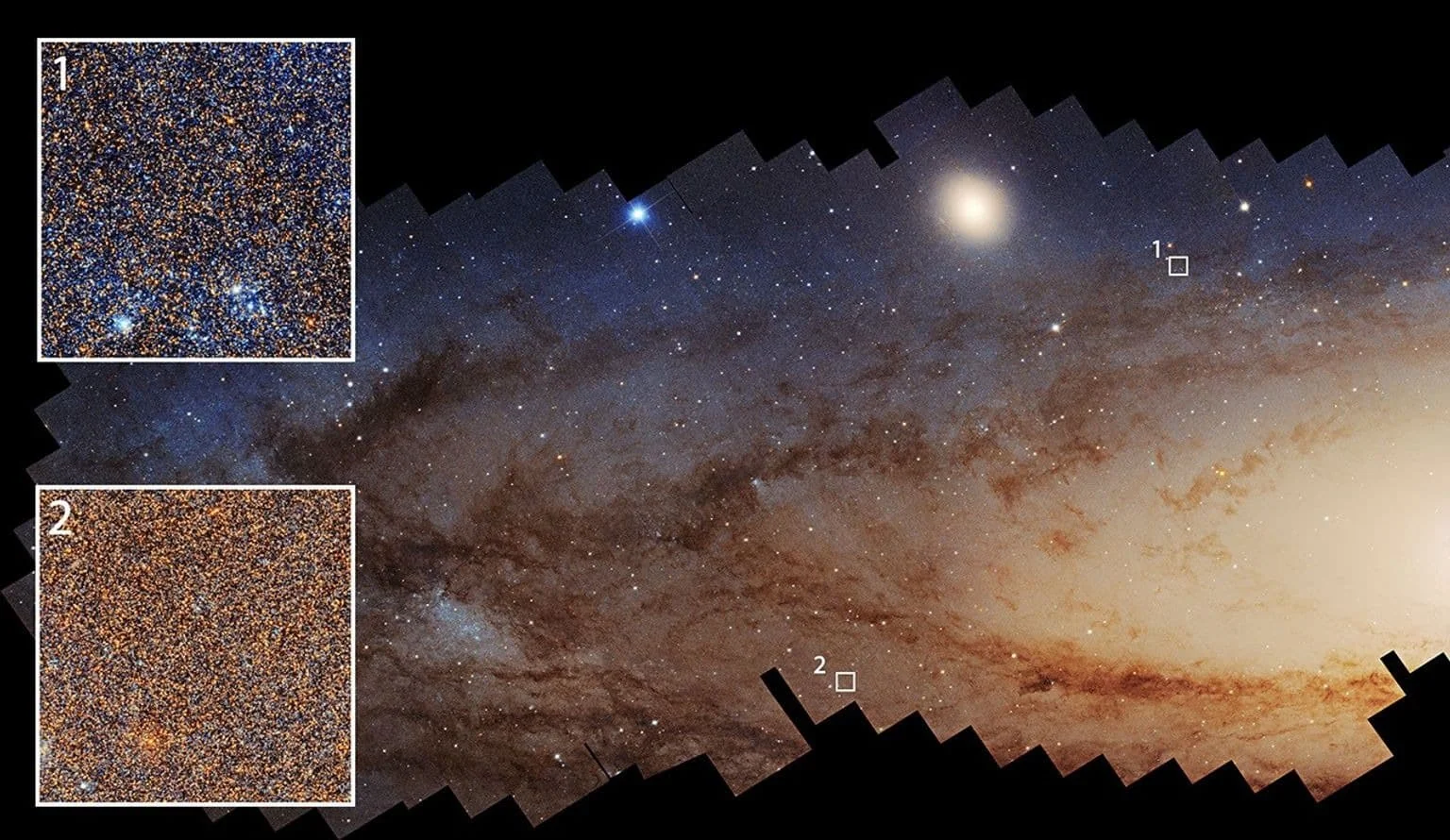
According to recent astronomical observations, the birth rate of new stars in the Andromeda galaxy, the large spiral galaxy closest to us, has been continuously declining over the past half billion years. The results of space research are of great importance for understanding evolutionary processes in the universe and how giant star systems age. Ixbt.com reports this.
According to ixbt.com, to reach this conclusion, scientists deeply analyzed data from the U.S. National Space Agency's Hubble space telescope. This unique instrument made it possible to accurately measure the parameters of approximately 200 million individual stars in the disk of the Andromeda galaxy. Researchers combined the results of two major surveys covering nearly two-thirds of the galaxy's disk.
How was stellar history reconstructed through colors?
The obtained space images were divided into thousands of small sections, each equal to 300 light-years. Specialists reconstructed the history of star formation based on the color of the stars. It is known that young massive stars are blue and have a short lifespan, while older and less massive stars acquire a reddish hue. This method clearly showed scientists how the star formation process has changed over time.Calculations showed that 500 million years ago, Andromeda formed stars equivalent to approximately 1 solar mass each year. While this figure dropped to 0.5 solar masses 40 million years ago, at the time of current observations it amounts to just 0.2 solar masses per year. Consequently, the rate of decline has accelerated significantly over the past 40 million years.
Reasons for the decline in activity and future plans
The reduction in main activity occurred in a star-forming ring located about 32,000 light-years away from the center of the galaxy. According to scientists, this decline was not caused by a lack of gas and dust necessary for the birth of new stars. The situation is related to the natural fading process following a period of high activity. It was previously established that Andromeda experienced a powerful starburst 2 billion years ago as a result of a collision or merger with another galaxy.The authors of the study found that the disk region near the M32 dwarf galaxy also began to lose its activity 60 million years ago. This can help clarify the timing of a possible interaction between M32 and Andromeda, although a direct connection has not yet been proven. In the future, astronomers plan to supplement these results with data from ground-based observatories and the future Nancy Grace Roman space telescope, which has a wider field of view.


Comments 0
…