


Scientists find traces of an extinct unknown species in human DNA
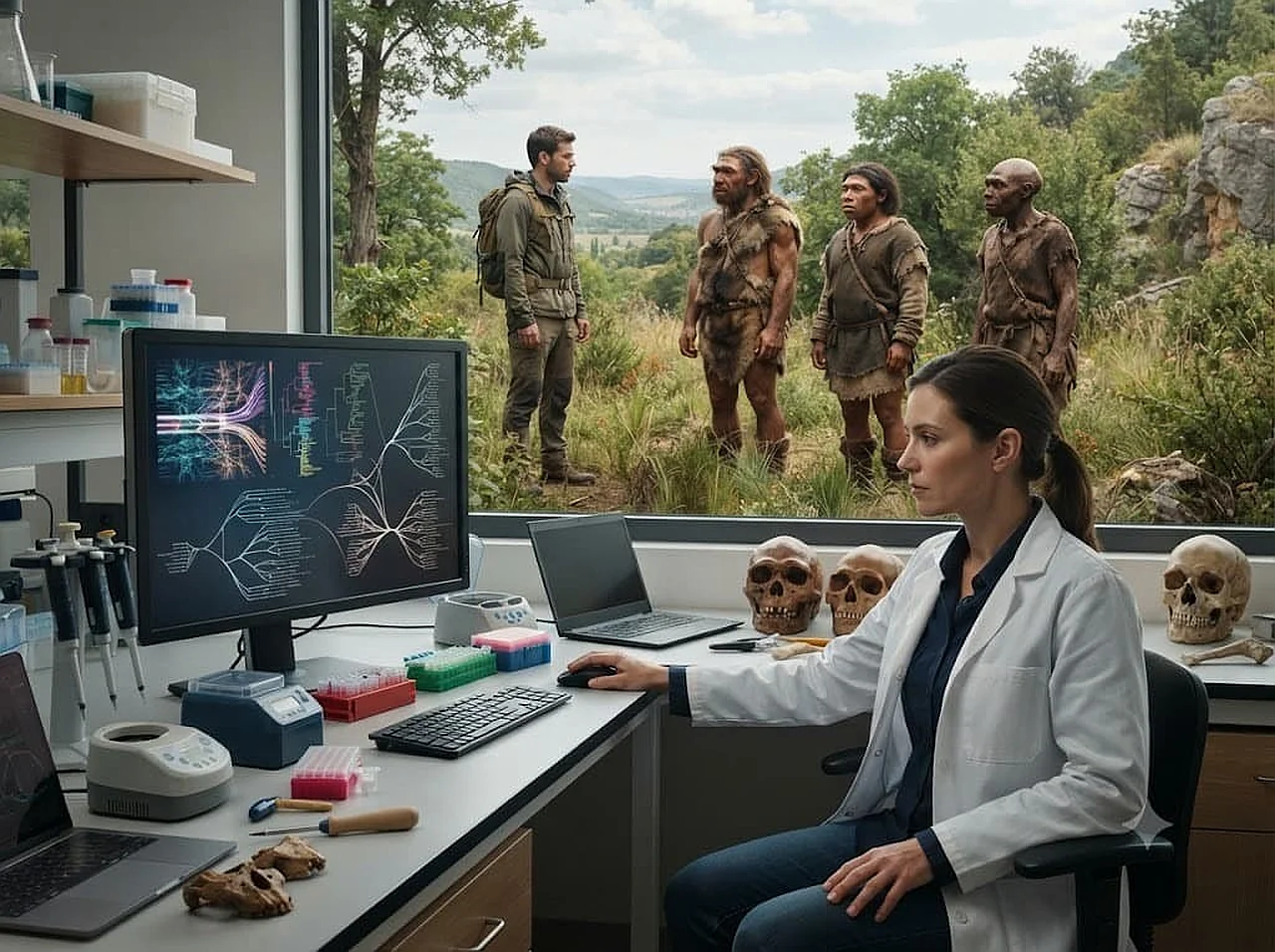
An international team of researchers has identified genetic traces belonging to a previously unknown ancient hominin species within the modern human genome. As highlighted in a study published in the journal Science, this discovery was achieved using the new TRACE algorithm, which eliminates the need for DNA samples extracted from fossils. This approach demonstrates that the history of human evolution is a complex process in which various species interbred multiple times over millennia. This is reported by Ixbt.com reports .
Currently, the main challenge in paleogenetics is the scarcity of ancient samples. It is impossible to preserve DNA from organisms that lived in hot climates or more than a million years ago. Consequently, regions and populations where no fossil samples were previously found remained closed to researchers. The newly developed TRACE method does not compare modern genomes with ready-made reference samples in a database; instead, it reconstructs evolutionary trees—ancestral recombination graphs—that track the inheritance process of each DNA fragment over hundreds of thousands of years.
According to ixbt.com, when tested using simulations, this software algorithm demonstrated an accuracy of approximately 90 percent while keeping the probability of error below 0.25 percent. Afterward, the scientists applied it to data from the 1000 Genomes Project, which covers populations in Africa, Europe, Asia, and Oceania. As a result, the algorithm not only identified previously known Neanderthal and Denisovan genes but also found a completely new 'ghost' admixture that does not match any known group.
Secrets of the unknown population
It turned out that this mysterious genetic component is present in the genomes of all humans on Earth—both Africans and representatives of other continents—in amounts ranging from 0.5 percent to 1.1 percent. The fact that these fragments are shorter than Neanderthal DNAs indicates the antiquity of the phenomenon. Statistical analyses showed that the ancestors of this group diverged from modern humans about 830,000 years ago, and their interbreeding process occurred before humanity left Africa.The study also provided important conclusions regarding the genetic landscape. According to the TRACE map, ancient DNA covers more than 70 percent of the human genome. Interestingly, these 'ghost' traces were also found in 'genetic deserts' previously thought to be cleared of Neanderthal and Denisovan genes. For example, on chromosome 7, where the speech-related FOXP2 gene is located, the frequency of this admixture reaches 13.3 percent. This implies that natural selection did not work against all ancient genes, but only against specific lineages carrying harmful genetic loads.
Ultra-ancient heritage passed through intermediaries
Another layer of the study was discovered in the genome of the population of Oceania—citizens of Papua New Guinea, Vanuatu, and the Santa Cruz Islands. TRACE highlighted segments nested within Denisovan DNA that show extremely deep divergence. Experts interpret this as an 'ultra-ancient' introgression, meaning that the Denisovans themselves interbred with an even more ancient population and later passed these genes on to modern humans.The divergence time of this lineage dates back to about 1.77 million years ago, and scientists consider Homo erectus the most likely candidate. While there is no direct physical evidence for this yet, the new computational method provides the first precise quantitative estimate independent of fossil preservation. Genome archaeology based on computers and algorithms is becoming the sole path to unlocking the secrets of a million-year history.


Comments 0
…