


China creates fish-like robot: a new era underwater may begin (video)
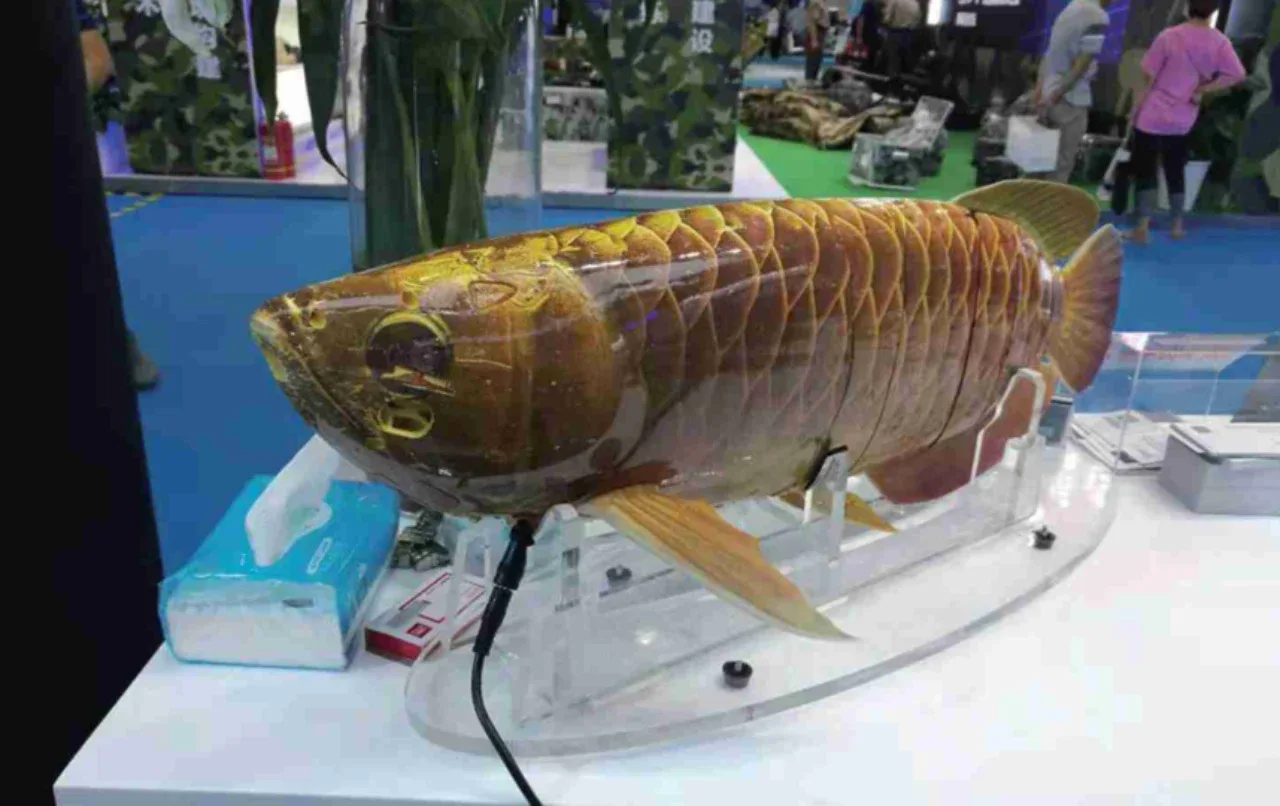
Looking at a fish moving underwater, it is becoming increasingly difficult to realize that it is not a living creature. A new bionic robot fish demonstrated in China has attracted attention by mimicking the movements of a natural fish.
Most interestingly, this technology is not just a regular robot toy. Experts are exploring the possibilities of using such devices in the future to monitor and inspect the underwater environment, and to perform tasks that are complex for humans.
Why does the robot differ from ordinary devices?
Most conventional underwater robots use propeller-driven systems. The bionic robot fish, on the other hand, copies nature's millions of years of "engineering solutions"—it mimics the movements of a fish's body and fins.
This approach allows the robot to move softer, more flexibly, and with greater maneuverability in the water.
Scientific research also notes that fish-like propulsion systems can have higher maneuverability and efficiency compared to traditional propeller propulsion.
How does artificial intelligence "help" the robot?
One of the most important aspects of this technology is the ability to adapt movement to the environment, rather than relying solely on pre-issued commands.
Modern robot fish combine sensors, control algorithms, and machine learning methods. For example, a soft robot fish developed by Chinese scientists is equipped with a system capable of sensing environmental changes and adjusting its swimming mode.
Therefore, in the future, such robots may perform tasks such as detecting underwater obstacles, changing direction, and navigating complex environments more independently.
Looking like a "live fish" is not just a design
The robot's resemblance to a real fish was not done just for appearance.
Using the shape of a natural fish's body, tail movement, and fins is considered one of the most efficient methods of movement in water. Therefore, engineers are trying to transfer these mechanisms from nature into robotics.
Some new-generation robot fish are even specially adapted to move in narrow and complex underwater areas.
Where can they work in the future?
One of the most realistic application areas for such technologies is underwater inspection and monitoring.
It was reported that one of the bionic robot fish demonstrated at the 2026 Robotics Conference in China was developed to inspect underwater objects and reduce human labor in hazardous conditions. It also features a sensor system that allows for obstacle detection.
In the future, such devices can be used for tasks such as:
inspecting underwater structures;
monitoring pipes and utilities;
conducting scientific research;
monitoring the aquatic environment;
collecting data in places inconvenient for humans
and similar tasks.
The most interesting aspect — robots are moving increasingly "alive"
A new trend in robotics is that engineers are not limited to creating only metal structures. They study the most efficient movement mechanisms in nature and transfer them to artificial systems.
Research is also being conducted on robots inspired by the movements of fish, rays, and even sharks. Works published in 2026 show increased focus on combining flexible structures, sensors, and autonomous control in bionic underwater robots.
The "ordinary fish" in the sea may actually be a robot
Today, this technology is mostly in the experimental and research stage. However, as the appearance, movement, and environmental adaptability of robot fish improve, perceptions of underwater robots may also change.
Perhaps in the near future, it will no longer be as easy to distinguish whether every "fish" moving underwater is a living creature or not.
And the future of underwater robotics is increasingly resembling nature.



Comments 0
…