


NASA tested a swarm of autonomous robots with AI
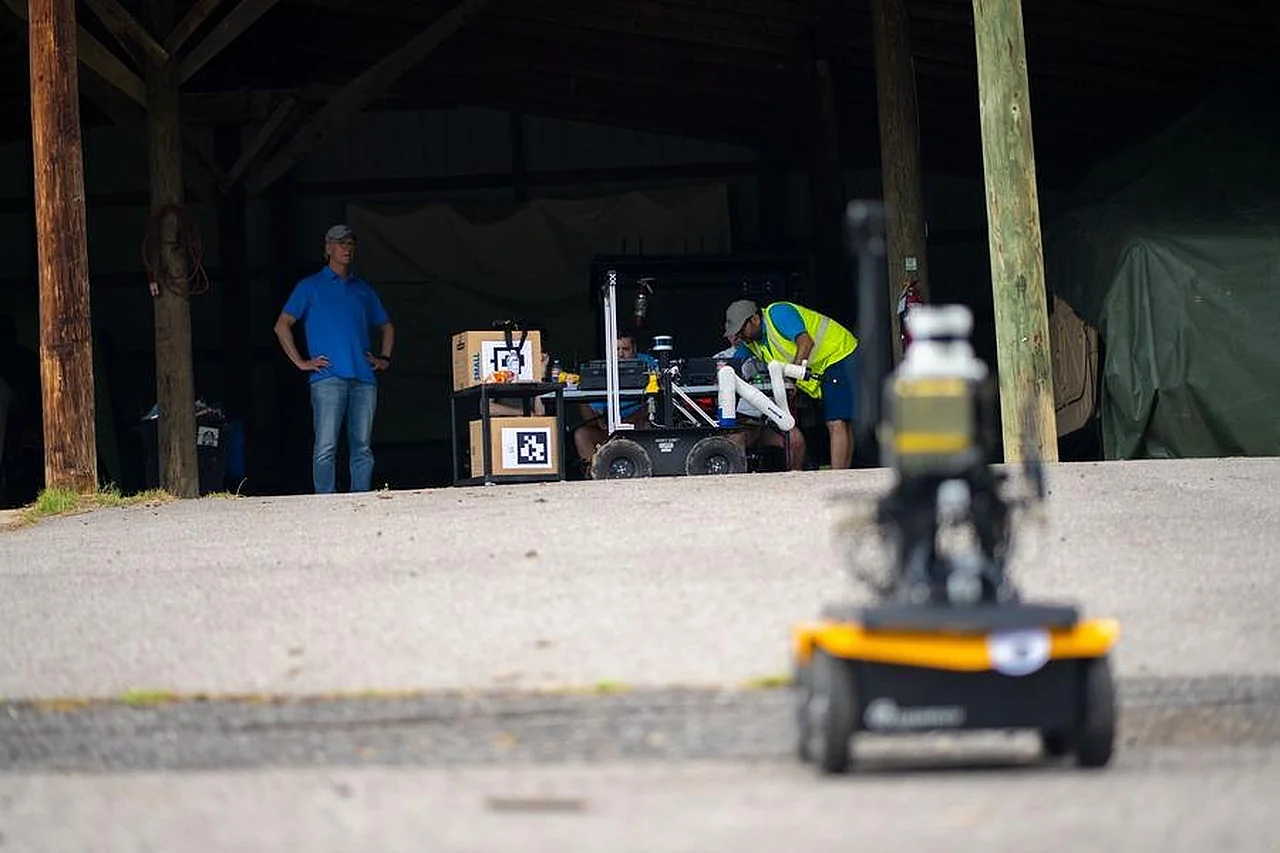
NASA has tested a new technology that could revolutionize space exploration. In July, the NASA ASTRA (Adaptive Sensing Technology for Responsive Autonomy) team successfully completed field tests of a specialized group of three robots that independently define scientific tasks and coordinate with each other without direct commands from Earth. This approach will significantly accelerate and improve the efficiency of exploring distant planets in the future. This is reported by Ixbt.com reports .
Intelligent system for independent decision-making
According to ixbt.com, during the test, the drone only received initial scientific goals from humans, after which it selected the area and independently decided which device was suitable for the task by comparing risks and expected scientific results. Throughout the cycle, the system continuously checked for environmental hazards, re-evaluated the strategy based on new data, and reported to operators.The robot swarm moving on the test site consisted of one UAV and two rovers equipped with different instruments. Specifically, the drone performed search and reconnaissance, the first rover assisted in lidar mapping and navigation, while the second rover performed the task of collecting samples using a robotic arm.
Ability to dynamically change tasks
The main question in the field test focused on the robot swarm's ability to autonomously switch to a new goal during an ongoing task. The system showed high results in both cases: when the lead drone identified an additional object of interest, it called another device to study the finding without interrupting the current mission.Decision-making programs relied on both objective and subjective criteria simultaneously. These include factors such as equipment availability, distance to the target, movement speed, scientific value of mapping the area, and the importance of obtaining new data outside the original plan for scientists.
Bethany Theiling, lead researcher for the ASTRA project at NASA's Goddard Space Flight Center, explains that this technology allows missions to perform tasks that were previously impossible. The reason is the presence of an autonomous decision-making system on board that can evaluate all criteria simultaneously.
This advanced technology is designed for scenarios where manual control is impossible due to signal latency. For example, this robot swarm will be of great importance for unmanned missions to outer planets or in situations where it is considered too dangerous for astronauts to work in hard-to-reach areas of the Moon and Mars.


Comments 0
…