


How was the assassination attempt on Ali Khamenei carried out by the USA?
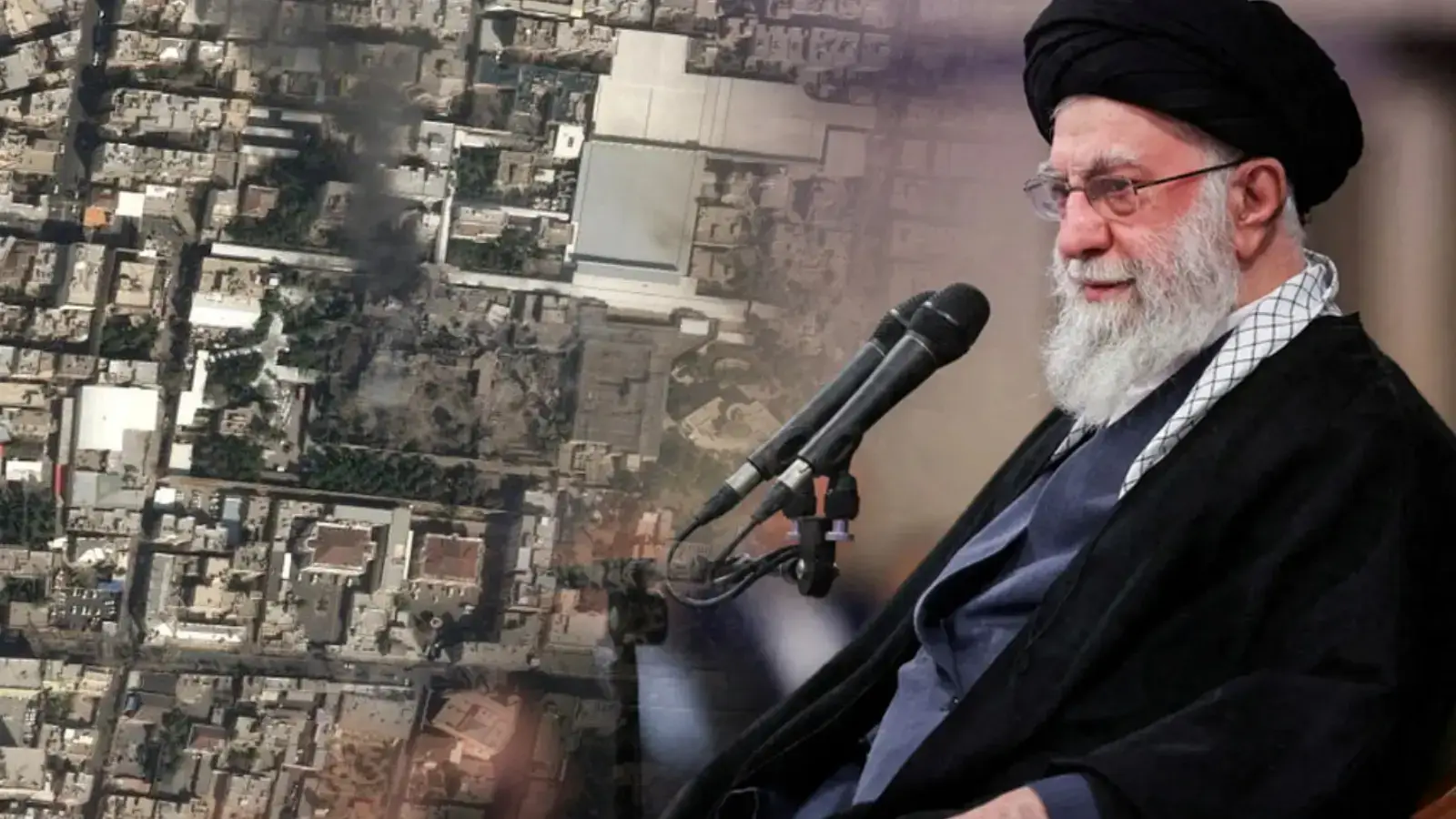
Photo: Reuters / The building housing the offices of the Iranian leader and president after the Saturday morning attack.
New and highly noteworthy details are being revealed surrounding the US and Israel's attack on Iran. The New York Times, citing sources familiar with the operation, wrote that on the eve of the attack, the US Central Intelligence Agency paid special attention to the location of the main target - Iran's Supreme Leader, Ali Khamenei. Reuters, citing a similar source, reported that US intelligence has received accurate information about Khaminai's location.
According to reports, the US Central Intelligence Agency (CIA) has been gathering information about Khaminai's movements, security routes, and potential meeting locations for several months. Sources say that recently, reports have emerged suggesting that Iran's top leadership will meet on February 28th in the central Tehran area, where government and security agencies are located. Most importantly, it is said that intelligence "highly accurately" indicated that Ali Khaminai would also be around during this meeting. These claims mainly rely on NYT sources; official US agencies have not publicly confirmed all the details of this.
This information was assessed as a great opportunity for the USA and Israel. Because through this, it became possible to simultaneously strike both the point where the Iranian political-security elite gathered and the location close to the supreme leader. Reuters writes that the attack may have been previously scheduled for a different time, but updated intelligence information about a high-level meeting has affected the pace and timing of the operation.
As mentioned in the text, Iran's highest-ranking officials - a number of individuals in the military and security bloc - are expected to participate in this meeting. Later, reports of death for some major names began to be confirmed in official or semi-official sources. In particular, Reuters and other sources reported the death of Muhammad Pakpur, and some sources close to Iran also reported the death of Ali Shamkhani.
The attack itself is described not as a simple operation, but as an operation organized based on precise calculations. According to sources, relatively few aircraft, but capable of long-range flight and equipped with high-precision strike weapons, were involved. It is reported that the strike was carried out simultaneously at several points in Tehran. Reuters describes this attack as a highly coordinated operation, coinciding with the time when the inner circle of the Iranian leadership gathered.
This event was an unexpected and heavy blow to Iran. According to NYT sources and Reuters, while Tehran was aware of the threat of war, it did not take sufficient precautions against such a rapid and targeted attack scenario. In other words, US-Israel intelligence cooperation and information exchange became the strongest side of the offensive, while Iran remained seriously open at this point.
Sources also mention another important aspect: the strikes were not limited to the circle close to the supreme leader, but could also have been directed at the top level of the Iranian intelligence system. This claim has not yet been independently confirmed in all its details, but several publications, citing the NYT, report that the points where the Iranian intelligence leadership is located have also been targeted. Therefore, for now, it is better to accept this part with caution.
In short, the current picture suggests that this attack is not just a military strike, but the result of months of observation, high-precision reconnaissance, and close coordination between the US and Israel. If new confirmations emerge in the coming hours, this operation may go down in history as one of the most important and arduous reconnaissance and military operations in the Middle East in recent years.



Comments 0
…