


Schengen Crisis Across Europe: Is the “Storm” in Ceuta Fracturing Europe?
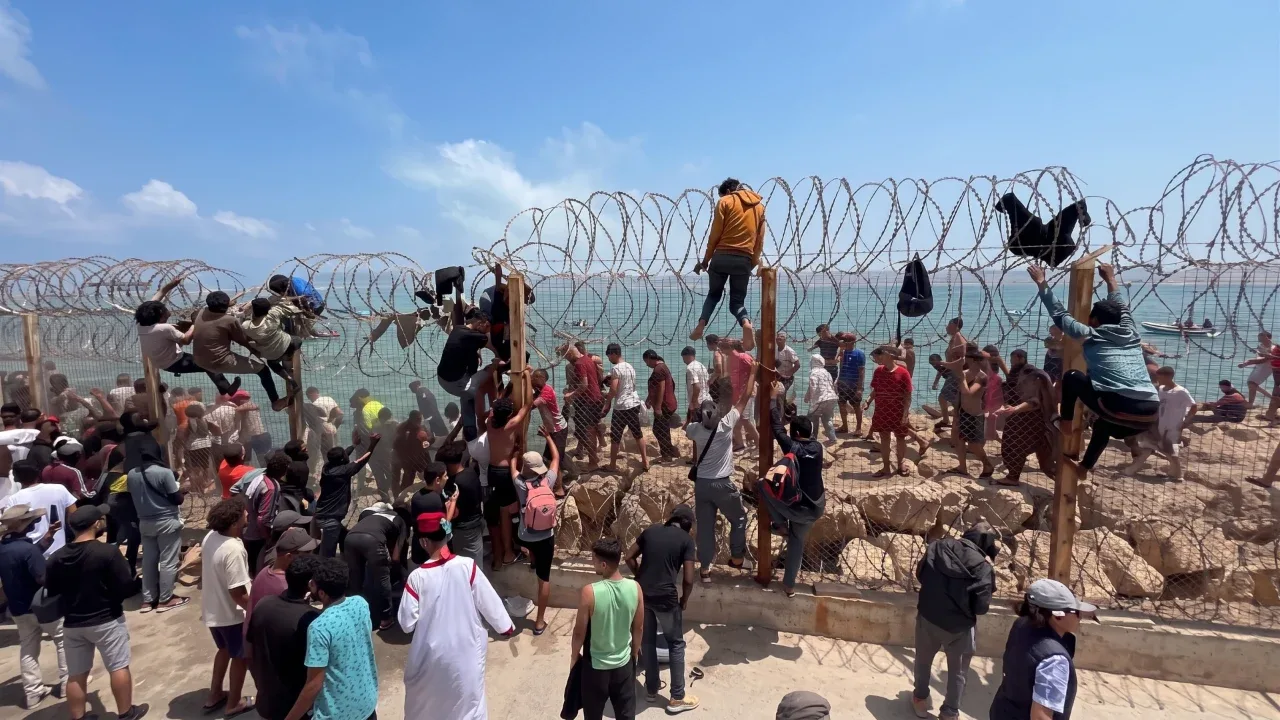
The Schengen Area, considered one of the European Union's most vital achievements, is facing another severe test. Following the mass breakthrough of tens of thousands of illegal migrants into Ceuta, a Spanish enclave in North Africa, Italy announced the temporary suspension of the free movement regime between Rome and Madrid. This decision has further deepened the geopolitical and security crisis on the European continent.
1. Borders Closing: An Unexpected Blow from Rome to Madrid
In a sudden and sharp move, the Italian leadership tightened controls on its maritime and land borders with Spain and temporarily suspended the Schengen free movement regime. Rome also ordered maximum reinforcement of checks along its land border with France.
Italian Foreign Minister Antonio Tajani justified this emergency measure as necessary to ensure national security and protect the external borders of the European Union.
According to Italian publications ANSA and La Stampa , this decision took effect immediately following an emergency meeting chaired by Interior Minister Matteo Piantedosi. The Italian Interior Ministry confirmed that entry points for arrivals from Spain are temporarily closed, but stated that this restriction does not affect the legal right of European Union citizens to travel.
2. The “Migration Storm” in Ceuta: Mass Influx of Nearly 60,000 People
The event that shook all of Europe occurred in Ceuta, an autonomous Spanish city located on the African continent. Migrants aiming to reach Western Europe via Morocco massively breached border barriers within just a few days.
While the Spanish Interior Ministry reported that nearly 50,000 people entered the city illegally in recent days, local authorities in Ceuta claim the number has reached 60,000.
The Situation in Ceuta in Numbers:
50,000 – 60,000 individuals — Estimated number of migrants who illegally broke into Ceuta;
37,500 individuals — Migrants returned under the agreement between Spain and Morocco (according to RTVE);
2 main transit points — The enclaves of Ceuta and Melilla remain key gateways for crossings from Africa to Europe.
According to Spanish state broadcaster RTVE , although the governments of Madrid and Rabat have accelerated returns, the sheer intensity of the flow remains unprecedented.
3. Fiery Duel Between Meloni and Sánchez: “Stunning” Sights and Accusations
The events in Ceuta have sparked an open political war among European leaders. Italian Prime Minister Giorgia Meloni sharply criticized the situation in Spain, describing the footage from Ceuta as “stunning and horrific.”
“Uncontrolled and mass illegal migration is not merely a humanitarian issue, but a direct threat to Europe's borders and security,” — Meloni emphasized.
Spanish Prime Minister Pedro Sánchez did not leave these criticisms unanswered. He reminded that European nations should show solidarity rather than blame one another. At the same time, relying on official statistics, Sánchez delivered a “counter-punch” against Rome:
“Looking at the numbers, the largest share of illegal migrants entering the European Union falls precisely on Italian shores,” — Sánchez stated.
4. Crisis of the Schengen System: Has Europe's “Soft Spot” Burst?
Expertsnote that Ceuta and Melilla have for years been primary targets for illegal migrants striving from Africa to Europe. Morocco plays a significant role in this flow as a transit and geopolitical pressure tool.
Italy's temporary suspension of the Schengen regime demonstrates a severe fracture in the European Union's single security and border policy:
Restoration of Internal Borders: The tightening of checks between France, Italy, and Spain casts doubt on “free movement,” a foundational principle of Schengen.
Humanitarian and Political Pressure: The arrival of tens of thousands of people into small territories like Ceuta within days has paralyzed local infrastructure.
Signal for Brussels: Unless the European Union creates a unified and robust mechanism to protect external borders, such crises will continue to worsen relations among member states.
5. Conclusion: What Awaits Europe?
Italy's decision is not just temporary border control, but the next phase of a deep crisis in the European Union's migration policy. As the situation in Ceuta remains unstable, geopolitical tensions between Rome and Madrid and debates surrounding the future of Schengen are certain to escalate further.
Against the backdrop of political processes in Ukraine and Eastern Europe, this migratory “storm” in Southern Europe is forcing Brussels to urgently rethink external border security.



Comments 0
…