


First brain tumor removal using AI
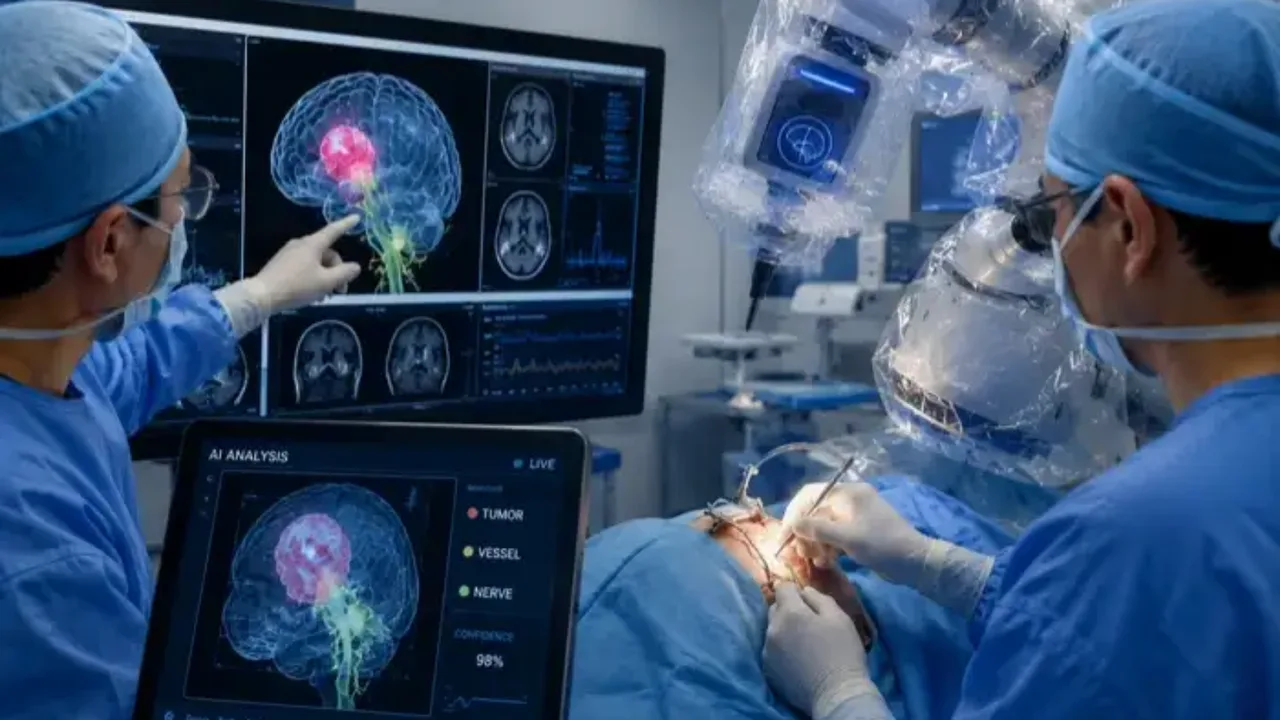
In the United Kingdom, for the first time in the world, a brain surgery was performed with the real-time assistance of artificial intelligence. The new technology helped surgeons more accurately distinguish critical blood vessels and nerves during the operation, allowing for a safer tumor removal. This was reported by the BBC.
It is noted that 48-year-old Rhys Hibbert, a father of two from Bedfordshire, underwent the surgery at the University College London Hospital. Doctors stated that if the tumor had not been removed in time, the patient could have lost his vision.
Hibbert was diagnosed with an 11-millimeter non-cancerous tumor on his pituitary gland. Located at the base of the brain, this gland produces essential hormones that regulate growth, metabolism, blood pressure, and body temperature.
However, the location of the tumor made the surgery complex. It was situated very close to the carotid arteries, which supply blood to the brain, and the optic nerves responsible for vision.
Over time, the tumor began to put pressure on the optic nerves, causing a decline in Hibbert's peripheral vision. Therefore, doctors decided not to delay the surgery.
During the operation, surgeons reached the base of the brain through the nose using an endoscope—a device equipped with a thin camera. However, because the tumor was hidden behind layers of bone and dura mater, it required careful removal.
It was during this process that artificial intelligence assisted the surgeons. The AI analyzed the live video feed of the surgery, tracked the surgical instruments, and marked the likely areas where blood vessels and nerves were located.
As a result, the system helped specialists determine the safest way to remove the tumor. In other words, the AI did not replace the surgeon but provided them with crucial additional information during the procedure.
Researchers trained this AI system based on videos of hundreds of pituitary tumor removal surgeries. Specialists marked blood vessels and nerves in the videos, teaching the AI to recognize critical structures in the brain.
One of the surgeons, Professor Hani Marcus, stated that the AI system was trained on more surgical data than many specialists might see in their entire careers.
He emphasized that such technology could act as a "second expert eye" for surgeons. This could help reduce surgical risks, especially in complex and delicate areas like the brain.
Experts consider this result an important step in expanding the possibilities of using artificial intelligence in neurosurgery.


Comments 0
…