


Mercury is shrinking faster than expected: scientists discover new fact
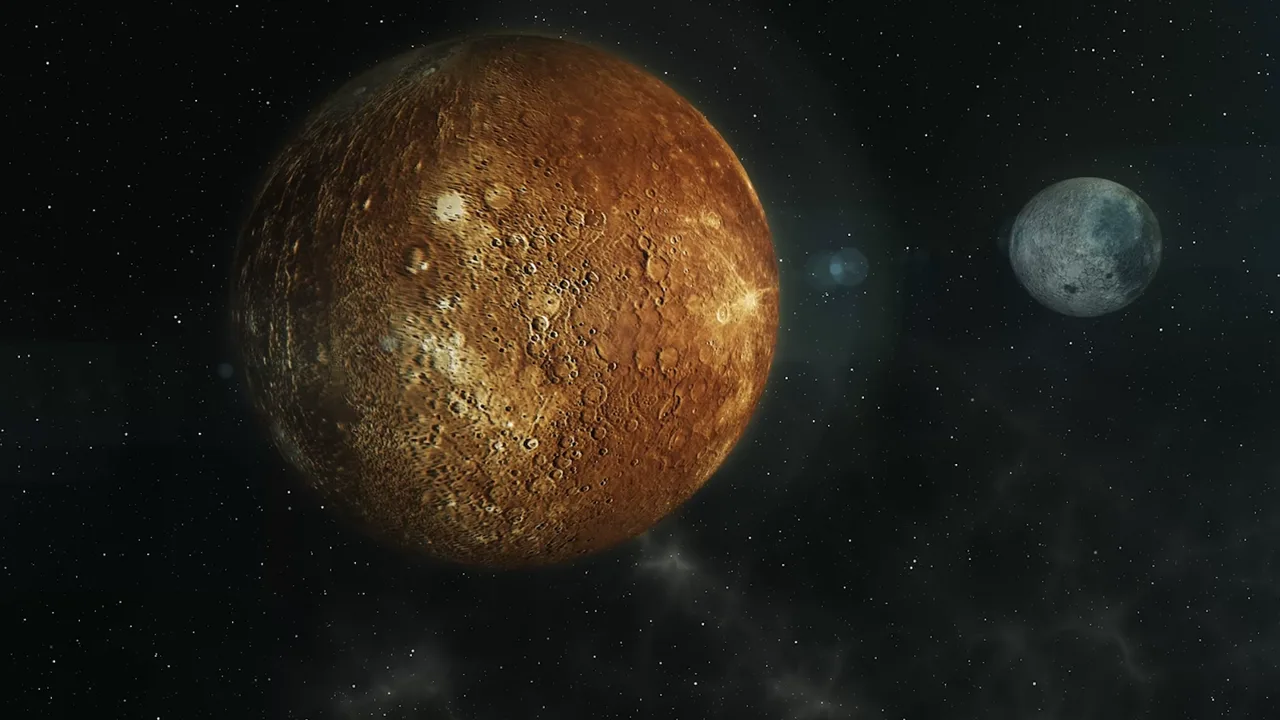
The planet Mercury may be shrinking 30 percent more than previously estimated. Scientists have determined that the planet's diameter has shrunk by up to 23 kilometers. Research on this was published by the Associated Press.
It is reported that the study was conducted by scientists at the German Aerospace Center's Institute of Planetary Research. The authors of the study noted that the constant modification of Mercury's surface due to meteorite impacts may have masked the true extent of the planet's contraction.
Mercury is the smallest planet in the solar system and the closest to the Sun. Its diameter is approximately 4,900 kilometers. It has been shrinking since the planet formed, about 4.5 billion years ago.
It is noted that this is caused by the cooling of Mercury's interior. As the planet's relatively large iron core cools, it shrinks in volume. This leads to the compression of the mantle and crust, causing various wrinkles and cracks to appear on its surface.
Scientists compared geological maps of Mercury with updated maps of the planet's surface. As a result, it was found that there are fewer signs of contraction in the most uneven areas. Researchers hypothesize that some wrinkles may have been buried under debris caused by meteorite impacts.
Study author Gaku Nishiyama says the new calculations will help better understand Mercury's evolution.
Currently, the BepiColombo spacecraft sent by Europe and Japan is flying toward Mercury. It is expected to enter the planet's orbit in November and study the exact rate of Mercury's contraction.
For information, Mercury is the smallest planet in the solar system. It orbits the Sun once every 88 days. One day on the planet is equal to approximately 59 Earth days. Because Mercury's atmosphere is very thin, temperatures on its surface can rise to 430 degrees during the day and drop to minus 180 degrees at night.


Comments 0
…