


New C8 Alliance Formed in Europe: Zelenskyy Announces Format Consisting of 8 Countries
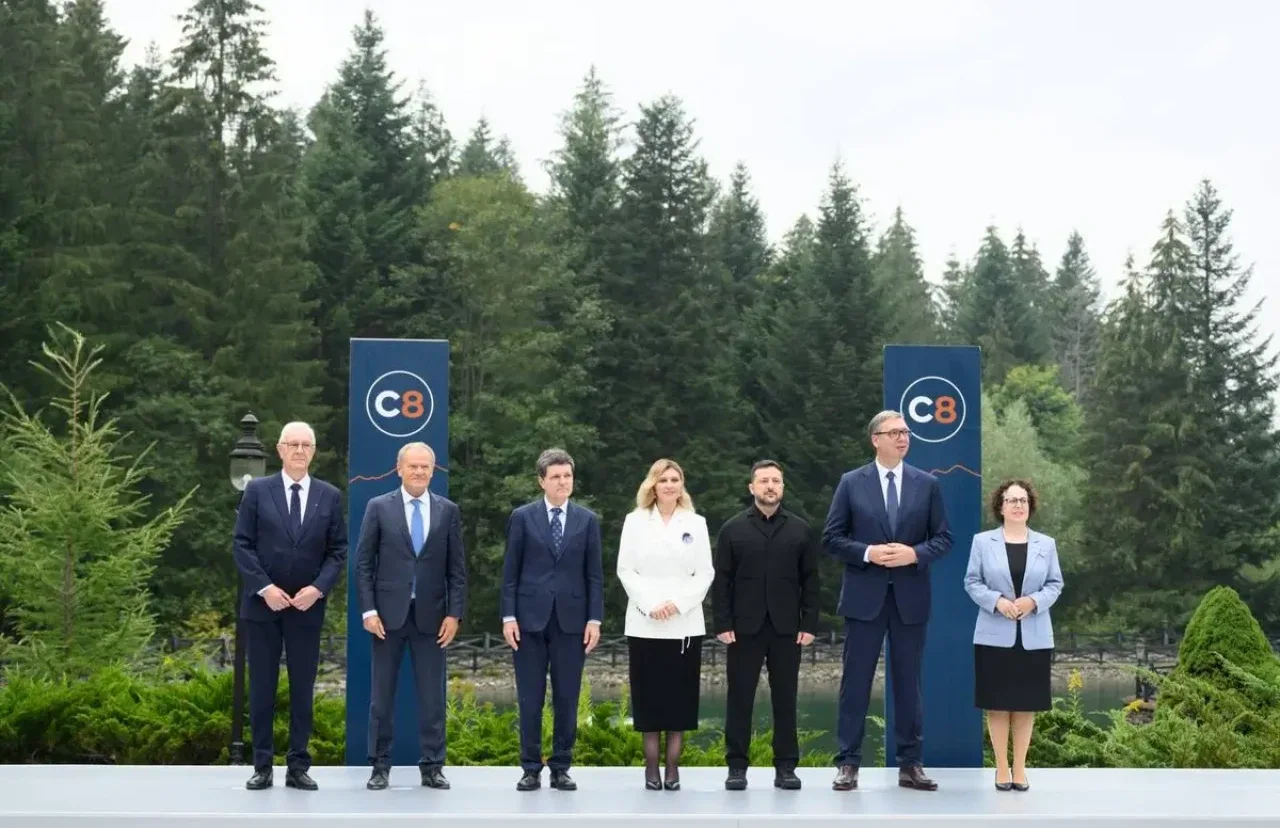
A new diplomatic and economic structure aimed at changing the balance of regional powers in the geopolitical arena of Eastern and Central Europe has begun its work. Ukrainian President Volodymyr Zelenskyy officially announced the launch of a new international block — the "Carpathian Eight" (C8) format. This strategic alliance aims to unite Ukraine and its direct European neighbors — Romania, Serbia, Poland, Slovakia, the Czech Republic, Austria, and Hungary, and through them, the entire European Union into a single cooperation platform.
At the historic first C8 summit hosted by Ukraine's Ivano-Frankivsk region on September 18, Polish Prime Minister Donald Tusk, as well as Serbian and Romanian presidents Aleksandr Vuchich and Nicușor Dan participated in person. However, the event was not without diplomatic demarches and intrigues: Slovak Prime Minister Robert Fico, who had stated he would visit Ukraine just a day before the summit, unexpectedly canceled his visit and did not attend the meeting; according to "Yevropeyska Pravda," Bratislava is participating in the summit at a much lower diplomatic level. Nevertheless, the conference covered a huge business scale: about 550 major business representatives are participating, and in the end, exactly 1 billion euros in investment and trade agreements are expected to be signed.
So, what geopolitical goals does the "Carpathian Eight" pursue, why did Robert Fico refuse to come to the summit, and how will the new C8 format change the European security architecture?
"8 countries and 4 strategic pillars": Key directions of the C8 format
Main details of the "Carpathian Eight" presented by Zelenskyy:
8 participating countries: Ukraine, Poland, Romania, Serbia, Slovakia, the Czech Republic, Austria, and Hungary;
4 main cooperation fronts: Members of the block plan to form a single chain in regional security, energy security and independence, transport logistics, and cross-border economy;
Integration of regions and communities: The format will develop direct ties not only between heads of state, but also between border regions and local communities located in the Carpathian region;
Bridge with the European Union: Since the majority of C8 members are EU countries, the structure will be a tool to accelerate Ukraine's full integration into European infrastructure.
"1 billion euros and 550 business giants": The summit in Ivano-Frankivsk in figures
Economic indicators of the first founding summit:
About 550 business representatives: A major business forum is being held within the framework of the summit with the participation of the region's largest enterprises, investment funds, and manufacturers;
1 billion euro package: At the end of the negotiations, a package of agreements worth 1 billion euros will be signed to expand logistics corridors, interconnect energy networks, and stimulate mutual trade;
Rank of top leaders: The personal arrival of Polish Prime Minister Donald Tusk, Serbian leader Aleksandr Vuchich, and Romanian President Nicușor Dan proved the high political status given to the structure.
"Fico's absence and behind-the-scenes conflicts": Diplomatic analysis
Conclusions of international political scientists regarding the new C8 format and summit conflicts:
Robert Fico's position: The Slovak Prime Minister's last-minute refusal to attend the summit is assessed as being related to the complex aspects of Bratislava's relations with Kyiv and the country's interests in energy issues with Russia;
The Hungary and Serbia factor: The involvement of Hungary, which often holds an alternative position in the European Union, and Serbia, which is not a member of the bloc, shows that Zelenskyy's diplomacy is striving to create new compromise grounds;
New hegemony of Central Europe: This alliance, emerging on the initiative of Poland and Ukraine, can become a strong economic and defense hub replacing traditional formats like the "Weimar Triangle" or the "Visegrad Group."
The launch of the "Carpathian Eight" is becoming one of the largest regional initiatives by Central and Eastern European countries to strengthen security and cross-border economy in the face of common threats.
In your opinion, can the "Carpathian Eight" (C8) format become a new independent center of power within the European Union? How will the personal absence of Slovak Prime Minister Robert Fico at the summit affect the future solidarity of this new alliance? Leave your analytical thoughts in the comments and share this review of the hot geopolitical changes in Europe with all international politics enthusiasts and your friends!



Comments 0
…