How are Central Asian countries participating in the European Union's 'Global Gateway' initiative?
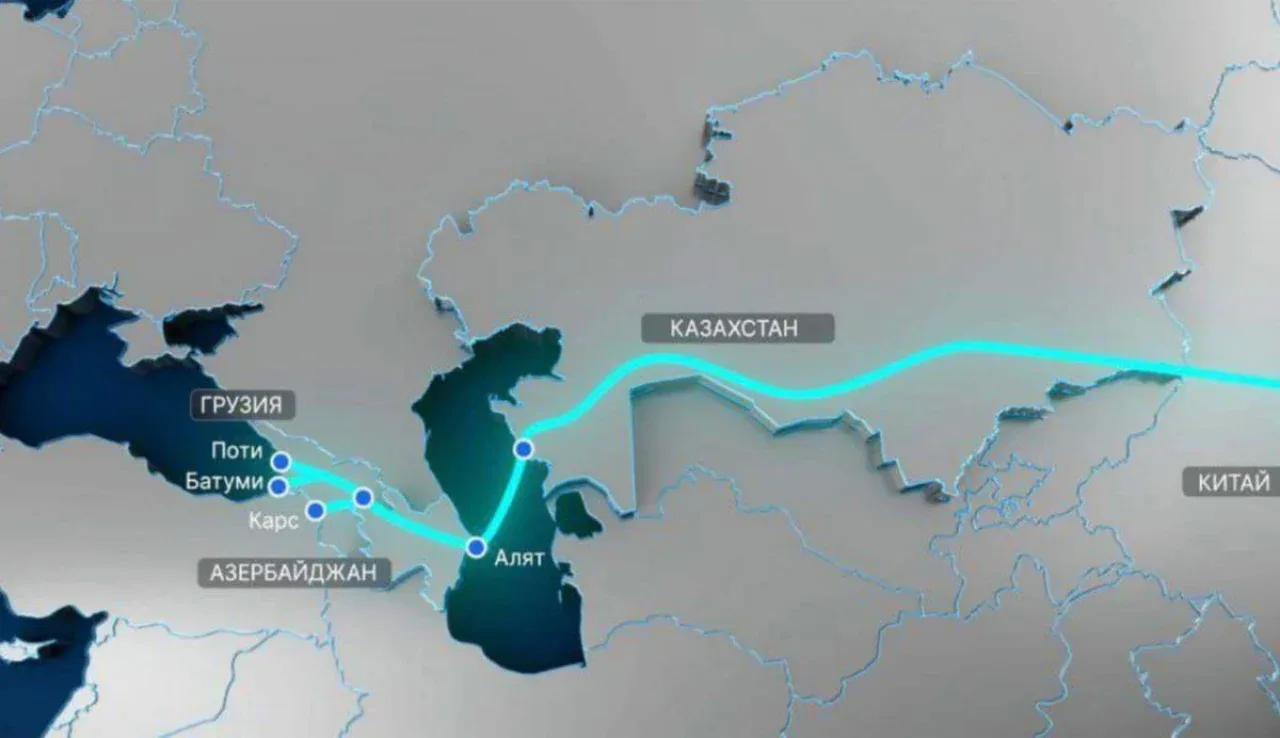
The second interregional ministerial meeting involving countries from the Black Sea region, the South Caucasus, and Central Asia took place in Brussels. At the meeting, Kazakh Foreign Minister Mukhtar Tleuberdi emphasized that the republic considers the Trans-Caspian International Transport Route (the "Middle Corridor") to be the key link connecting Europe and Asia, calling on all parties to jointly develop it to diversify trade routes. According to the Kazinform news agency, representatives from Tajikistan and Turkmenistan also actively participated in the event, expressing their interest in cooperation in the fields of transport, green energy, and digitalization.
Kazakhstan and the 'Global Gateway' initiative
In his speech, Mukhtar Tleuberdi noted that the development of transit-transport potential and the modernization of infrastructure are strategic priorities for Kazakhstan. Astana is ready to further strengthen ties with European and regional partners in the areas of transport, logistics, energy, and digitalization. In particular, the importance of attracting investments and improving transport infrastructure within the framework of the European Union's Global Gateway initiative was highlighted. The Kazakh side announced its readiness to jointly optimize customs clearance and logistics processes to create an efficient and sustainable Eurasian transport network.
Participation of Tajikistan and Turkmenistan and the global context
At the meeting, Tajikistan's Deputy Foreign Minister Idibek Kalandar outlined Dushanbe's priority tasks in developing transit-transport infrastructure, green energy, and digitalization. Representatives from Turkmenistan also participated as part of the Central Asian delegation, confirming their support for deepening cooperation in transport, digital, and energy networks.
This meeting took place against the backdrop of numerous obstacles emerging on major maritime routes. In a statement made before the meeting, the European Union's High Representative for Foreign Affairs and Security Policy, Kaja Kallas, emphasized that restrictions in the Strait of Hormuz, the blockade of the Black Sea corridor, and problems in the Bab-el-Mandeb Strait are forcing countries to actively seek alternative trade routes and energy supply corridors. According to her, in such conditions, the Central Asia, South Caucasus, and Black Sea regions are becoming crucial in expanding connections between Europe and Asia.
Participants and directions | Main goals and tasks |
Kazakhstan | Developing the "Middle Corridor" and modernizing infrastructure within the framework of "Global Gateway" |
Tajikistan and Turkmenistan | Expanding regional cooperation in transport, green energy, and digitalization |
European Union | Increasing trade flows threefold by 2030 and reducing transit time |
According to a European Commission press release, the "Middle Corridor" has been included among the European Union's flagship initiatives. Its main goal is to connect Central Asia directly to European markets via the Caspian Sea, the South Caucasus, Turkey, and the Black Sea, thereby aiming to sharply increase trade flows and significantly reduce cargo transit times by 2030.
In your opinion, how much will the development of the "Middle Corridor" accelerate logistics processes in the region and open up new economic opportunities? Leave your thoughts in the comments!

No ads with a subscription
Zamin Premium — 4 900 UZS a month


Related news


Comments0
…