


Trump announces new oil routes as alternatives to Hormuz (video)
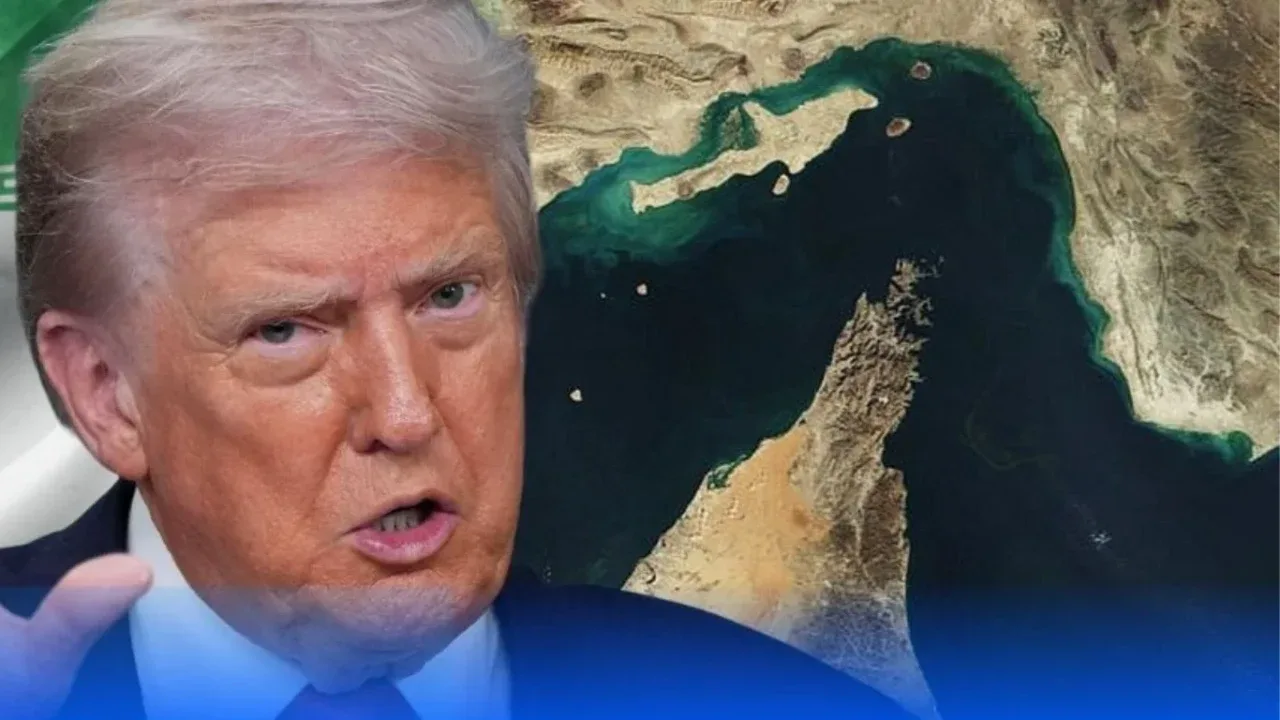
Geopolitical tension around the Strait of Hormuz has brought a new question to the global energy market agenda: is it possible to reduce dependence on this strategic sea route for oil transport?
US President Donald Trump says that new pipelines and land routes are emerging in the Middle East that allow bypassing Hormuz. He specifically mentioned a route passing through Syria.
“Many alternatives to the Strait of Hormuz are being created. Hormuz is no longer what it used to be,” Trump said.
Behind this statement lie geopolitical and economic shifts far greater than a simple transport issue.
1. Which route is Trump referring to?
Trump emphasized that a land route through Syria is already operational. According to him, oil-carrying trucks are moving through Syrian territory.
This information has also been confirmed by independent sources: according to the Washington Post, thousands of oil tankers are moving daily from southern Iraq toward the Syrian port of Baniyas. This route has become active against the backdrop of disruptions in shipments through Hormuz.
In other words, this is not just about a future plan — an alternative land route is already being tested.
2. The biggest project — a pipeline from Iraq to Syria
The most important part of the plan to transport energy through Syria is the new oil pipeline project.
According to available information, a pipeline is planned to be built from Iraq's Basra region to the port of Baniyas on the Syrian Mediterranean coast.
Indicator | Project details |
|---|---|
Route | Basra — Baniyas |
Distance | Approximately 1,600 km |
Planned cost | Around $5.7 billion |
Capacity | Up to 2 million barrels per day |
Main goal | Bypassing Hormuz to reach the Mediterranean |
According to the Washington Post, the project is planned to be implemented by a consortium led by Chevron, and construction could take at least two and a half years.
Therefore, this pipeline is not a ready-made solution that will fully replace Hormuz in the short term.
3. Why has Syria's importance suddenly increased?
Syria's main advantage is its geographical location.
Oil coming from the Persian Gulf region can be transported by land to Syria and from there to Mediterranean ports.
This allows oil exports not to be solely dependent on Hormuz.
The Syrian government is also promoting the idea of turning the country into a transit hub in the Middle East. Beyond oil, plans to develop railways, highways, and other logistics routes are also being discussed.
4. Is it possible to replace Hormuz entirely?
It is difficult to answer with a definitive “yes” for now.
The Strait of Hormuz holds an extremely important place in the global energy system. Large volumes of oil and gas are transported through it.
Pipelines cannot immediately take on the massive volumes transported by sea.
Furthermore, the new projects themselves may face challenges such as security, financing, infrastructure, and political stability. The pipeline route through Syria also faces serious security challenges.
5. Other alternative routes are also emerging
The situation in Hormuz has increased interest in new logistics routes not only in Syria but also in other regions.
For example:
Transit cargo volume through Jordan's port of Aqaba has increased significantly;
some oil importers are switching to sourcing more raw materials from America and Africa;
options for diverting Persian Gulf oil to other directions are being considered;
efforts to reduce dependence on a single strategic route for energy supply are intensifying.
The most important result of this process is that global energy logistics are gradually diversifying.
6. What does Trump mean by “Hormuz is no longer what it used to be”?
It is too early to interpret Trump's statement as meaning the Strait of Hormuz is now irrelevant.
More precisely, the US President is putting forward the position that the strategic importance of Hormuz may decrease as alternative routes multiply.
Currently, the situation is different: alternative routes are emerging, but they have not yet reached the level of immediately replacing all the flow passing through Hormuz.
Final question: Is the era of Hormuz ending?
Trump's statement highlighted an important trend in global energy: reducing dependence on strategic routes is no longer a theoretical idea, but is becoming a set of practical projects.
Truck movement through Syria has begun, a new pipeline from Iraq to the Mediterranean is being planned, and other countries are rethinking their logistics chains.
But for now, the most accurate conclusion is this: it is not that the importance of Hormuz has disappeared, but that new energy corridors that could serve as alternatives are taking shape.



Comments 0
…