


NASA and Boeing test radical new wing aircraft
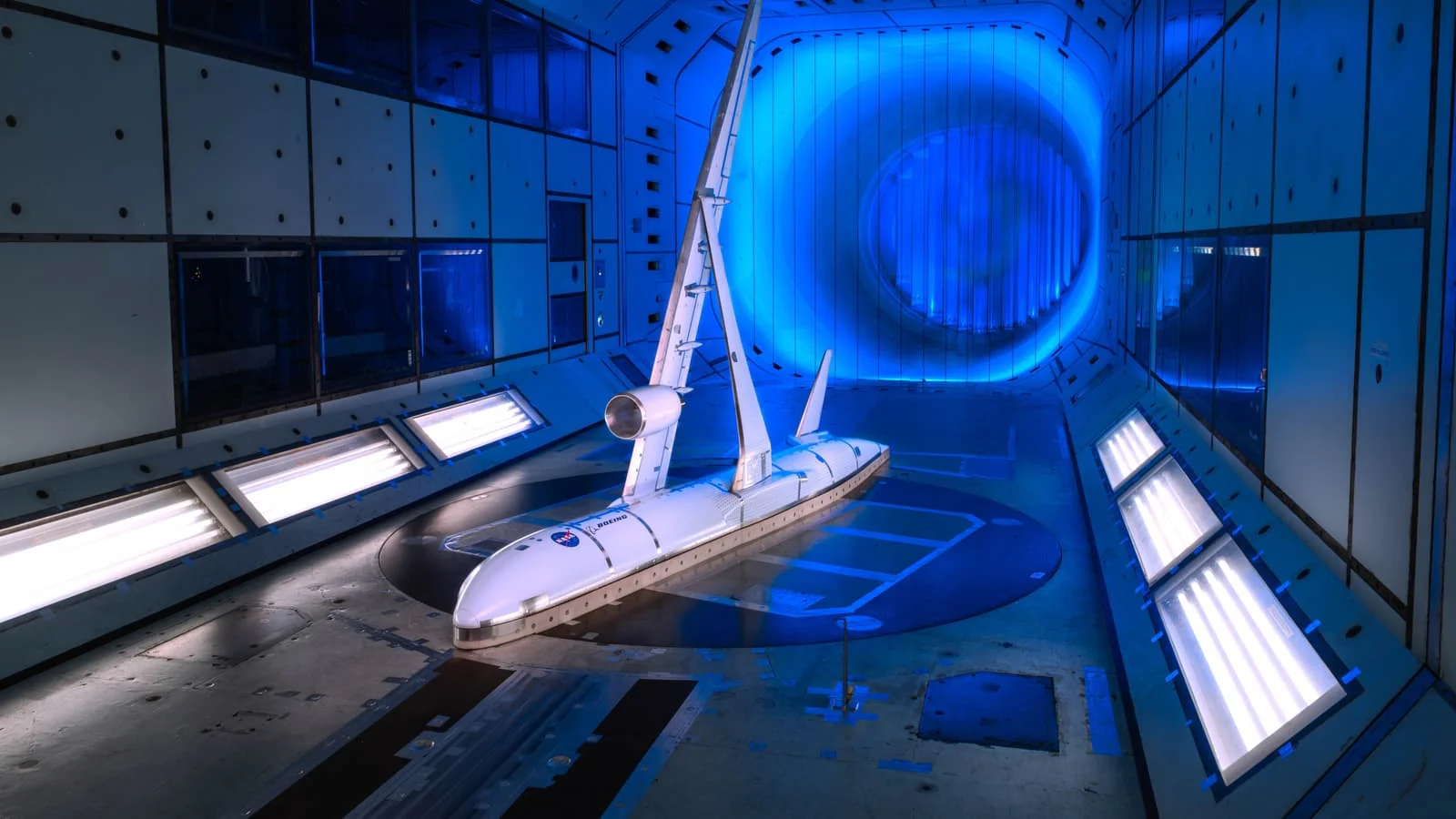
NASA and Boeing have completed the next testing phase of a new passenger aircraft wing design, representing one of the most radical ideas in civil aviation. Ixbt.com reports on this.
This is not a simple modification, but a completely new wing architecture. Instead of the conventional short and thick wing, a long and thin wing supported by external aerodynamic struts is being proposed.
Such a configuration helps to significantly reduce air resistance. As a result, fuel consumption and operating costs are also reduced.
The latest tests were conducted in a large wind tunnel at QinetiQ in Farnborough. The model included moving elements, including flaps and other surfaces.
These studies are part of the SUGAR concept developed by Boeing. Its goal is to create a family of environmentally friendly airliners with significantly reduced fuel consumption.
If the concept proves its effectiveness in subsequent stages, it could lead to the emergence of a new generation of lighter and more economical airliners.



Comments 0
…