


Russian and Chinese Scientists Develop New Electrolyte for Solid-State Batteries
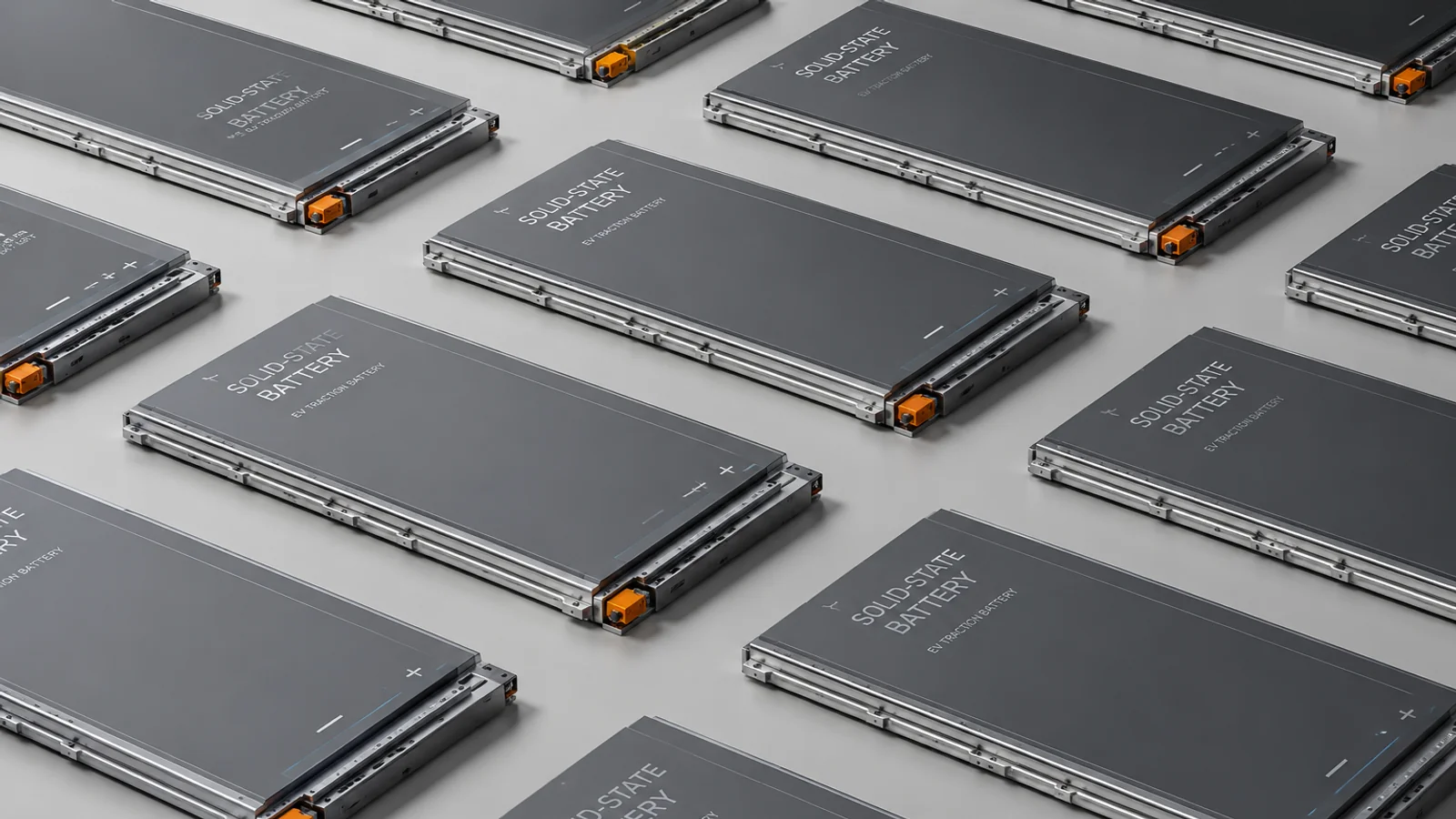
Scientists from Russia and China have developed an improved ceramic electrolyte and a special protective layer designed to enhance the safety, stability, and lifespan of solid-state batteries. The project involved specialists from the Idea Science Center, Lomonosov Moscow State University, Xi'an Jiaotong University, and Dubna State University. Ixbt.com reports .
The main goal of the research was to eliminate one of the biggest challenges in promising solid-state lithium batteries: the formation of lithium dendrites that can cause short circuits. To achieve this, researchers improved the electrolyte composition by mixing ceramic powders of coarse and fine particles. As a result, the material became denser, stronger, and more resistant to chemical and electrochemical effects.
Additionally, a thin bilayer protective interface was created between the ceramic electrolyte and the lithium anode. This layer prevents ceramic degradation and slows dendrite growth. Batteries with the new protective layer operated for over 1,400 hours, nearly twice as long as unprotected counterparts.
Test results showed that after 100 charge-discharge cycles, the batteries retained 95% of their initial capacity, with a coulombic efficiency of 99.9%. Furthermore, when heated to 300°C, the new elements maintained their integrity, while samples without the protective layer disintegrated.
Scientists note that this technology is not only effective but also suitable for large-scale manufacturing. This could significantly accelerate the practical application of solid-state batteries in real-world devices.


Comments 0
…