


Artificial Plasma Shield for Earth: Scientists Develop Protection System Against Powerful Solar Storms
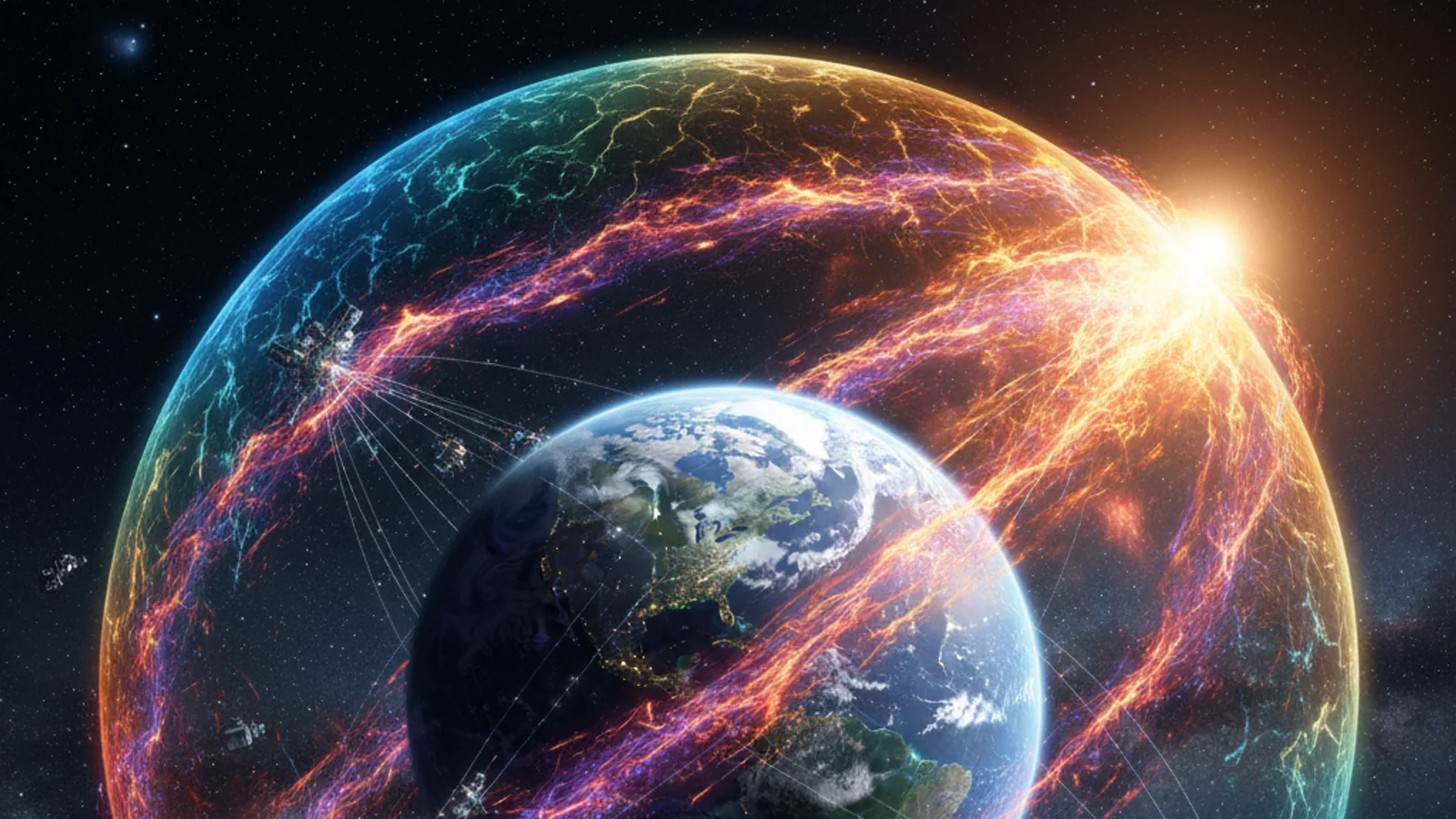
Scientists at Boston University have proposed an unusual method to protect Earth from catastrophic solar storms. While humanity currently limits itself to monitoring approaching solar plasma clouds, the new concept involves active intervention. The project, named StormWall, envisages creating a system of artificial satellites that enhance Earth's natural magnetic defense and weaken the impact of space weather before it reaches our planet. According to Ixbt.com report .
According to researchers' calculations, such a system is capable of reducing the power of extreme geomagnetic storms by more than half. This helps protect satellites, GPS navigation systems, communication networks, and energy grids from serious failures. The idea is based on combating a phenomenon called "magnetic reconnection." When solar wind and Earth's magnetic field lines align, a direct corridor opens for a massive energy flow. StormWall is designed specifically to stop this process.
The project proposes launching a group of six artificial satellites into geostationary orbit. Each device carries a supply of special substances such as barium, lithium, sodium, or calcium. Upon receiving a warning about an approaching powerful solar storm, the satellites release these substances into space. Under the influence of solar radiation, they quickly turn into a plasma cloud, forming an additional protective layer on the side of Earth's magnetosphere facing the Sun.
To test the concept, researchers modeled the consequences of the powerful geomagnetic storm that occurred in May 2024. The results showed that while the StormWall system cannot completely stop a solar storm, it can reduce its impact by more than 50 percent. According to project leader Brian Walsh, the idea is fully feasible from a physics perspective, and modern rocket power is sufficient to build such a system.
However, the project has a significant drawback: the system is essentially single-use. After the substances are released, the supply is exhausted, and new reagents must be delivered to orbit for reuse. According to scientists' calculations, the total volume of reagents is equivalent to the load of about ten large tanker trucks. Nevertheless, against the backdrop of hundreds of billions of dollars in investments being poured into space infrastructure, such a protection system could be economically justified.


Comments 0
…