


First Hong Kong taikonaut's appearance changes in space: China releases new footage
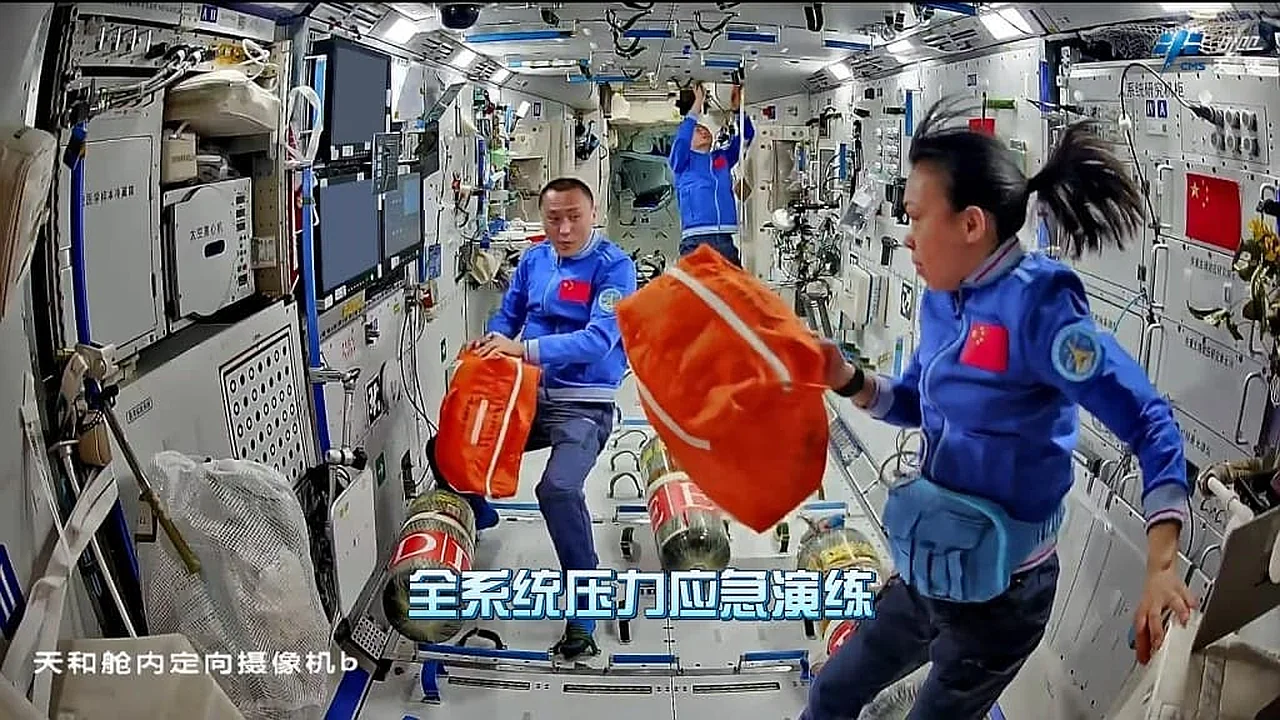
New video footage from China's Tiangong space station has captured global attention. The frames show a noticeable change in the appearance of Lai Ka-ying, the first female taikonaut in Hong Kong's history, specifically facial swelling. This is considered a natural process related to the impact of microgravity on the human body. This is reported by Ixbt.com news.
Experts explain that in open space, due to the lack of Earth's gravity, fluids in the human body redistribute. On Earth, fluids tend to move downward, but in orbit, they move upward toward the head and face. As a result, astronauts' faces temporarily appear swollen and rounded. Lai Ka-ying's hair can also be seen standing upright in weightlessness.
Scientific mission on the orbital station
Currently, Lai Ka-ying is carrying out planned tasks alongside crew commander Zhu Yangzhu and taikonaut Zhang Zhiyuan. The crew has been in orbit for three weeks. During this short time, they completed the handover of the station with the Shenzhou-21 spacecraft and finalized rotation procedures, as well as successfully executed the undocking operation of the Shenzhou-22 manned spacecraft.One of the most important stages of the mission was installing equipment outside the station designed for research in the field of radiation biology. This is the fourth major operation in this area, aimed at studying the effects of cosmic radiation on living organisms.
The taikonauts placed three important experimental samples into the open space environment:
- Nanoenzymes;
- Actinomycetes (ray fungi);
- Plant seeds.
These biological samples will remain in the extreme conditions of space, including intense radiation and temperature fluctuations, for five months. Through this experiment, scientists plan to obtain valuable data on the long-term effects of cosmic radiation on biological objects.
Such research is vital for future long-duration human spaceflights, particularly missions to colonize other planets. These scientific studies, conducted as part of China's space program, are expected to make a significant contribution to the development of space biology.


Comments 0
…