


Weather Jiu-Jitsu: Scientists discover a new way to control storms and droughts
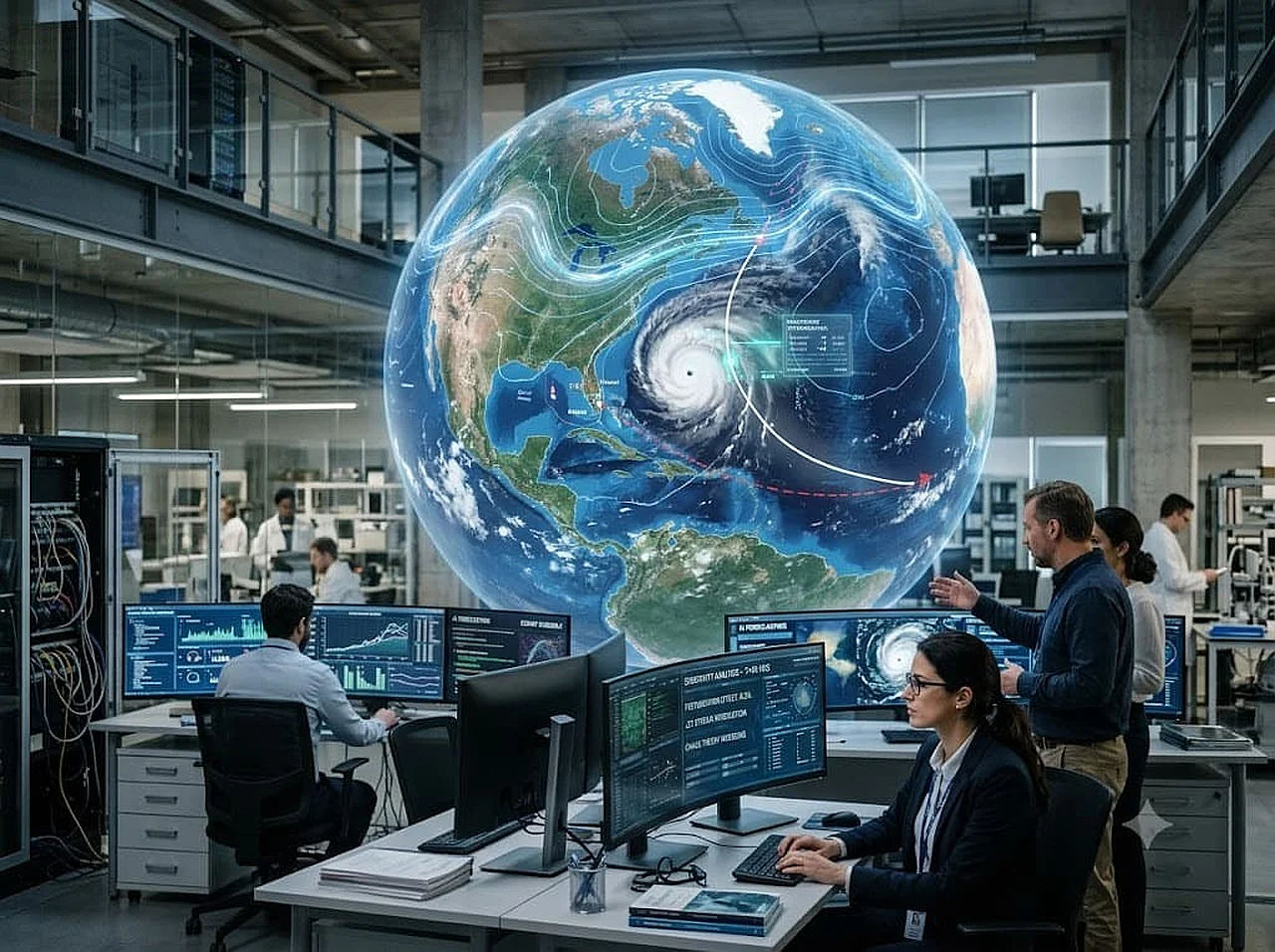
Researchers at Arizona State University (ASU) have proposed a revolutionary method for combating extreme weather events. Instead of brute-force intervention in the climate system, scientists are attempting to prove that disasters can be prevented by applying small, targeted interventions during the most sensitive stages of their development. This approach, called "Weather Jiu-Jitsu," involves using the atmosphere's own internal forces to redirect its path. This is reported by Ixbt.com reports .
The research is based on the famous "butterfly effect" in chaos theory. Since the atmosphere is a complex and non-linear system, even a minor change in its initial state can have a significant impact on future large-scale processes. Scientists believe there is an opportunity to "reconfigure" the trajectory and intensity of storms, cold fronts, or droughts before they reach their full destructive power.
Using AI and computer models
According to ixbt.com, to test this concept, experts used a large-scale AI model named Aurora. This AI system analyzes vast arrays of climate data to help determine the optimal time and point for intervention. During the experiments, historical scenarios of real natural disasters were processed and subjected to artificial influence.The results were even more effective than expected. For example, when working on the model of Hurricane Sandy, which caused massive damage in 2012, it was found that a precisely calculated intervention carried out a few days before it peaked could have shifted the hurricane's path by 300 kilometers. This is a sufficient distance to steer the storm away from a major metropolis like New York.
Other results were also recorded during the modeling process:
- During the anomalous cold snap in Texas in 2021, it was found possible to raise the minimum temperature by approximately 10 degrees;
- It was shown that the precipitation intensity of "atmospheric rivers," which cause severe flooding, could be reduced by 5 percent;
- Scenarios for controlling high-altitude atmospheric currents that determine the movement of storms with minimal impact were confirmed.
Technological implementation and the future
Although this project is currently only at the level of computer simulations, it is proposed to use existing methods such as cloud seeding to put it into practice. Importantly, this is not about suppressing the atmosphere's energy or stopping it entirely. Instead, it is intended to use nature's own dynamics to steer it in a safer direction.The project authors believe the key to success is timing. Intervention must take place a few days before a natural disaster reaches its peak. In the future, it is expected that "correcting" weather in real-time using supercomputers and AI will become a primary tool for saving the global economy and human lives.


Comments 0
…