


New type of flexible battery powered by airborne humidity has been created
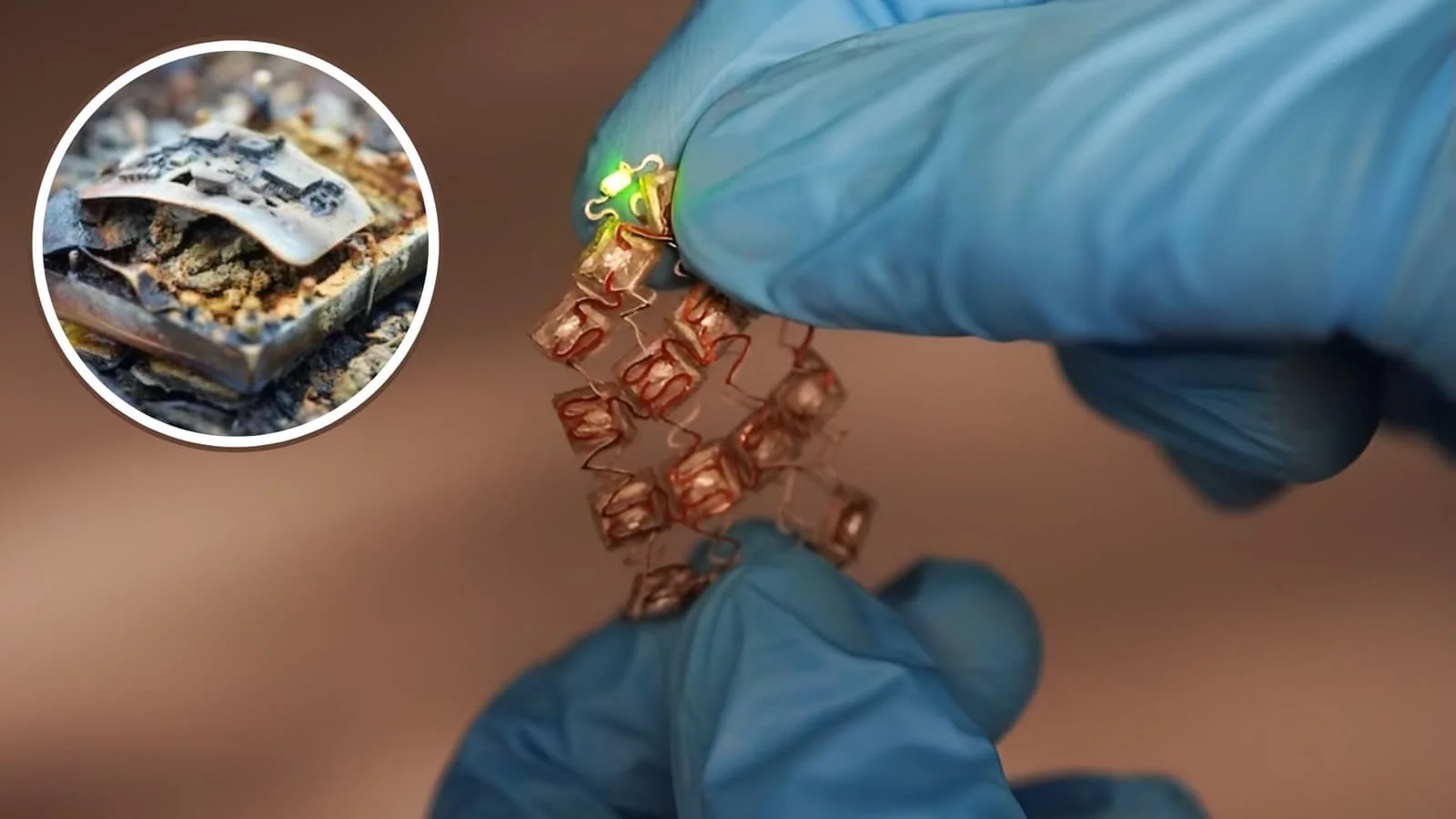
Scientists from Rice University in the USA and North Carolina State University have achieved a revolutionary breakthrough in the world of electronics. The researchers presented a flexible battery capable of generating electricity by absorbing moisture from the air. Unlike traditional batteries, this invention stands out not only for its environmental cleanliness but also for its unique operating mechanism. This was reported by Ixbt.com report s.
The basis of the new device is a cellulose membrane infused with lithium chloride salts. The battery is completely inactive when sealed hermetically and can be stored for a long time without losing its charge. However, as soon as the casing is opened and it comes into contact with humid air, the membrane absorbs water and the salts dissolve, forming an electrolyte. It is this process that triggers the chemical reaction that powers the battery.
The internal structure of the device consists of a magnesium anode and a cathode system made of silver and silver chloride. The authors emphasize that abandoning toxic and highly flammable liquid electrolytes makes the battery safe and environmentally harmless. Importantly, this technology maintains its ability to work effectively even in environments with low humidity levels.
Pangolin scales and high durability
To give the battery flexibility, scientists drew inspiration from nature. The device's design consists of elements that overlap each other like the scales of a pangolin. This allows the battery to be bent, stretched, and twisted, with its technical characteristics remaining virtually unchanged. During testing, the prototype powered a Bluetooth oximeter device for 30 hours continuously.Additionally, the researchers developed an unusual method for ensuring data security. If an attempt is made to open the device's sealed casing without authorization, a strong exothermic reaction occurs with the involvement of aluminum and iodine. As a result, the electronics fail within a short time and the data on them becomes impossible to read. In an experiment, a wireless sensor was completely destroyed in just three minutes.
According to ixbt.com, this technology is expected to be widely applied in the following areas in the future:
- Wearable electronics and smartwatches;
- Medical sensors and implants;
- Internet of Things (IoT) systems;
- Single-use protected electronic devices.


Comments 0
…