


A Giant Underground Network: Scientists Map 110 Quadrillion Kilometers of Fungi
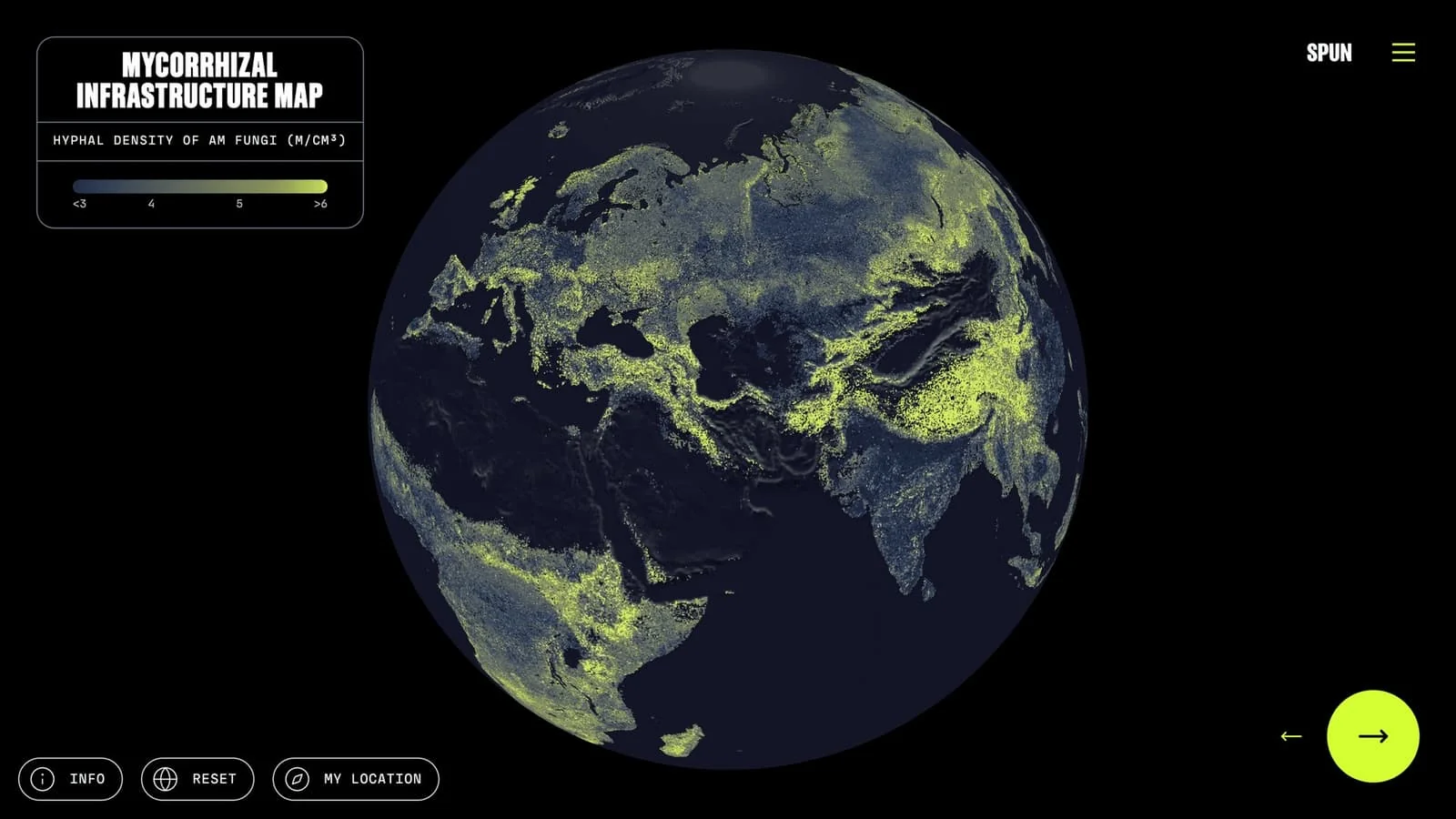
An international team of scientists has developed the first global map of the vast underground mycorrhizal fungal network in Earth's history. According to the study published in the journal Science, the total length of this hidden system is approximately 110 quadrillion kilometers. This discovery fundamentally changes our understanding of how the planet's ecosystem works, demonstrating the scale of nature's "global internet." This is reported by Ixbt.com reports .
The discussion concerns arbuscular mycorrhizal (AM) fungi. These organisms establish a symbiosis, or mutually beneficial relationship, with plant roots. The fungi's ultra-thin threads, called hyphae, cover the soil and provide plants with water and minerals. In return, plants share carbon produced during photosynthesis with the fungi. According to data, about 70 percent of plant species on Earth rely on this network to survive.
The foundation of the global ecosystem
To create this massive map, researchers combined data from 322 scientific studies and analyzed nearly 16,000 soil samples from various parts of the world. According to Ixbt.com, the process utilized modern visualization techniques and machine learning algorithms. These technologies allowed for the observation of microscopic structures that were previously invisible to the human eye and standard instruments.Calculations suggest that this fungal network contains 300 megatonnes of carbon in its total biomass. For comparison, this is 4–6 times the weight of all humanity. One of the study's authors, Justin Stewart, noted that the scale of the system is staggering: even a teaspoon of soil can contain up to 10 meters of fungal threads.
Impact on climate change and risks
This underground network plays a crucial role in the global carbon cycle. Every year, 4 billion tonnes of CO2 equivalent pass through the fungi into the soil. This is equal to approximately 11 percent of total CO2 emissions released into the atmosphere by human activity. In other words, mycorrhizal networks act as a natural filter that helps curb global warming.However, scientists have also identified a worrying trend. It was found that the density of the fungal network in agricultural lands is twice as low as in natural ecosystems. In particular, the fact that grasslands are being developed four times faster than forests is leading to the degradation of this hidden system.
In conclusion, the decline of underground fungal networks reduces the soil's ability to sequester carbon. This, in turn, could have a negative impact on global climate stability. This research is of great importance not only from a biological perspective but also from the standpoint of ecological security.


Comments 0
…