


A 'Sense of Pain' for Drones and Autopilots: Scientists Discover a New Safety Method
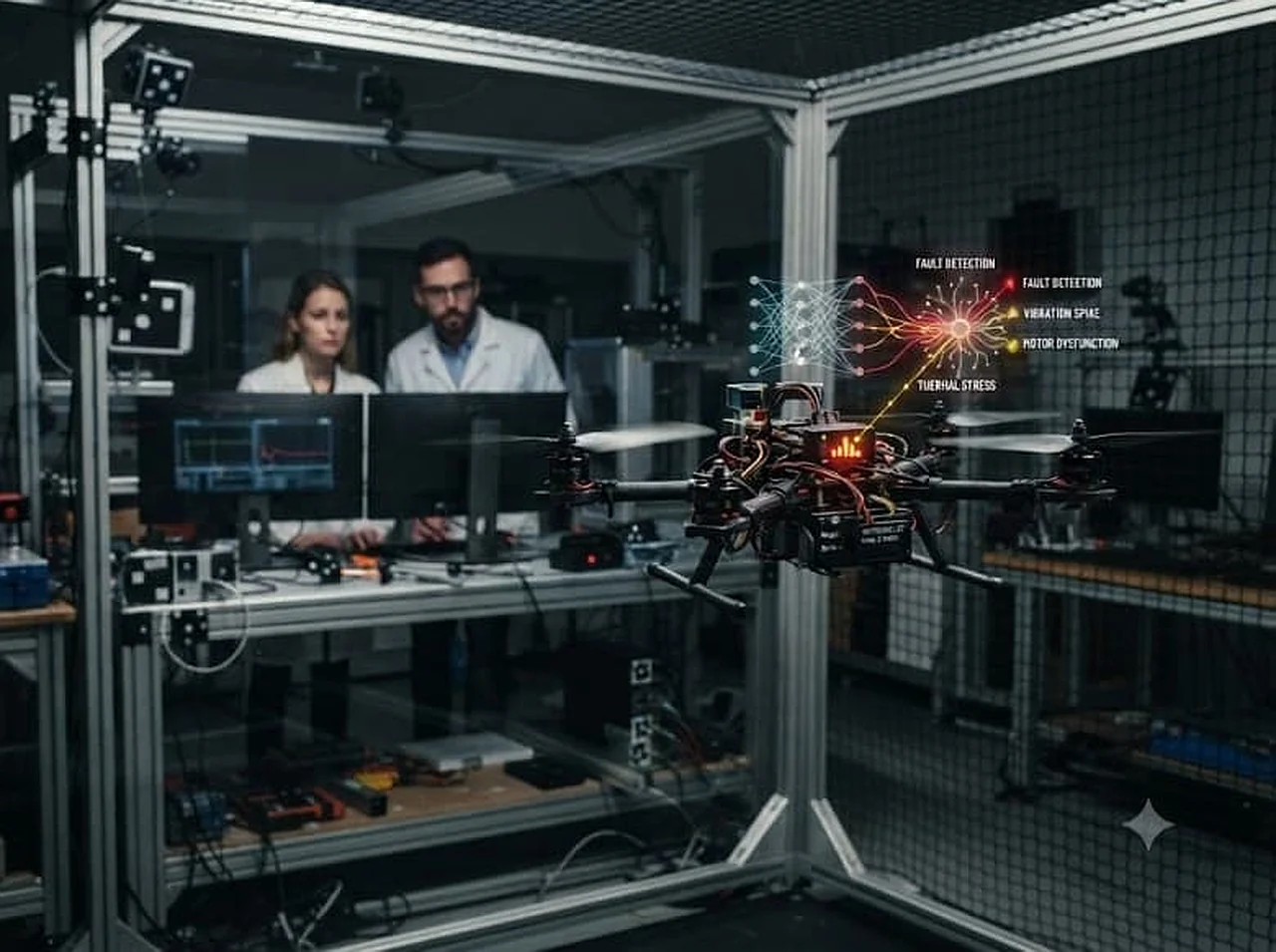
Scientists from Delft University of Technology and Wageningen University in the Netherlands have developed an unexpected yet revolutionary system for autonomous vehicles. This technology allows drones and self-driving cars to 'feel pain' much like living organisms. This approach is expected to be a significant step in detecting and preventing technical malfunctions before they occur. This was reported by Ixbt.com reports .
The operating principle of the system is based on human biology. When a person is injured, the nervous system immediately sends a danger signal to the brain, forcing the body to reduce the load and prevent more serious damage. In an article published in the Proceedings of the National Academy of Sciences (PNAS) journal, researchers announced that they have succeeded in creating a digital analog of this exact mechanism.
The technology is based on a phenomenon called 'critical slowing down.' Previously, this method was used in ecology to predict catastrophic changes in complex systems, such as the collapse of ecosystems. Scientists discovered that technical systems exhibit similar patterns just before losing stability.
Self-diagnosis without complex algorithms
The main advantage of the new method is that it does not require pre-prepared models of system behavior, historical data, or overly complex predictive algorithms. Instead, the technology continuously analyzes signals from existing sensors in real-time and detects specific changes that indicate an approaching malfunction.To test the research in practice, quadcopters from the CyberZoo facility were used. During the experiment, scientists intentionally damaged the drone propeller blades, increasing the level of degradation up to 55 percent. It turned out that the device began to lose control when one of the front propellers was damaged by only 15 percent. The developed system successfully detected these signs of instability before the situation reached a critical level.
Project leader Jasper van Beers compared the algorithm's operation to the human ability to feel pain. According to him, pain provides immediate feedback to a person about their physical state and helps them understand which actions are safe. Unfortunately, modern mechanisms are almost devoid of such self-diagnostic capabilities.
Prospects for autonomous vehicles
Researchers consider this technology particularly promising for self-driving cars and Advanced Driver Assistance Systems (ADAS). An autonomous vehicle may face problems such as sensor failure or mechanical wear. Current systems often notice a problem only when it begins to directly affect driving safety.Since the new approach uses only data from standard sensors, its implementation does not require the installation of additional equipment. This makes the technology very attractive for existing robotaxi platforms. According to ixbt.com, giving machines the ability to 'feel pain' will help them realize their limitations before a situation becomes critical.
In conclusion, this discovery could take the safety of not only drones but also industrial robots and other complex autonomous systems to a new level in the future. Machines starting to care about their own 'health' will be a key factor in preventing technological accidents.


Comments 0
…