


Scientists turn cockroaches into remote-controlled cyber-robots
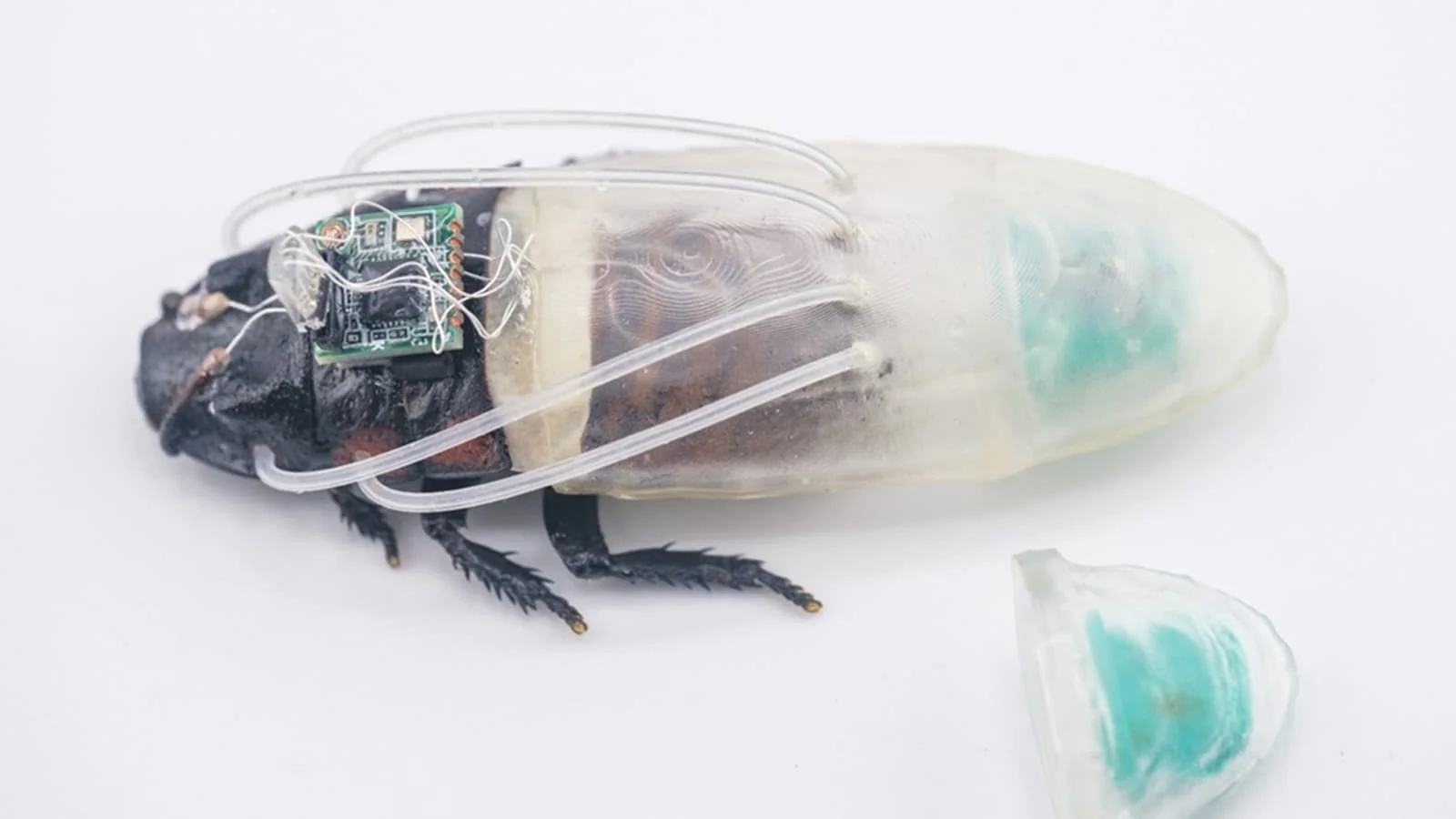
In a revolutionary step for robotics, scientists in Singapore have successfully transformed live cockroaches into remote-controlled cyber-organisms. According to research published in the journal Nature Communications, these bio-hybrid systems are capable of moving not only on land but also underwater using specially developed "aqualung" devices. This is reported by Ixbt.com reports .
A team led by Professor Hirotaka Sato of Nanyang Technological University chose Madagascar cockroaches for this project. These insects are distinguished by their durability, lifespan of up to five years, and high adaptability to harsh conditions. The scientists' goal is to create a controllable platform for search and rescue operations in ruins and hazardous areas where traditional robots cannot enter.
Underwater breathing technology
The biggest technical hurdle in the project was the cockroaches' inability to survive underwater for long periods. To solve this, engineers 3D-printed miniature modules that cover the insect's breathing holes. This system is not based on oxygen tanks, but on a chemical reaction. A mixture of hydrogen peroxide and manganese dioxide decomposes to deliver oxygen directly to the insect's respiratory system.Researchers initially attempted to mount the control devices on the insect's back like a "backpack." However, it was found that this method reduced the cockroach's movement speed. As a result, all microcircuits and power sources were placed directly on the insect's body. This allowed the cyber-organisms to move at high speeds underwater just as they do on land.
Future prospects and advantages
Experiments showed that the modified cockroaches could remain active underwater for up to three hours. Most importantly, no negative changes were observed in the insects' overall condition after the experiment. According to ixbt.com, such bio-hybrid systems have several advantages over classic robots:- Significantly lower production costs;
- High energy efficiency (the insect derives energy for its movement from food);
- Ability to navigate complex terrain and narrow spaces;
- Potential for use in extreme conditions, including missions on other planets.


Comments 0
…