


AI agents consume 136 times more energy than standard chatbots
As AI technology evolves, it is moving from simple chatbots to autonomous AI agents. However, a study by researchers at the Korea Advanced Institute of Science and Technology (KAIST) shows that these next-generation systems could pose a serious threat to ecological and energy infrastructure. It turns out that AI agents consume 136.5 times more electricity to fulfill a single request compared to standard generative models. This is reported by Ixbt.com reports.
Researchers explain that traditional chatbots like ChatGPT are limited to generating a single response to a user query. AI agents, however, independently plan tasks, conduct internet searches, execute software code, and interact with external applications. This process requires multiple calls to Large Language Models (LLM), which drastically increases the demand for computational resources.
Energy crisis and computing power
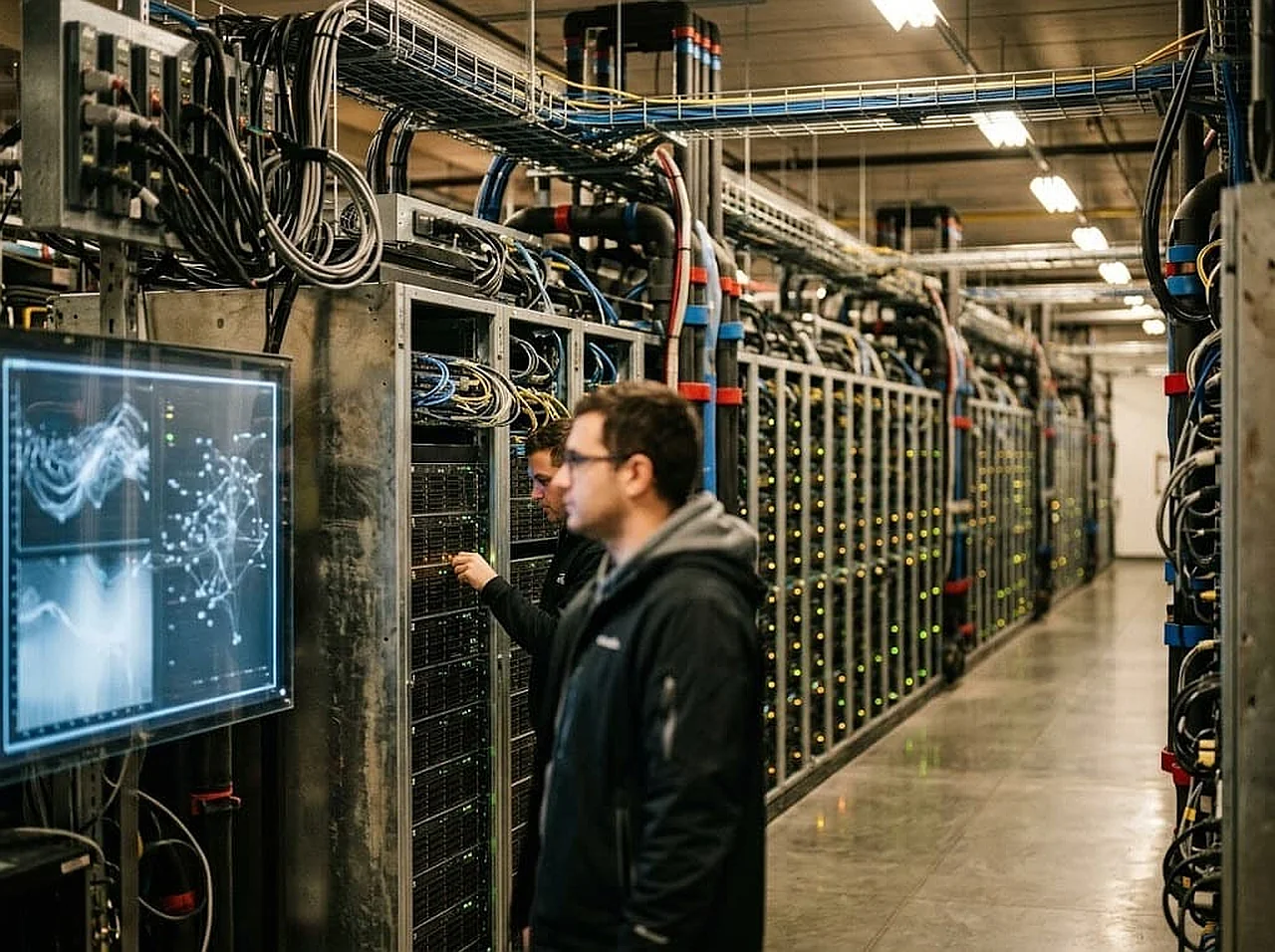
A research team led by Professor Minsoo Rhu analyzed AI agents as a distinct type of workload for data centers. Experiments showed that a single AI agent request based on a 70-billion parameter language model consumes an average of 348.41 Wh of energy. For comparison, this is hundreds of times more power than what is used for a simple chatbot response.According to ixbt.com, the researchers modeled another interesting scenario: if AI agents processed 13.7 billion requests per day, similar to Google search, they would require 198.9 GW of power. This is nearly half of the average electricity consumed across the entire United States. Current data centers and energy systems are not prepared to handle such a massive load.
The study notes that while AI agents are running, GPUs remain idle for 54.5% of the time, waiting for responses from external tools. However, the equipment continues to consume energy during this idle time, indicating that the technology's efficiency is still very low.
Future challenges and solutions
Currently, tech giants like OpenAI, Google, Microsoft, and Anthropic are actively promoting AI agents as the next stage of AI development. But the conclusion of KAIST scientists is that the large-scale implementation of this technology depends on more than just making algorithms smarter. To scale the industry, changes are needed in the following areas:- Radically increasing the energy efficiency of semiconductors;
- Optimizing GPU workloads;
- Rethinking data center architecture;
- Expanding global energy infrastructure.


Comments 0
…