


White House Establishes New Scientific Board to Study UAP Phenomena: Avi Loeb Appointed as Head
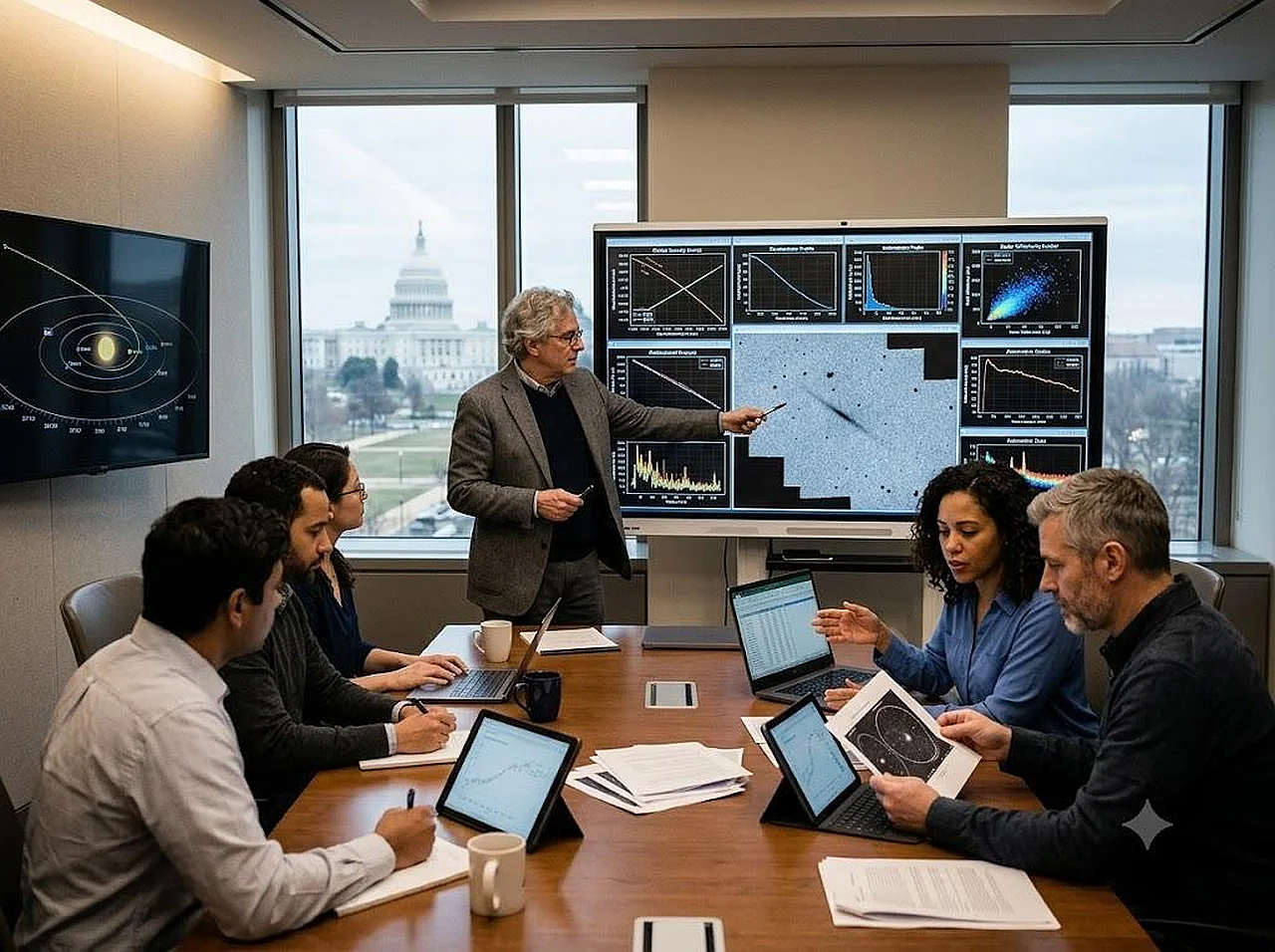
The U.S. administration has formed a new Scientific Advisory Board to systematically study Unidentified Anomalous Phenomena (UAP). Harvard University astrophysicist Avi Loeb has been appointed to lead this prestigious body. This step signals a fundamental shift in Washington's approach to phenomena that have been kept secret or overlooked for decades. This is reported by Ixbt.com reports .
The board will work in cooperation with the White House, the U.S. Department of Defense's All-domain Anomaly Resolution Office (AARO), the Office of the Director of National Intelligence (ODNI), and the FBI. According to ixbt.com, the new structure will cover not only atmospheric objects but also unexplained phenomena in space, underwater, and other environments.
Avi Loeb emphasized that the board's activities will focus not on reviewing old, unverifiable reports, but on collecting high-quality data and conducting scientific analysis using modern equipment. Establishing unified observation standards has been set as a primary task in this process.
Scientific Approach and Expert Composition
The new structure includes not only astrophysicists but a wide range of specialists. Experts in measurement systems, biologists, oceanographers, anthropologists, and even psychologists are involved. This diversity allows for a comprehensive and objective assessment of anomalous phenomena.According to one of the board members, astrophysicist Nandal, the rigorous methodology used in fundamental sciences will be applied to the UAP topic. This will help move the subject from the realm of speculation and rumors to the level of evidence-based research.
Avi Loeb is known in scientific circles for his bold hypotheses. He is the founder of the Galileo Project, which aims to search for technological traces of extraterrestrial civilizations. Loeb also sparked significant debate with his scientific views on the potential artificial origin of the interstellar comet 1I/ʻOumuamua.
Expected Results and Funding
The scientific community has welcomed this news with cautious optimism. Mark Rodeghier, president of the J. Allen Hynek Center for UFO Studies, believes that the involvement of independent scientists is an important step. However, the board's effectiveness will depend on its access to data and its ability to publish research results.According to Robert Powell, a member of the Scientific Coalition for UAP Studies (SCU), another important task of the board is to facilitate the allocation of government grants for research in this field. Establishing funding through the U.S. National Science Foundation could pave the way for unexpected scientific discoveries in this area.
This initiative may also be of interest to scientific circles in countries like Uzbekistan, as the new technologies and data analysis methods used to study anomalous phenomena contribute to the development of fundamental physics and astronomy.


Comments 0
…