


China aims for a space revolution: Gravity-2 to become the most powerful reusable rocket
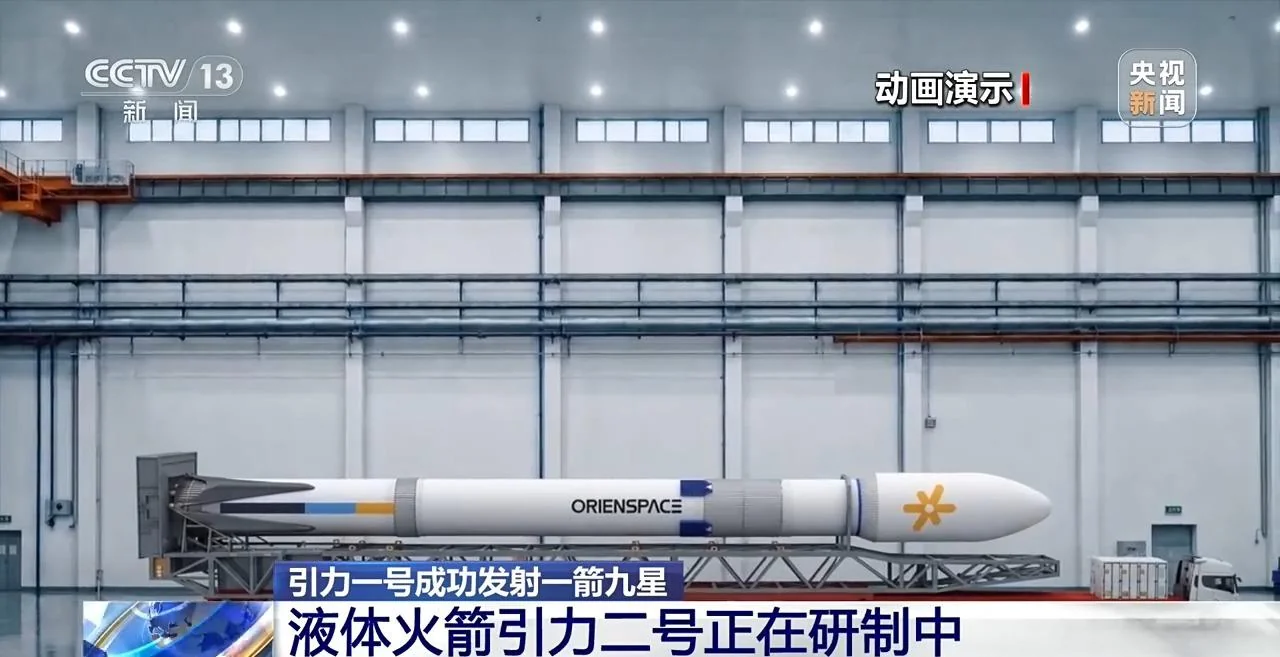
The private Chinese company Orienspace is taking another giant step in conquering space. The Gravity-2 rocket, currently under development by the company, is expected to make its maiden flight in the fourth quarter of 2026. This project is of great importance not only for China but for global commercial astronautics, as it is expected to drastically reduce the costs of launching payloads into space due to its reusability. This is reported by news from Ixbt.com.
The announcement of the new rocket came after the third successful flight of the Gravity-1 rocket. On July 22, Gravity-1 successfully launched nine satellites into orbit, proving its reliability. Orienspace representatives noted that this successful mission marks the transition of the rocket from the testing phase to regular commercial flights.
Technical capabilities and competition with Falcon 9
The technical specifications of the Gravity-2 rocket are impressing industry experts. It will have the capacity to carry up to 21.5 tons to low Earth orbit and up to 15 tons to a 500-kilometer sun-synchronous orbit. According to ixbt.com, in terms of its characteristics and payload capacity, it is becoming almost a clone of the famous Falcon 9 rocket belonging to Elon Musk's SpaceX.The main advantage of the new rocket is the reusability of its first stage. According to the design, the central block will return to Earth after the flight, be refurbished, and be reused in subsequent missions. This will significantly lower service costs for commercial customers and strengthen China's position in the international space market.
Gravity-2 uses nine Force-110 liquid oxygen-kerosene engines, independently developed by the company, as its power source. The second stage is equipped with a single Force-110 Vacuum engine. Such powerful units allow for the launch of large satellites and entire orbital systems into space.
China's orbital internet project
One of the strategic goals of this project is to create China's national low-orbit satellite internet system. This system is expected to be a unique competitor to the Starlink network. According to the project's chief designer, Xu Guguang, Gravity-1 rockets will begin to be used starting from the third quarter of this year to launch the first units of this network into orbit.As a reminder, the current Gravity-1 rocket is the largest solid-fuel rocket in China. It has a total weight of 405 tons and is capable of carrying up to 6.5 tons of payload. The launch of Gravity-2 will increase these figures several times over, taking the participation of private Chinese companies in the space race to a new level.


Comments 0
…