


AMD reveals next-gen 256-core EPYC Venice processor ahead of official launch
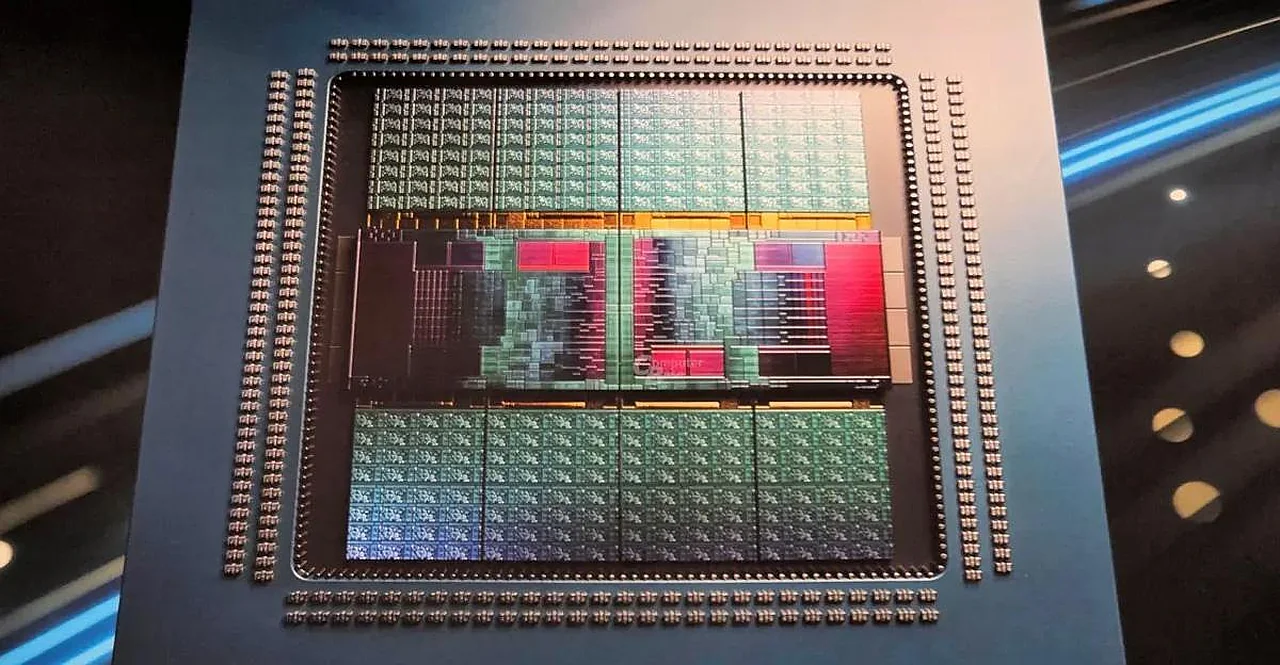
AMD, one of the leaders in the semiconductor market, is preparing to make a major breakthrough in the industry with its next-generation server processors. Thanks to an advertising banner installed near the Moscone West exhibition center in San Francisco, the internal structure and technical capabilities of the sixth-generation AMD EPYC Venice processor, which has not yet been officially unveiled, have been revealed to the public. This innovation is expected to usher in a new era for AI and high-performance computing systems. This is reported by Ixbt.com reports.
According to ixbt.com, the published images reveal the processor's complex and high-power architecture. The EPYC Venice flagship features a structure consisting of eight compute dies (CCD) and two large I/O dies. Each CCD chiplet, in turn, combines two compute complexes (CCX) containing 16 cores each. This means there are 32 cores per die, totaling 256 cores in the entire processor.
Zen 6 architecture and 2nm technology
The new processors are based on AMD's latest Zen 6 architecture, which primarily utilizes compact Zen 6c cores. This approach allows the company to provide record-breaking multi-core performance for server systems while maintaining energy efficiency. For Uzbekistan's rapidly developing data centers and cloud service providers, such technologies will be crucial for saving resources and increasing computing power in the future.Another important aspect confirmed by AMD is the manufacturing process. EPYC Venice series chips will be the world's first high-performance products to be mass-produced based on TSMC's 2nm process technology. Such a reduction in the process node increases transistor density and significantly improves the device's operating speed.
AMD CEO Lisa Su is expected to provide detailed information about this platform during the Advancing AI 2026 conference. Experts believe that 256-core processors will take not only traditional server tasks but also complex neural network training and Big Data processing to a new level.
Industry position and competition
This move by AMD is aimed at strengthening its technological lead over Intel and other competitors. Currently, the global demand for server processors has surged due to the AI boom. A single processor with 256 cores has the capability to manage thousands of virtual machines simultaneously or perform complex scientific simulations.Full technical specifications, power consumption figures, and pricing for the new platform will be announced after the official launch. However, the current information alone shows that AMD intends to maintain its leadership in the server segment.


Comments 0
…