


Space Debris: Satellites Are Reaching a Critical Threshold
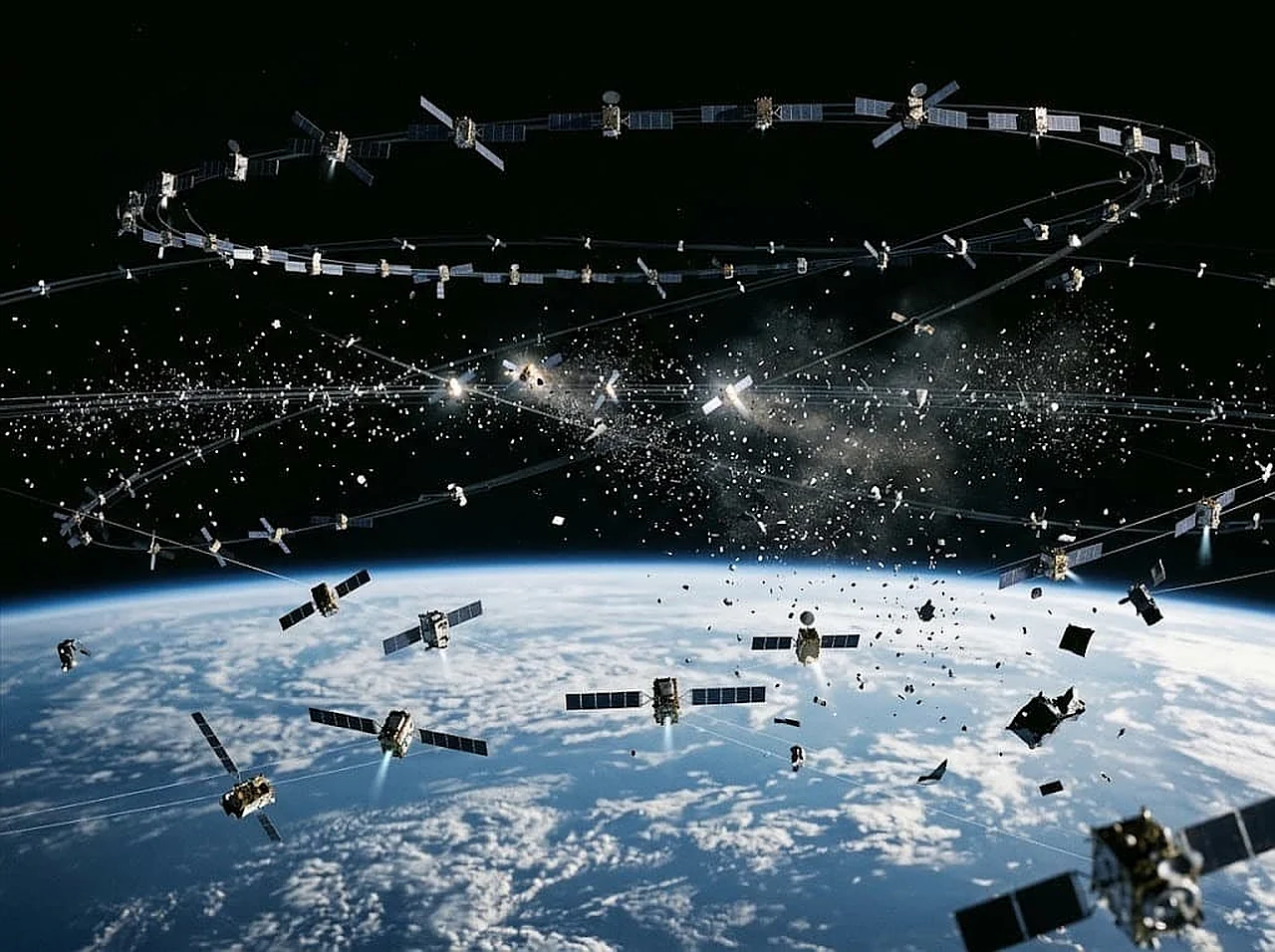
The number of satellites launched into Earth orbit is approaching an alarming level, and in the near future this situation could trigger an uncontrollable cascade of space debris. According to Ixbt.com, nearly 30,000 spacecraft have already been placed in orbit, while regulators have received applications to deploy more than 1 million additional devices. This is reported by Ixbt.com reports .
A new scientific analysis by Hugh Lewis, a scientist at the University of Birmingham, shows that satellite constellations have a specific critical size. Once this threshold is crossed, orbital collisions trigger a self-perpetuating and unstoppable flow of debris. If all currently planned projects are fully implemented, the total number of spacecraft is expected to approach 1.7 million.
Cascade Effects and Safety Concerns
The main cause of this problem is the cascade effect. A collision between two satellites can produce thousands of small fragments, each of which can destroy another spacecraft and generate even more debris. The expert notes that current safety assessments typically consider only the risks posed by individual spacecraft and do not account for the collective behavior of entire constellations.Hugh Lewis developed a specialized mathematical model to calculate how frequently satellites and debris pass through certain regions. The model also accounts for spacecrafts’ ability to avoid collisions and the rate at which they leave orbit after reaching the end of their operational lives. The scientist assessed 16 major satellite constellations currently in orbit or in the planning stage.
Findings and Ways to Reduce the Risks
According to the study, 6 of the constellations examined have already exceeded the critical threshold at which debris begins to grow without limit. These include major projects from the United States and China. Another 3 constellations have entered an unstable zone where debris is accumulating, although the process has not yet become an uncontrollable cascade.The critical threshold does not depend solely on the number of spacecraft. For example, the study found that a constellation with only a few hundred satellites could cause instability because of the specific arrangement of its orbits. In some smaller constellations, the lack of thrusters for maneuvering has further worsened the situation.
According to the scientist’s calculations, risks can be significantly reduced through relatively simple design changes. These include increasing spacecrafts’ aerodynamic drag so they deorbit faster after completing their missions, or extending their operational lifetimes to reduce the number of new replacements required.


Comments 0
…