


Astronomers Find No Dyson Spheres in 129 Galaxies
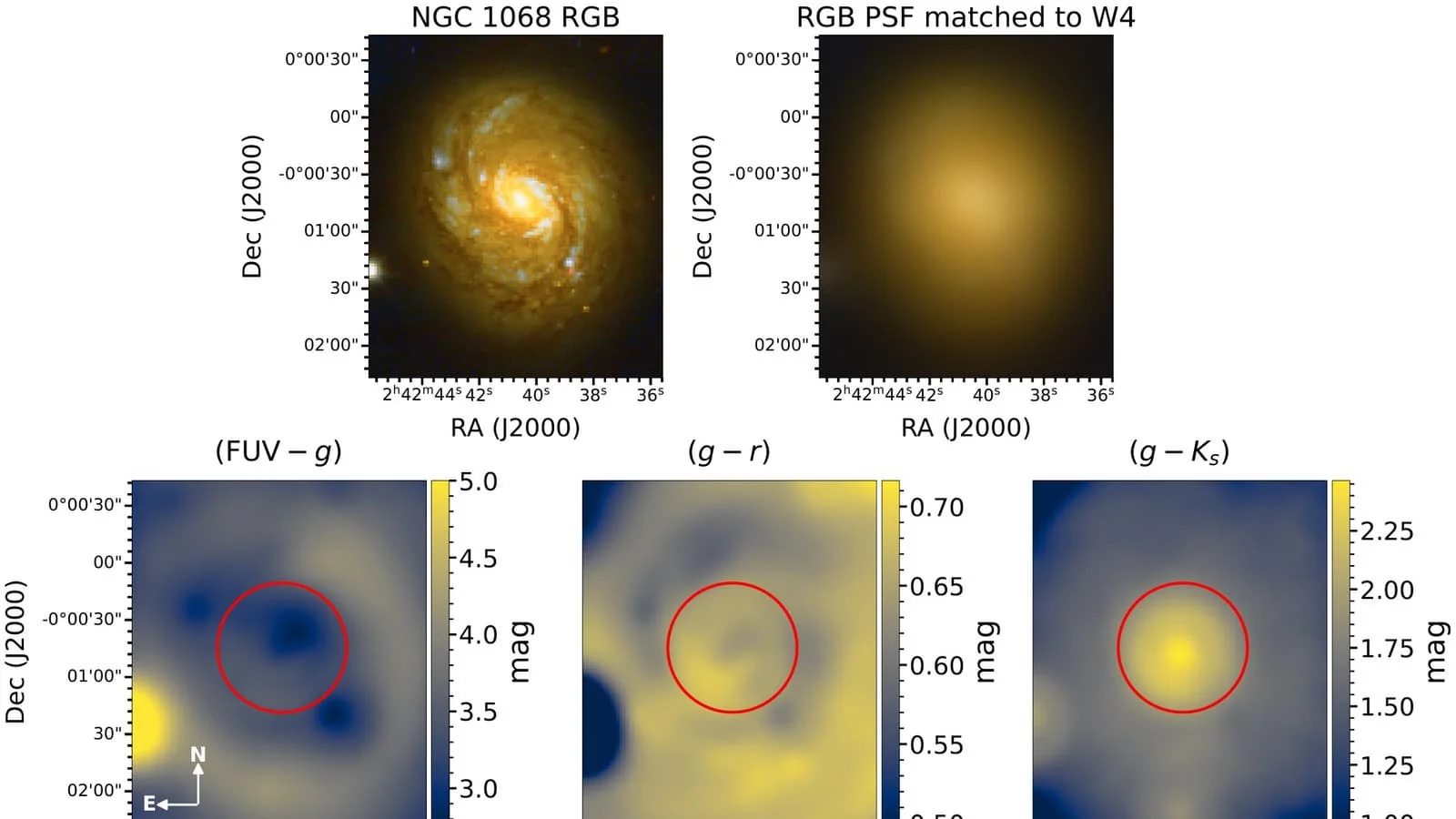
An international team of scientists has completed the largest study in history aimed at detecting signs of technological civilizations in interstellar space. According to ixbt.com, astronomers analyzed 129 nearby galaxies and found no evidence in any of them confirming the presence of previously hypothesized Dyson spheres or similar large-scale megastructures. Nevertheless, this extensive search made it possible to develop a more precise and rigorous scientific method for future searches for extraterrestrial civilizations. This was reported by Ixbt.com.
The central idea behind the scientific search is based on simple laws of physics. If a technologically advanced civilization had built a system of solar panels, stations, or other enormous structures—a Dyson swarm—around its star to harness its energy, the absorbed light would not disappear. It would inevitably be re-emitted in the infrared range. For this reason, the researchers searched for excess infrared radiation that could not be explained by ordinary cosmic dust, an active galactic nucleus, or active star formation.
The most promising regions for the search were identified
During the study, the scientists analyzed not only real data but also tested 1,419 spectral energy distributions with different parameters using a model. They found that quiescent galaxies with slow star formation and little dust are the most suitable environments for such searches. Because the sources of infrared radiation in these systems are predictable, it is possible to detect hypothetical structures that absorb just 4–5% of starlight.However, the situation is far more complicated in galaxies with active star formation. Heated interstellar dust produces its own “infrared excess,” and under such conditions an artificial swarm would need to block at least 20% of the star’s energy to become detectable. Another difficulty is associated with active galactic nuclei, whose hot dust could be mistaken for technological waste heat, creating confusion.
Statistical results and future prospects
According to the real data obtained, none of the 129 galaxies studied matched the Dyson swarm model with statistical reliability. For quiescent galaxies without active nuclei, the median upper limit for the captured radiation fraction was just 0.3%. Across the full sample, this result means that structures blocking approximately 25% of starlight could be present in no more than 2.6% of the galaxies studied.The authors also outlined ways to distinguish technological radiation from natural astrophysical phenomena. In particular, Dyson swarm emission should be distributed across the stellar disk, while an active nucleus is concentrated at the center, and dust associated with star formation reproduces spiral arms. In the future, wide-field PRIMA data will help clarify the cold part of the spectrum, after which the most interesting candidates can be examined using the JWST telescope.


Comments 0
…