


Number of near-Earth asteroids exceeds 40,000
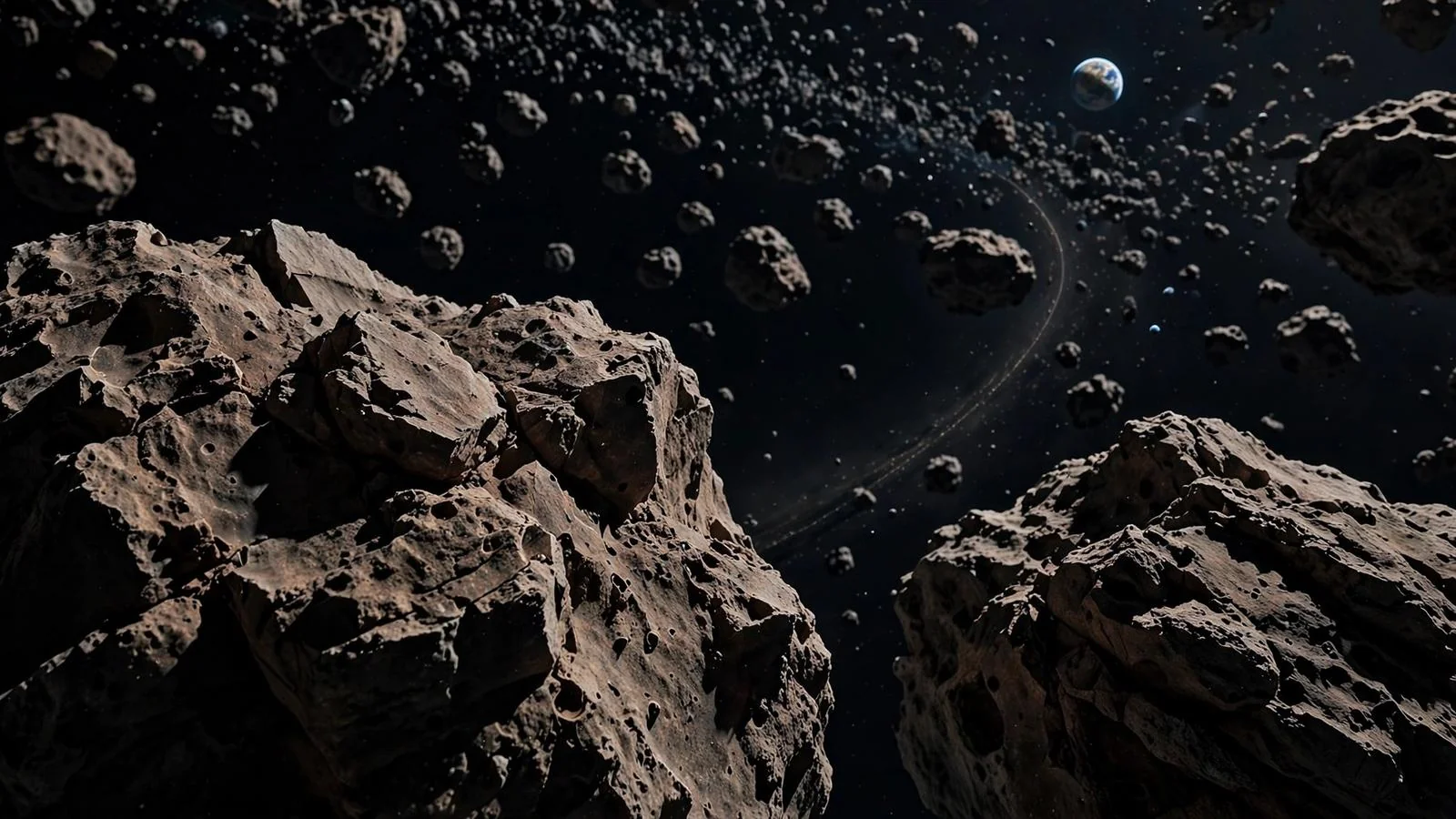
Astronomers have announced the discovery of 40,000 celestial bodies that are near Earth's orbit and cross its path. According to the European Space Agency (ESA), this figure marks a significant milestone in the history of space exploration, with nearly 10,000 of them discovered in the last three years alone. This was reported by Ixbt.com reports.
Experts note that the rate of discovering new space objects is accelerating rapidly. For example, at the beginning of the century, the number of such objects was only 1,000, reaching 15,000 in 2016 and 30,000 in 2022. Although the first such asteroid, Eros, was discovered in 1898, the real scientific leap began in the 1990s with the launch of modern survey telescopes.
Risk assessment and orbits
Once a new object is found, scientists collect several observation data points and use computer models to calculate its trajectory decades and centuries into the future. Determining the trajectory can either increase or decrease the probability of a collision. For example, the situation surrounding the asteroid 2024 YR4 in early 2025 developed according to this exact scenario.According to ESA data, there are about 2,000 near-Earth asteroids with a non-zero probability of colliding with Earth in the next 100 years. However, most of them are too small to pose a real threat. Large objects with a diameter exceeding one kilometer that could cause global destruction are easily detected, and scientists are confident that most of them have already been found.
Future tasks and new technologies
Currently, the main focus is on medium-sized asteroids ranging from 100 to 300 meters in size. They are capable of causing serious damage to a specific region, but only 30 percent of their total number has been found so far. The launch of new-generation ground-based observatories is expected to further accelerate efforts in this area.Each newly discovered object not only enriches catalogs but also provides valuable time for prediction and planning to prevent potential threats. Experts believe that current results are just the "tip of the iceberg" of a massive problem, and space security will be further strengthened with the help of new technologies in the future.


Comments 0
…