


Hubble Space Telescope completes its 200,000th orbit around Earth
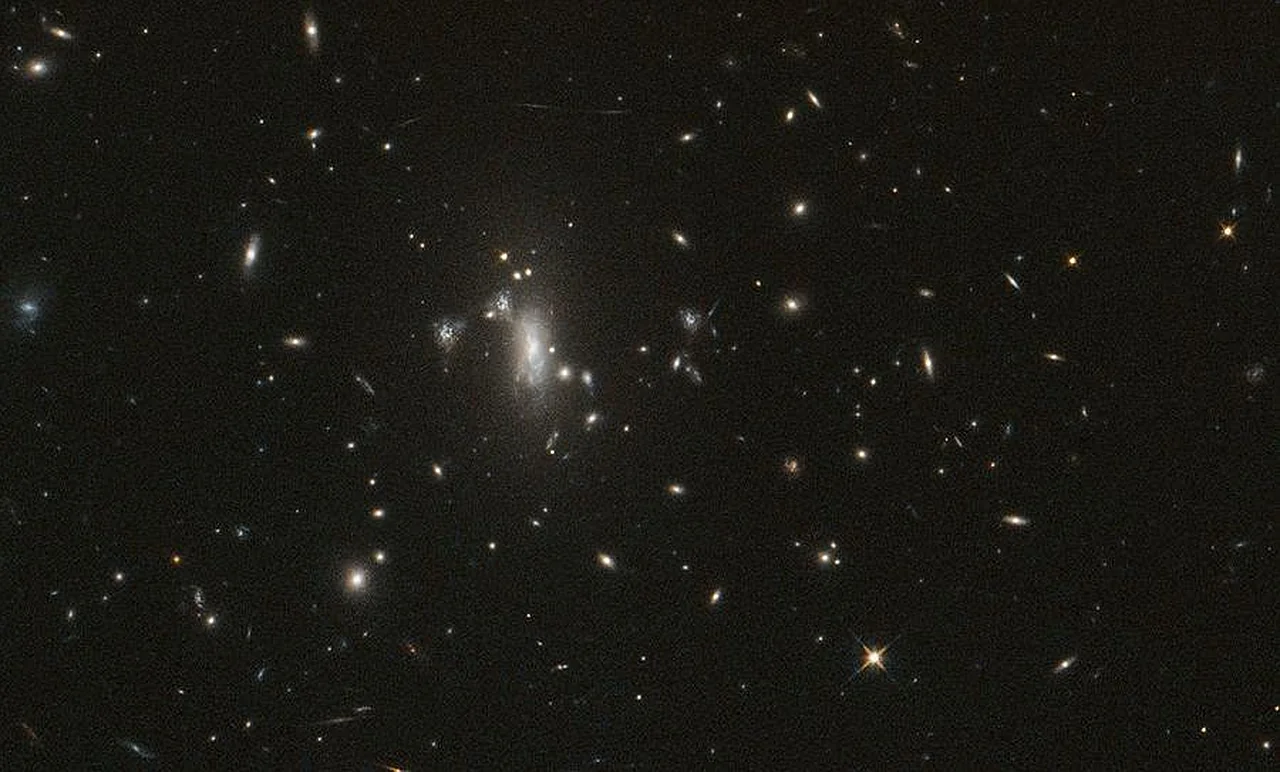
The legendary Hubble Space Telescope has reached a historic milestone for global science by completing its 200,000th orbit around Earth. Operating continuously for 36 years, this unique instrument remains one of the most productive scientific tools in human history, providing unparalleled service in exploring the universe. This was reported by Ixbt.com reports .
According to ixbt.com, the spacecraft has traveled over 8 billion kilometers and performed more than 1.7 million scientific observations during its mission. The telescope dedicated its jubilee 200,000th orbit to measuring the expansion rate of the universe, known as the Hubble constant.
Scientific research and new tasks
Currently, Hubble continues to observe the supernova "Athena," discovered by the James Webb Space Telescope in 2025. Light from this stellar explosion passes through the MACS J0417 galaxy cluster, which acts as a gravitational lens, creating multiple images of the same event.Scientists expect the reappearance of "Athena" by March 2027. Precisely measuring the time delay between these appearances allows for mapping the mass distribution of the lensing cluster and refining fundamental parameters such as the expansion rate of the universe.
Collaboration with modern telescopes and high demand
Despite its age, Hubble retains its unique advantages. It operates in ultraviolet and optical ranges, perfectly complementing the infrared observations of the James Webb and the recently launched Nancy Grace Roman telescopes. Launched in 1990, the device works around the clock, covering everything from Solar System objects to the most distant galaxies.Experts note that interest in the telescope from the astronomical community continues to grow year after year. Currently, the number of requests for observation time submitted by scientists is 7 times higher than available capacity, demonstrating its immense scientific value. Real-time monitoring of Hubble's current observations remains available via the official NASA website.


Comments 0
…