


Astronomers confirm the youngest exoplanet in scientific history
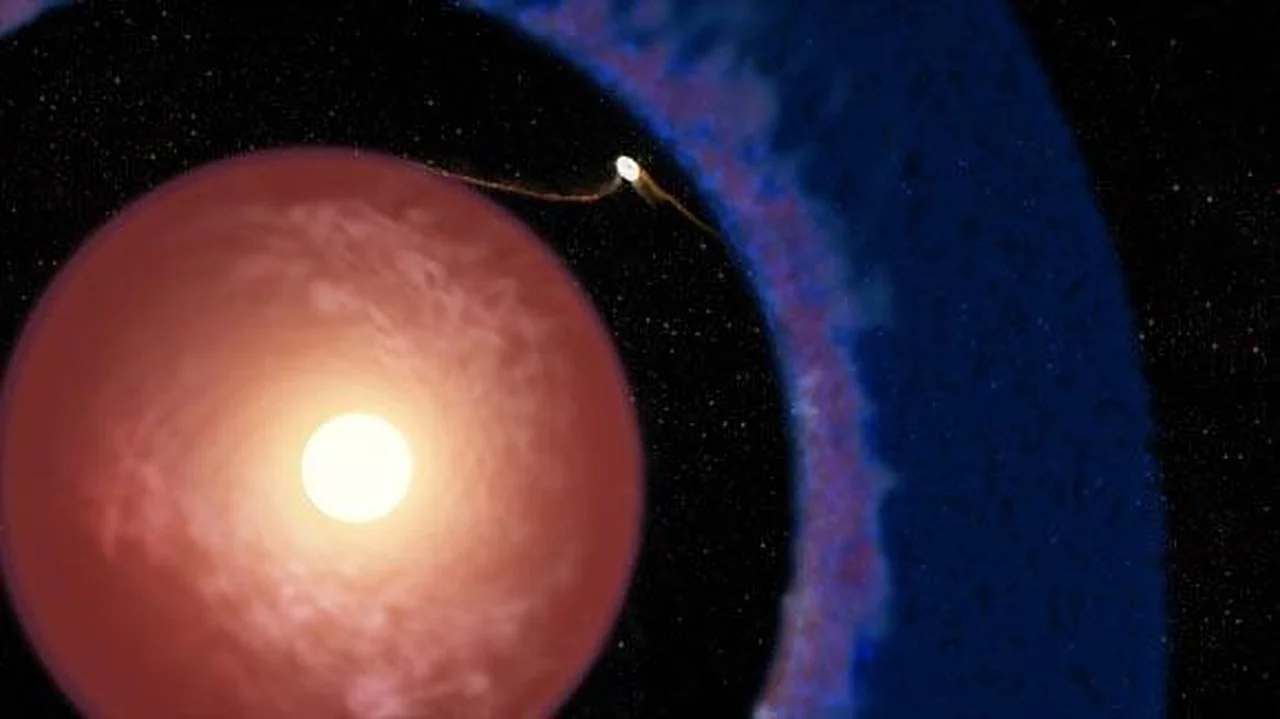
An international team of astronomers has officially confirmed the existence of the youngest exoplanet in scientific history. Located approximately 454 light-years from Earth in a star-forming region of the Ophiuchus constellation, this celestial body has been named Elias 2-24b. According to Ixbt.com, this exoplanet is less than one million years old and continues to gain mass by accumulating material from the protoplanetary disk surrounding its star. This is reported by Ixbt.com .
The star Elias 2-24, along with its young planet, forms a system that, by cosmic standards, has only just emerged from its "infancy." Previously, the youngest protoplanets were considered to be objects in the PDS 70 and WISPIT 2 systems, which were approximately 5 million years old. The new discovery is forcing scientists to reconsider existing concepts.
Scientific models and history of discovery
As noted by Professor Lucas Cieza of the Institute of Astrophysics in Chile, previous models of planet formation struggled to explain even the earlier record-holders. Elias 2-24b clearly demonstrates that even the most advanced theories are missing some critical processes. The history of this unique object's discovery spans a decade of painstaking research.Ten years ago, the ALMA radio telescope recorded a narrow gap in the protoplanetary disk. This was a key indicator that a large celestial body was forming inside. Later, using the Very Large Telescope, a faint object was found within that gap. The decisive image was captured using the coronagraph at the Keck Observatory on Mauna Kea — a special instrument that blocks starlight, allowing the planet to be seen directly.
Prospects for future research
According to initial estimates by astronomers based on brightness and planetary evolution models, the mass of Elias 2-24b is between 1.9 and 4 times that of Jupiter. The alignment between the gap in the disk and the bright dust ring supports the hypothesis that gas giants form via rapid accretion around a solid core.One of the study's authors, Andrea Bernardi, noted that such findings will become easier in the future. According to him, Elias 2-24b is at the limit of current telescope capabilities, but new space telescopes like the Nancy Grace Roman will significantly facilitate the discovery process. Experts conclude that the discovery of the youngest exoplanet marks a turning point in assessing the timing of planet formation and processes in young disks.


Comments 0
…