


NASA may partially shut down New Horizons due to lack of funding
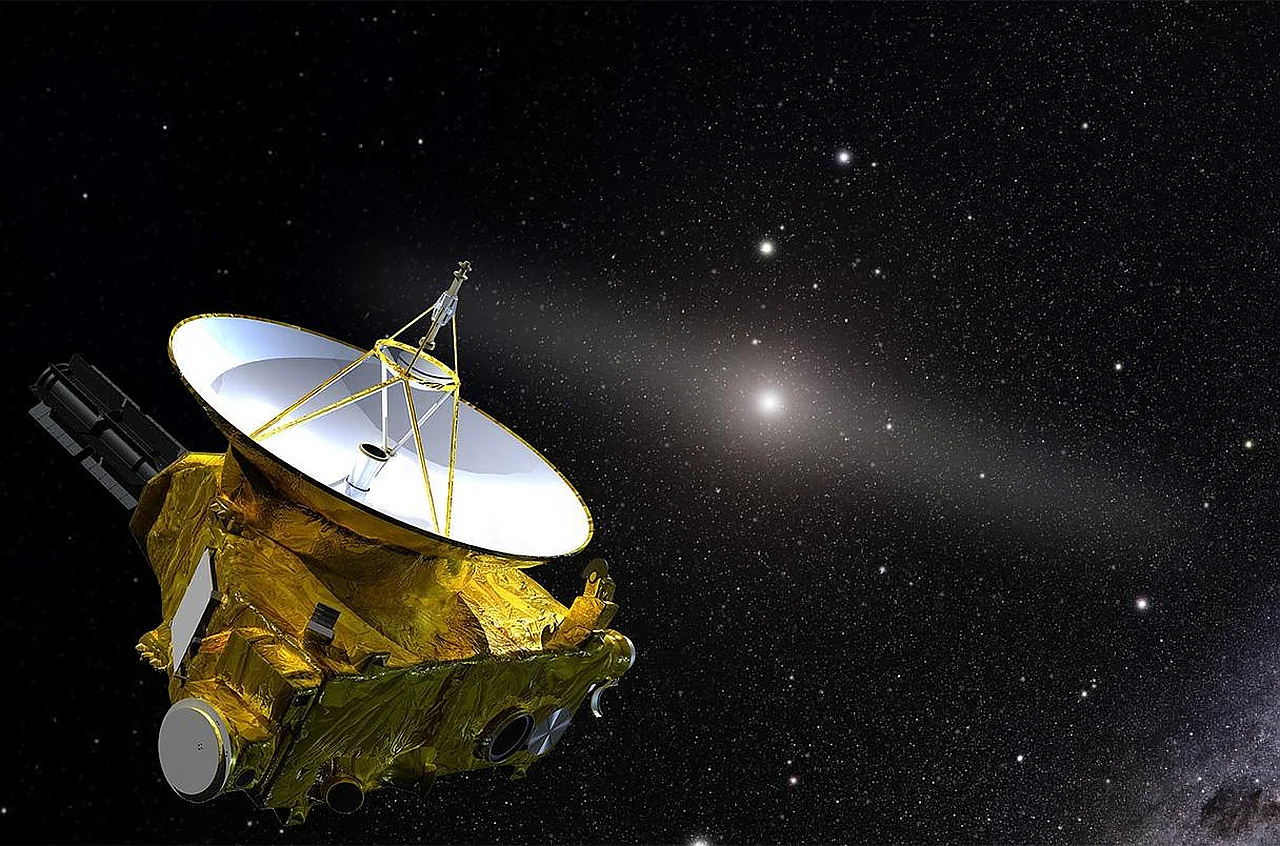
The US National Aeronautics and Space Administration — NASA in October New Horizons may be forced to shut down two scientific instruments on the spacecraft due to a lack of funding. This situation, occurring as the probe—currently in full working order—approaches the outer reaches of the solar system, is sparking sharp criticism from the scientific community. According to ixbt.com, the problem stems from the failure to allocate the necessary $2 million over the last two fiscal years. This is reported by Ixbt.com news.
These funds, required to support the instruments, are necessary to pay the engineers and scientists who receive, process, and analyze the data. If funding is not restored, two critical devices studying solar wind particles—the PEPSSI which detects high-energy particles, and the SWAP instrument, which measures lower-energy solar wind particles—will be deactivated.
The importance of scientific measurements
Data obtained using these instruments is crucial for studying the Sun's influence on space far beyond Pluto's orbit. Specifically, they measure neutral atoms—uncharged ions in interstellar space. Once these neutral atoms are ionized, they are captured by the solar wind, absorbing its energy and affecting processes in regions where the flow slows down significantly.Currently, the New Horizons spacecraft is moving at a distance 66 times further from the Sun than Earth and twice as far as Pluto. In the coming years, it is expected to reach the shock wave where the supersonic solar wind flow decelerates sharply, and then continue its journey toward the heliopause—the boundary of the space created by the solar wind. Unlike the Voyager probes, New Horizons is traveling in a different direction, allowing it to provide unique data on distant regions inaccessible to older equipment.
Negative consequences of the decision
Experts believe that shutting down these instruments could cause irreversible damage. If the devices are turned off now and the need for observations in a new space region arises for NASA in a few years, the lost measurements cannot be recovered. Yet, the New Horizons spacecraft itself is capable of operating until 2050 and has the potential to continue research until it crosses the heliopause boundary into interstellar space.The financial problem arose during the internal budget allocation process at NASA. The mission's primary costs—approximately $10 million per year—are covered by the planetary science division, but an additional $2 million was supposed to come from the geophysics budget annually. Although these funds were allocated for several years, funding stopped for the 2025 and 2026 fiscal years.
After the New Horizons science team failed to resolve the issue internally, they made it public. Nevertheless, the situation may still change. NASA Administrator Jared Isaacman stated that the agency is working on the matter. He emphasized that the primary funds have already been invested in the construction of New Horizons, so NASA should be interested in obtaining maximum scientific results from the spacecraft for relatively small current expenses. For now, no official decision has been made to save the instruments.


Comments 0
…