


Vera C. Rubin Observatory discovers a new dwarf galaxy
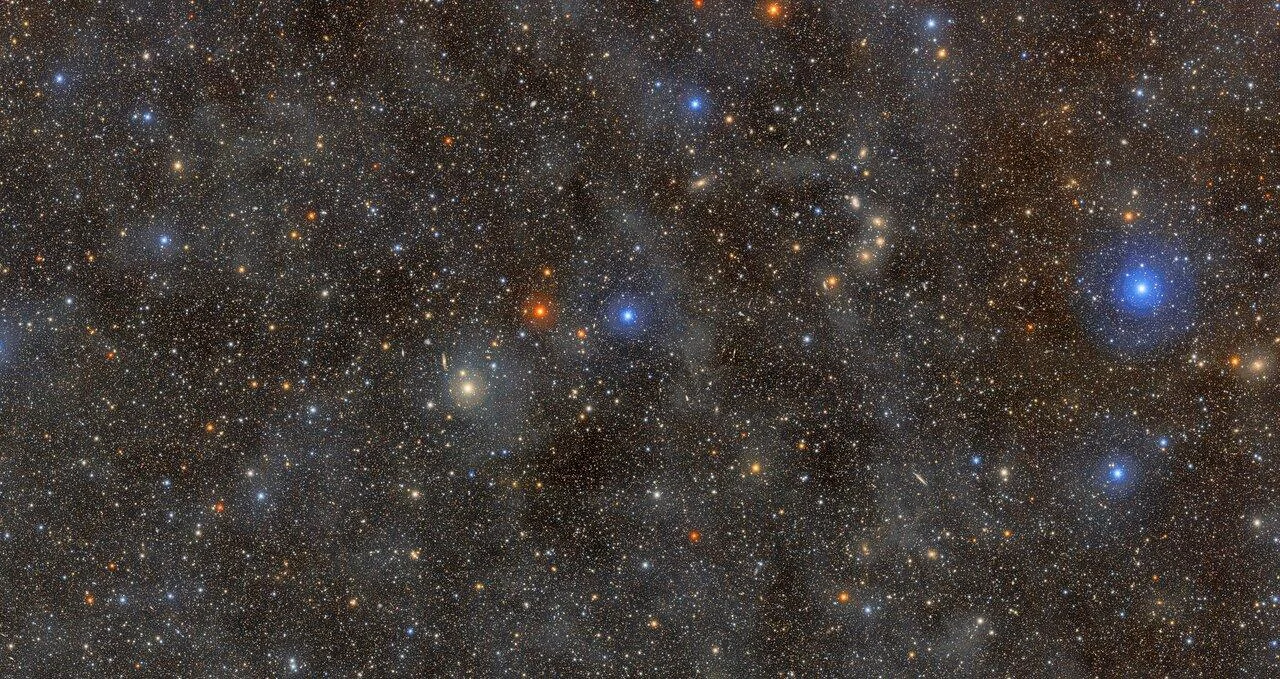
The Vera C. Rubin Observatory has made a unique discovery even before the start of its main ten-year sky survey. According to ixbt.com, astronomers have managed to identify an ultra-faint dwarf satellite galaxy of the Milky Way. This celestial body, named Aquarius IV, was found based on test data collected before the telescope's main operations began. This is reported by Ixbt.com news reports.
The new object was recorded as part of the Early Data Preview 2 (EDP2) test data collected between April 2025 and January 2026. This preliminary survey covered approximately 7 percent of the celestial sphere, providing scientists with significant opportunities for future large-scale research.
Special search methods and isochrones
Aquarius IV cannot be seen in ordinary images because ultra-faint dwarf galaxies do not have the appearance of typical galaxies. Therefore, researchers used a special search method. The object appeared as a cluster of several dozen faint stars among foreground and background stars.Scientists searched for groups matching a single isochrone, which shows the relationship between the color and brightness of stars formed simultaneously from the same gas cloud. A model of an ancient, metal-poor stellar population was tested at various distances. As a result, it was determined that there were significantly more matching stars in the Aquarius IV region than random background indicators would suggest.
Significance in studying dark matter
The size of the identified dwarf galaxy turned out to be larger than almost all globular clusters of the Milky Way. This aspect is very important because while globular clusters are dense systems of old stars, dwarf galaxies possess their own dark matter halos.The obtained characteristics indicate that Aquarius IV is indeed an ultra-faint dwarf galaxy. Such objects are of great interest for studying dark matter because they contain very little ordinary matter, and their properties are primarily determined by dark halos.
Currently, about 40 such galaxies are known around the Milky Way. Experts believe that the upcoming LSST survey will allow this number to double. It is worth noting that the main ten-year scientific work of the Vera C. Rubin Observatory began in June 2026, and it will regularly monitor the entire southern sky.


Comments 0
…