


NASA mission to rescue Swift telescope fails
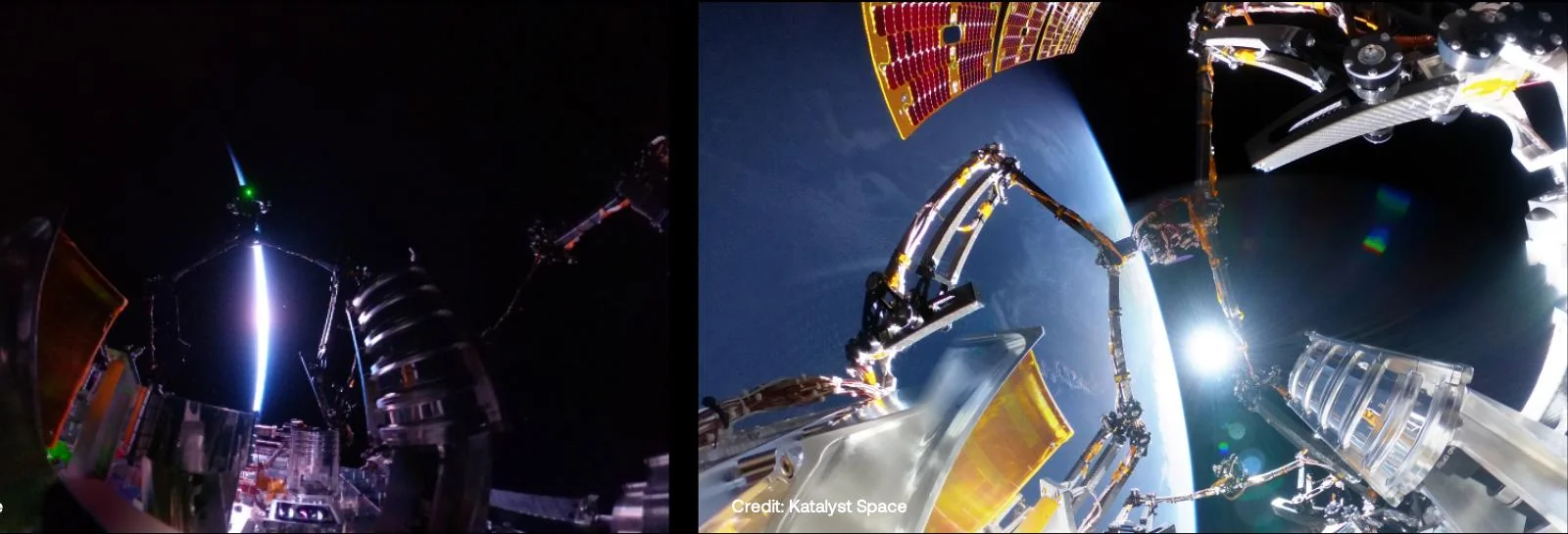
A unique attempt to extend the life of NASA's famous Swift space observatory has ended in failure due to unexpected technical malfunctions. The specialized robotic apparatus, named LINK and valued at $30 million, deorbited on September 25 and burned up in Earth's atmosphere. This project was expected to be a significant step in reducing space debris and rescuing orbital assets that have become legendary for their reliability. This is reported by Ixbt.com reports .
According to ixbt.com, the LINK apparatus, developed by Katalyst Space, was successfully launched from the Marshall Islands on July 3 of this year. The mission's primary plan was to capture the Swift telescope, which lacks its own propulsion system, using special robotic arms in space and boost it to a higher orbit. This would have significantly extended the operational life of the scientific observatory, which has been active since 2004.
Orbital tests and unexpected malfunctions
In the initial phase, the flight proceeded as planned, and LINK successfully performed its first orbital maneuvers. However, during the full system activation process, serious problems arose in controlling the spacecraft. As a result of an electronic failure shortly after reaching space, two of the three reaction wheels failed. Subsequently, a malfunction was also detected in the reaction control system valve.Due to battery and control issues, LINK began spinning uncontrollably, reaching an angular velocity of 9 degrees per second. As a result, communication with the apparatus was lost. Engineers managed to partially restore control using the remaining reaction wheel and orientation thrusters, but this process consumed a significant amount of fuel.
Change of original plan and additional experiments
After a thorough analysis of the situation, NASA and Katalyst Space specialists concluded that the remaining fuel reserves were insufficient to safely capture the Swift telescope and boost its orbit. Therefore, on August 19, the parties officially abandoned the original rescue operation. Given the circumstances, it was decided to use the remaining orbital life of the apparatus for additional scientific experiments.Specialists tested the operation of the three robotic manipulators on board LINK in space. Additionally, the apparatus was brought within 12–15 km of the Swift telescope, and unique images of the observatory were captured from that distance. In total, LINK operated in orbit for 85 days.
Importance of the Swift observatory
Operating in space since 2004, the Swift telescope was specifically created to record and study the most powerful energetic events in the universe — gamma-ray bursts. The main advantage of this object is its high reaction speed; once it detects a burst, it can immediately turn toward the source and help other telescopes begin observations.Although the observatory was originally designed for a two-year lifespan, it has been successfully operating for over two decades. However, due to high solar activity, the expansion of the upper atmosphere and increased drag for low-orbit assets remain the primary reasons for the decline of Swift's orbit.


Comments 0
…