


NASA restarts the Neil Gehrels Swift telescope
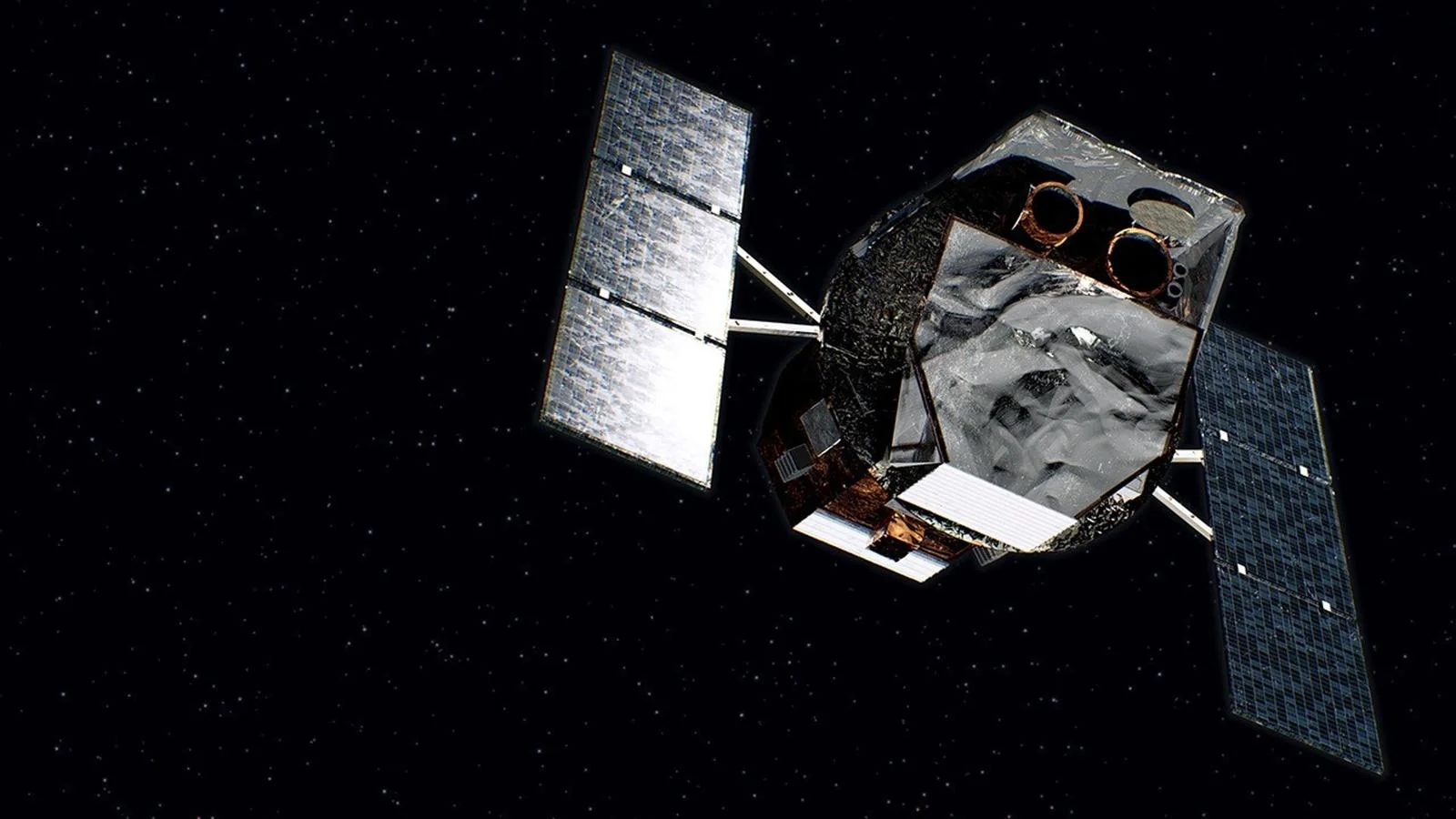
NASA has returned its legendary Neil Gehrels Swift orbital observatory to scientific observation mode. ixbt.com reports that the device has resumed its duties after a monthly break in a special mode aimed at slowing its orbital decay. This was reported by Ixbt.com reports .
It turns out that on August 26 of this year, specialists reactivated two of the three scientific instruments: the XRT X-ray telescope and the UVOT ultraviolet and optical telescope. These instruments were turned off in February to reduce aerodynamic drag and extend the hardware's lifespan in orbit.
Space instruments and the failure of the rescue mission
For now, the third instrument, the BAT gamma-ray telescope, remains off. It was shut down in April for energy efficiency and to further reduce atmospheric drag by adjusting the orientation of the solar panels. According to NASA representatives, this device will also be fully operational within the coming weeks.Initially, it was planned to use a private LINK spacecraft from Katalyst Space to boost the Swift telescope to a higher orbit. After the launch on July 3, the spacecraft was supposed to approach and capture the observatory. However, the mission did not go as planned: two of the three reaction wheels in the orientation system failed, and the propulsion system partially lost its functionality. Consequently, on August 19, NASA and Katalyst officially abandoned the attempt.
The future of the telescope and the final stage
Launched into space in 2004, Swift was originally designed for a two-year service life, but it has been operating successfully for over 21 years. During this time, it has become one of the primary tools for studying gamma-ray bursts and other short-term cosmic phenomena.However, the main problem is that the telescope does not have its own propulsion system. Due to high solar activity, the upper layers of Earth's atmosphere have expanded, increasing drag and causing the device's orbit to decay faster. NASA estimates that within the next month or two, Swift will drop to an altitude of approximately 300 kilometers, after which the descent process will accelerate. If no other way to boost the orbit is found, the observatory is expected to enter Earth's atmosphere and mostly burn up by the end of 2026. Until then, the device will continue to carry out its scientific program.


Comments 0
…