World's largest unmanned cargo aircraft completes its first flight: Details
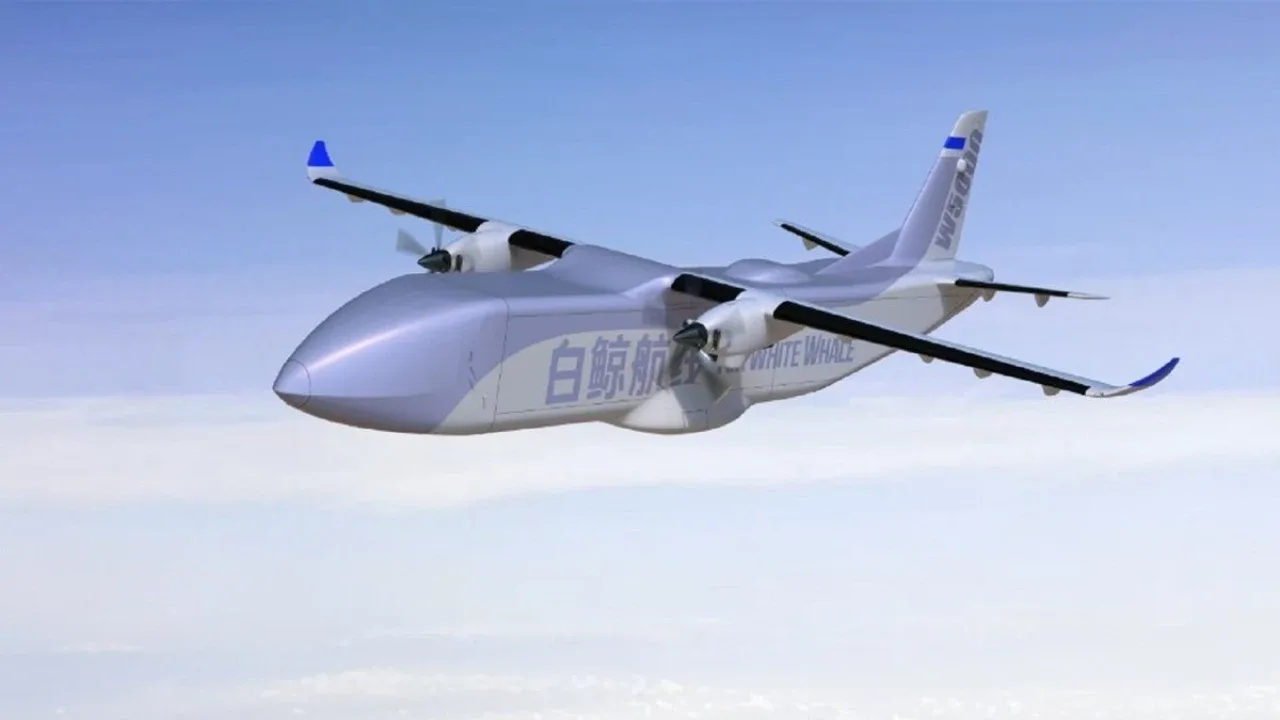
In China, the W5000, presented as the world's largest unmanned cargo aircraft, has successfully completed its first test flight. According to Naked Science, the tests were conducted on November 14 in the Inner Mongolia region in the north of the country. The project was developed by the Chinese aviation company Air White Whale and marks a new milestone in autonomous cargo aviation.
How did the test flight go and what are the technical specifications?
During the test, the W5000 took off after covering approximately 600 meters on the runway. The aircraft reached an altitude of 2,000 meters, flew for nearly 30 minutes, and landed successfully at the designated point.
During the flight, experts tested the aircraft's critical technical and electronic systems:
Autonomous control and communication: The independent flight system, data transmission channels, and the coordination of ground control equipment were verified.
Engine and electronics: The performance stability of the Chinese-developed turboprop engine, flight control systems, and electronic equipment was evaluated.
Lightweight and durable construction: Approximately 65 percent of the aircraft's structure is made of carbon fiber composite materials, which allows for weight reduction while maintaining durability and increasing payload capacity.
Technical and operational indicators | Parameters |
Payload and range | Transporting up to 5 tons of cargo up to 2,600 kilometers |
Cargo hold volume | 65 cubic meters |
Passenger capacity and range | 19 passengers, up to 400 kilometers per flight |
Economic efficiency | Up to 60 percent cheaper compared to similar piloted aircraft |
Cost reduction and areas of application
The W5000 does not require pilots on board—the aircraft flies in autonomous mode, while ground specialists monitor and coordinate its status and trajectory. According to the developers' calculations, the cost of transporting one ton of cargo over one kilometer can be up to 60 percent cheaper than traditional piloted cargo aircraft. This is achieved by the absence of a crew on board, the use of lightweight composite materials, and the optimization of fuel consumption.
In the future, this aircraft could be used for inter-regional cargo transportation, the delivery of products requiring specific temperature regimes, and the transport of emergency aid in disaster situations. Additionally, its capacity to carry up to 5 tons of cargo serves as a convenient solution for routes where operating standard cargo aircraft is economically expensive.
In your opinion, how much will the widespread introduction of unmanned cargo aircraft change the international logistics and freight market in the coming years? Leave your thoughts in the comments!

No ads with a subscription
Zamin Premium — 4 900 UZS a month


Related news


Comments0
…