


Astronomers measure baryonic matter in cosmic voids for the first time
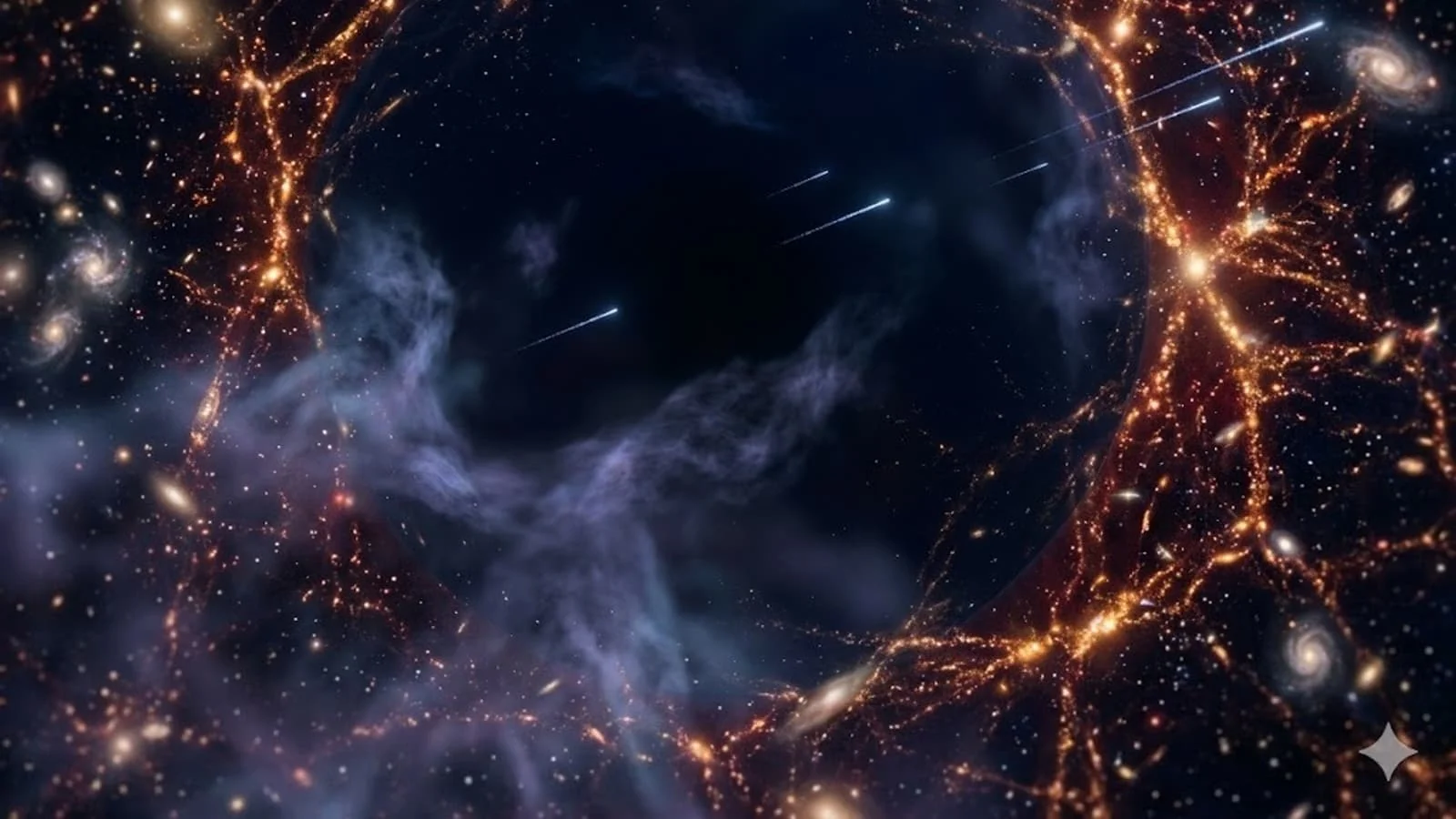
An international team of cosmologists and radio astronomers has for the first time obtained direct observational data on the amount of baryonic ("normal") matter within cosmic voids — vast spaces where galaxies are almost non-existent. Analysis showed that in the central parts of such regions, the density of baryonic matter is approximately 60 percent lower than the average in the Universe. Unlike galaxies and their clusters, voids evolve much more calmly, allowing them to preserve information about the conditions of the early Universe. This is reported by Ixbt.com reports .
To solve this complex task, scientists used Fast Radio Bursts (FRB) — short and extremely powerful radio pulses. As the signal travels through intergalactic space, it interacts with free electrons, which helps determine the amount of matter in its path. If the light passes through a high-density region, the signal delay increases, while crossing a cosmic void creates a specific deficit.
The study combined data from two major projects: Canada's CHIME/FRB radio telescope, which has recorded over three thousand radio bursts, and the SDSS BOSS project, which created a 3D map of galaxy distribution. This dataset allowed linking the passage of radio signals with the geometry of cosmic voids. The results show that the distribution of normal matter mimics the distribution of dark matter even in the sparsest regions.
Scientists also estimated the electron component temperature in the voids to be approximately 1.1 million Kelvin. This points to the existence of a sparse warm-hot intergalactic medium, which is considered one of the main reservoirs of normal matter in the Universe. In the future, with the launch of next-generation radio telescopes like CHORD, DSA, and SKA, astronomers plan to turn the emptiest regions of the Universe into the most precise tools for studying dark energy and neutrino mass.


Comments 0
…