


Europe Allocates 65 Million Euros to Build First MAGPIE Lunar Rover for Moon Exploration
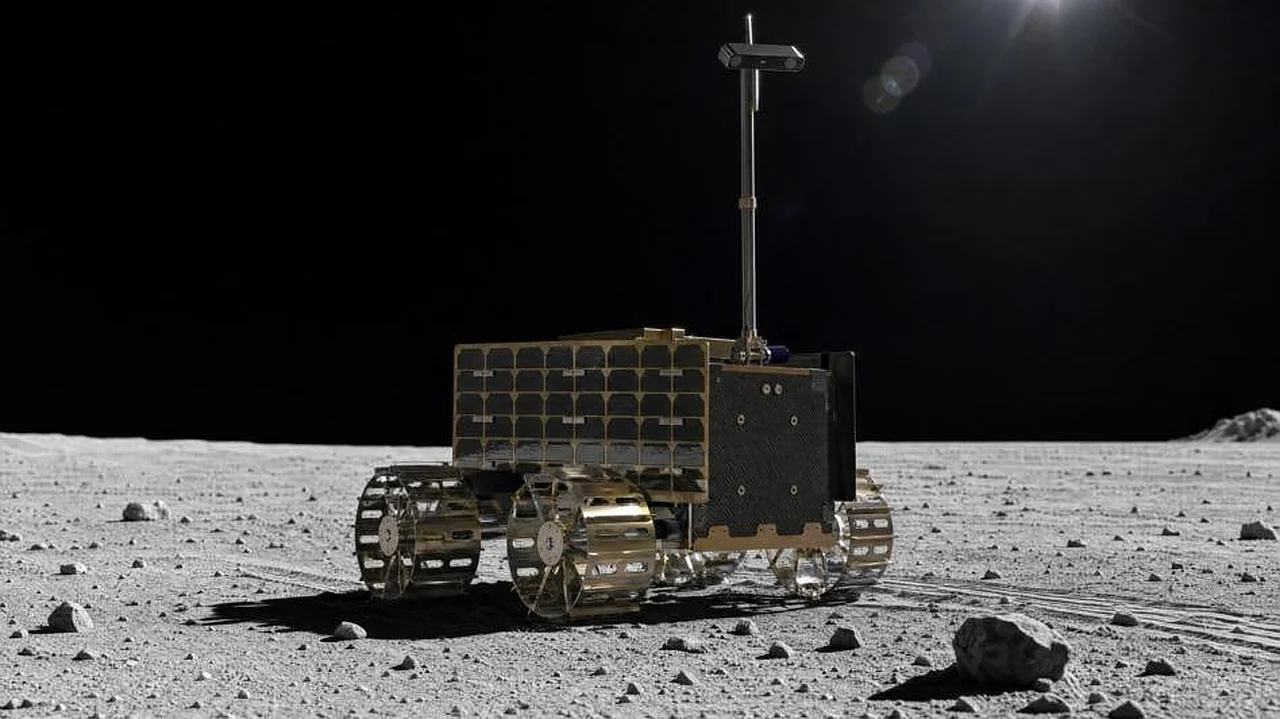
The European Space Agency (ESA) has signed a major €65 million contract with ispace-Europe to explore ice deposits at the Moon's South Pole. As part of this project, Europe's first lunar rover, named MAGPIE (Mission for Advanced Geophysics and Polar Ice Exploration), will be developed. This mission is expected to be a crucial step in assessing humanity's future ability to utilize lunar resources. This was reported by Ixbt.com reports .
The MAGPIE vehicle is scheduled to be launched to the Moon in 2029. It will be delivered into space using the ispace Mission 4 lander. The main task of the lunar rover is to search for water ice near the Moon's South Pole, as well as to study the stability of volatile substances that could evaporate when heated and the properties of lunar regolith. This data is considered essential for creating local resource recycling technologies for future bases on the Moon.
A New Approach to Space Exploration
This project is of historical significance for ESA, as the agency has chosen a small private space company as the prime industrial contractor for its lunar mission for the first time. The MAGPIE project is the first part of ESA's Small Exploration Missions (SMEX) program, which aims to implement research projects faster and with a lower budget. The agency has stated its willingness to accept a certain level of risk in this endeavor.According to ixbt.com, this time ESA is not just purchasing equipment delivery, but a complete package of services ranging from design to obtaining scientific data. While this scheme resembles NASA's CLPS (Commercial Lunar Payload Services) program, the European approach differs in that it provides for ownership of the rover itself and its research results.
International Cooperation and Experience
The MAGPIE mission is part of a broad international cooperation. European technologies and the mission control system will utilize Japan's ispace transport infrastructure. Thus, ESA and JAXA (Japan Aerospace Exploration Agency) are combining their capabilities in future lunar exploration matters. This cooperation serves to strengthen Europe's position in the global space race.For ispace-Europe, this is the second major attempt within the lunar program. Earlier, in 2025, the TENACIOUS lunar rover created by the company's Luxembourg division reached lunar orbit. However, due to a failure during the surface landing process, communication with it was lost. The new MAGPIE project is expected to be equipped with more advanced technologies, drawing conclusions from past mistakes.


Comments 0
…