


Metro passengers increase in Uzbekistan: six-month figures announced
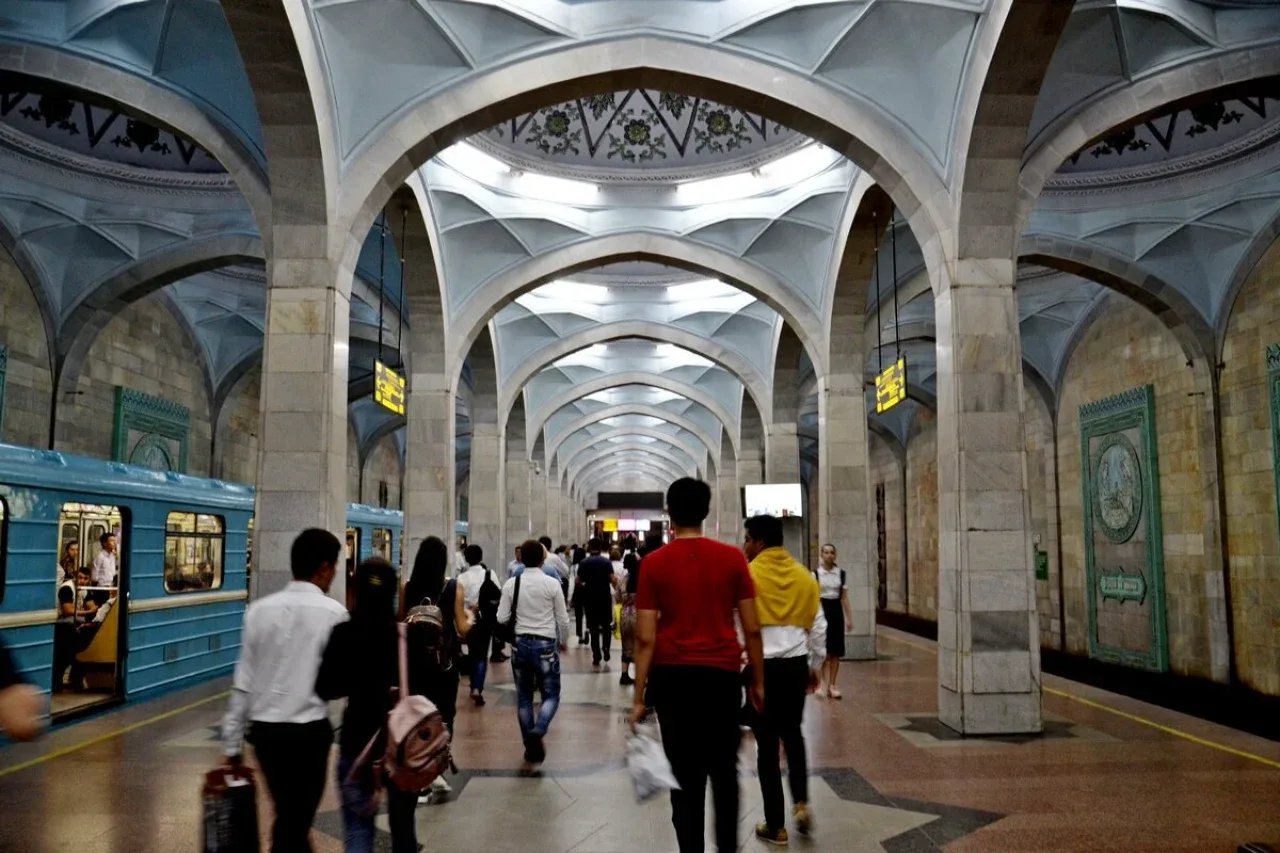
In Uzbekistan, the scope of metro usage has expanded further. In the first six months of 2026, the number of passengers carried by the metro exceeded 155 million, which is 7 percent higher than the previous year's figure.
When this figure is converted into a daily average, an even more interesting picture emerges: since the beginning of the year, the metro has served an average of nearly 860,000 passenger trips every day.
155.6 million passengers carried in half a year
According to the National Statistics Committee, a total of 155.6 million passengers were transported via the metro in January–June 2026.
This means a 7 percent growth compared to the same period in 2025. In the first half of last year, this figure was approximately 145.4 million.
Thus, within a year, the six-month passenger flow has increased by nearly 10.2 million.
The increase in the number of metro passengers alone is several times larger than the population of some major cities.
Nearly 860,000 trips every day
Breaking down the six-month data by days, an average of 859,700 passenger trips were carried out via the metro daily during the January–June period.
The average monthly figure is approximately 25.9 million.
This calculation shows that the metro is playing an increasingly important role in the daily movement of the capital's residents and guests. Especially during commuting hours for work and study, the demand for public transport remains high.
Could the annual figure exceed 300 million?
Throughout 2025, a total of 286.8 million passengers were carried via the metro. The result from the first half of 2026 equals more than 54 percent of last year's total annual figure.
If the pace in the first half of the year is maintained in the second half, the volume of transport by the end of the year could conditionally reach around 311 million.
This is a simple mathematical calculation and not an official forecast. The number of passengers can be influenced by the season, the academic year, holidays, new stations, and changes in transport operations.
How has the metro changed since 2000?
According to official statistics, 125.7 million passengers were carried by the metro in 2000. By 2025, this figure had reached 286.8 million.
This means that over a quarter of a century, the number of metro passengers has increased by 161.1 million, or nearly 2.3 times.
The changes over the years have not been uniform:
in 2015 — 52.3 million;
in 2019 — 79.2 million;
in 2020 — 38.8 million;
in 2023 — 172 million;
in 2024 — 270.3 million;
in 2025 — 286.8 million passengers were transported.
In particular, the sharp growth after 2023 indicates the beginning of a new phase in the metro network and the scale of its usage.
The increase in passengers also brings new challenges
The growing number of metro users is important for reducing traffic congestion and helping residents reach their destinations quickly. However, as the passenger flow increases, the load on the system also rises.
Now the main issues include:
shortening train intervals;
deploying additional cars and trainsets during peak hours;
strengthening security at stations;
ventilation and queue management;
ensuring convenient connections with other public transport.
Because the growth in statistics means not only that the metro has become more popular, but also that the quality of service expected by its users must increase.
The metro is heading towards a new record
The six-month result of 155.6 million indicates that 2026 could end with a new record for the metro. However, the true significance of a record does not lie solely in the number of passengers.
The main result is how quickly, safely, and comfortably people reach their destinations. As passenger flow continues to grow, adapting metro infrastructure to this pace becomes the next most crucial task.
In your opinion, has metro service improved over the past year, or has congestion increased even more? Leave your thoughts in the comments.



Comments 0
…