


Korean scientists create self-dressing clothing in 10 seconds
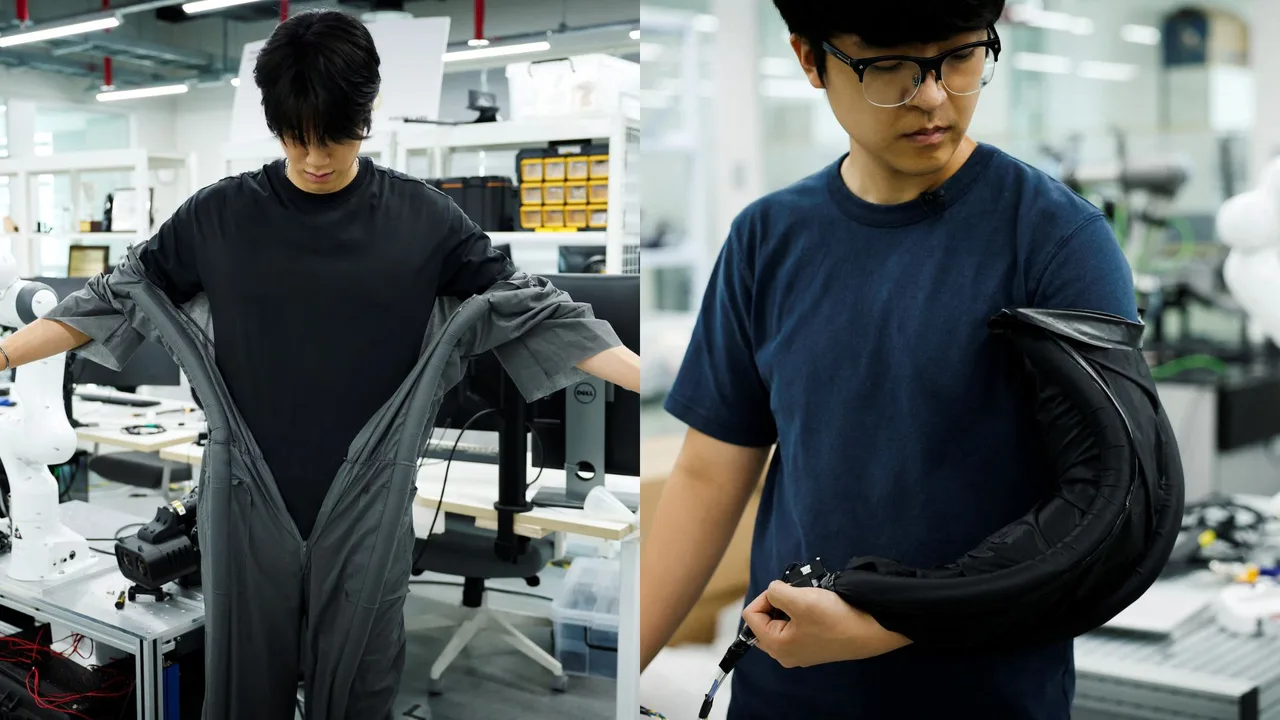
South Korea Scientists from the Korea Advanced Institute of Science and Technology (KAIST) and Stanford University have developed an innovative technology that helps people get dressed without using their hands. The authors note that the new system takes approximately 10 seconds to fully dress a person.
The secret of the technology lies in special soft tubes embedded in the fabric, resembling the vines of climbing plants. Under air pressure, these tubes straighten and begin to slide along the body, gradually pulling the clothing onto the person, much like ivy climbing a tree or a pole.
Project author Kim Nam-Gyun says the idea came to him on a rainy day. While riding his bike, he wondered how convenient it would be if a raincoat could put itself on. A few years later, this idea turned into a practical prototype, and the research results were IEEE Robotics and Automation Letters published in the scientific journal.
The new design differs from conventional exoskeletons or robotic manipulators in its method of movement. The tubes do not slide entirely with the fabric but, like plant shoots, only "grow" from the tip. This allows the system to easily pass through joints like shoulders, elbows, and knees without complex control algorithms or body-tracking sensors.
Also, a person does not have to stand still. They can walk, sit, or bend — the system automatically adapts to their movements.
The developers tested the technology on slippery, sticky, and uneven surfaces. During the tests, it was noted that the tubes were able to reliably pass through narrow and complex parts of the body.
Experts believe that this development could have great practical significance in a number of fields. In particular, it will allow the elderly and people with disabilities to dress independently without the help of others.
In addition, it will help employees in sterile laboratories where microchips are manufactured to put on protective clothing very quickly. This technology could also be important for emergency services and rescuers to save time, as every second is crucial in such situations.
Although the technology is currently at the laboratory prototype stage, the authors are working on adapting it to the needs of medical personnel, rescuers, and other professionals. If the project reaches mass production, this innovative clothing could become an integral part of workwear in the future, just like a zipper or Velcro.


Comments 0
…